Posts

Showing posts with the label Facebook

Ecuador 2, Germany 1

As one would expect.


That’s Gonzalo Plata poking the ball past Manuel Neuer, after Kevin Rodríguez’s flick-on. This was our winning goal, in minute 77.

Nilson Angulo had leveled the score in the ninth minute. He was assisted by Pedro Vite.

Immortals.

Disgraced: Tori Penso (referee, USA) and Joe Dickerson (VAR assistant, USA) for allowing Germany’s goal to stand although Germany had fouled Vite.

Our reaction was tremendous. We overcame the Germans and officials and claimed our just reward. The yellow-clad New Jersey crowd was overjoyed. Our players, so harshly criticized, were overjoyed. I was overjoyed, as were my parents and siblings and our spouses; we all watched together.

Just before the winning goal, I was holding Abel, and I thought, When the ball goes in, I’ll try to avoid shouting, so as not to frighten him. Please, God, let him not be frightened. Ecuador scored, I shouted – we all shouted – and Abel was calm, so calm, greeting the occasion as a matter of course.

I got a little misty when you all shouted, Karin said afterward. She suffered before the game, worrying she’d have to bear a houseful of anguished in-laws. No doubt our friends felt the same. Then the game ended and our phones exploded with congratulations.

Facebook reel: tying goal.

Facebook reel: winning goal. (Dale con fe.)

Facebook reel: winning goal. (Gol hjpta.)

Facebook reel: postgame. (Una moneda.)

Seahawks 29, Patriots 13

A Super Bowl for connoisseurs of defensive football. I’m not one. I understand what’s happening when a DB breaks up a pass or a lineman beats his blocker and troubles the QB. But os and xs, zonal coverage, disguised coverage … I know these things exist, but I can’t perceive them – not in real time.

I like Kenneth Walker’s running. Dude calmly glides toward his blockers, awaits the defenders’ removal, scoots past them. Elegant. Not unlike slow-roll penalty taking (in soccer).

♦ ♦ ♦ ♦ ♦

My Facebook friends signal their politics by praising or condemning Bad Bunny’s halftime show.

What a stupid time to be alive.

I’ve not previously listened to Bad Bunny.

The sugarcane is good décor. The dancing is uncouth.

So are the lyrics. I learn them only by reading them online. (I can’t understand them sung; I have trouble with Puerto Rican Spanish.)

The apagón song stands out because I know what it’s like to endure frequent apagones (power outages). One extended passage in that song is reminiscent of, if not quite ideologically aligned with, The Vagina Monologues. Is it included in this Super Bowl performance? I’m not sure. I can’t make out enough words, and I’m distracted by utility-pole dancers.

Timothy Dexter

Ecuador is mentioned in the first sentence of the main body of the Harper’s Weekly Review.

♦ ♦ ♦ ♦ ♦

The Facebook bots kindly shared a mini-bio, in Spanish, of Timothy Dexter (1747–1806), history’s hombre más suertudo (luckiest man). It was intriguing enough that I went on to read Dexter’s Wikipedia bio. Then I read that bio aloud to Karin.

Certain commonalities with our President suggested themselves. Dexter, however, made money instead of losing it. And he didn’t start out with money from his father; he extracted it from his rich wife, whom he abused.

In business, he seems to have been lucky and devilishly intuitive, e.g. he turned a profit literally “shipping coal to Newcastle” (the proverbial expression for exporting to a saturated market).

I don’t intend to read any full-length biographies of Timothy Dexter. But I went looking anyway. The major ones are from the 1800s. The last notable book, the most recent edition of which is 65 years old, is by John P. Marquand – like Dexter, of Newburyport, Mass. – the author of the “Mr. Moto” fictions and of the Pulitzer-winning, satirical Late George Apley. I wonder how serious his treatment of Dexter is.

R.I.P. “Minnie”

… a.k.a. Cinnamon Sprinkle, a.k.a. Cinnamon Sparkle: Cornell’s beloved miniature horse, who arrived on campus the year I moved away. (See, also, this earlier piece.)

Now that’s the kind of alumni reporting I’d like more of.


Had I known Minnie was at Cornell, I would have taken Karin to see her when we traveled to campus for my PhD defense.

♦ ♦ ♦ ♦ ♦

Happy New Year. Today, the USA attacked Venezuela and captured its head of state.

All day long, I worried about geopolitics, not least about soccer.

What will FIFA do about the World Cup? It would be consistent to ban the USA, since Russia is banned for attacking Ukraine.

If only.

What will CONMEBOL do about the Copa América? The USA is a hosting candidate but has just attacked a CONMEBOL member.

I went on Facebook to see what my “friends” are saying about the attack.

The Ecuadorian church leaders are silent. I don’t object to that. Not everything needs to be discussed.

Other Ecuadorians are making jokes about Venezuelans. Many Venezuelan refugees live in Ecuador. The jokes hint that now is the time for Venezuelans to return en masse.


(A Venezuelan says goodbye to her Ecuadorian sugar daddy.)

My U.S. “friends” who used to live in Ecuador are debating whether the coup is a canny U.S. foreign policy move; whether it’s good for Venezuela; whether Venezuelans, in preponderant numbers, support it; whether Maduro was entitled to rule; and whether “individualism” is better than “collectivism.”

I’ve seen none of these “friends,” none of them, say anything like this:

The geopolitical order is an order of sovereign states. An order of sovereign states forbids particular states from unilaterally attacking other states and deposing their leaders, even bad leaders.

It’s amazing how this simple norm, so dear to Latin Americans – including Venezuelans (even, I daresay, opponents of Maduro) – appears not to figure in ex-missionaries’ thinking.

What were they doing in Ecuador, all those years?

Not reading the room, it would seem.

USPS tracking

Alert: Winter storms in the Midwest through the Northeast U.S. and the professional football championship game in New Orleans may delay final delivery of your mail and packages.
No kidding. Behold the shipping history of the package I ordered three weeks ago:

Mishawaka
Mishawaka
Mishawaka
Indianapolis
Indianapolis
“In transit”
“In transit” (1.5 weeks later)
South Bend 😀
Indianapolis 😑
Indianapolis

(Indianapolis is 2–2.5 hrs. from Mishawaka and South Bend, which are across the street from each other.)

♦ ♦ ♦ ♦ ♦

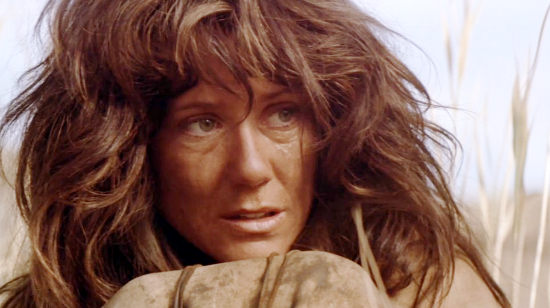
Tonight’s Super Bowl’ll be shown on Fox – and, for the first time, on Tubi, which appears to be struggling to handle the increase in viewership. I can’t access my queue or viewing history on the app. I keep putting on Tom & Jerry, for Daniel, but when I go away it switches to Dances with Wolves. Daniel has given up and fallen asleep.

I, too, slept through most of that movie when I saw it twenty-five years ago. I can only suspend judgment as to its quality.

I’m impressed with Mary McDonnell’s hair.

Also, I’m reminded of this amusing error on Facebook (it’s surely due to A.I.).

Nesting-time

From a friend’s Facebook page:


Yeah, well, Trump and Vance reside in counties that went to Harris. So there. 👅

Life goes on. “Pip” is due to be born in three-and-a-half weeks. Fellow churchgoers have been giving diapers and other tokens. At home, the task of the season – instinctive for Karin, imperative for me – is “nesting,” i.e. reconfiguring one’s living quarters for the baby. The most urgent time for this appears to be 10:00 or 11:00 p.m.

Anyway, that’s why I didn’t post last night – I was busy “nesting.”

Physically, things are progressing well, except that “Pip” still needs to flip upside-down. Karin lays frozen veggies on herself to goad him.

The sports

You’ll have to enlarge this to read it.


I would choose the sushi, the ham-and-cheese pizza, the pasta salad, the Nutella sandwich, the bologna-and-chorizo sandwich, and the fruit.

(I doubt the authenticity of this. Was there no second fullback?)

♦ ♦ ♦ ♦ ♦

It’s time for my annual baseball peek: Dodgers vs. Yankees, World Series Game 1. No runs yet. I’ll watch until the Fox Sports app’s free preview expires. We need a TV antenna. … The celebs are out in droves. … It’s nice to see such plain uniforms on both teams. I appreciate the subtle palm trees on the Dodgers’ socks. … Shohei Ohtani sure is … tall. … I like it that so many people in Japan are watching the Dodgers at 9:00am.

Karin: “Sports ads are garbage.”

First run scored: triple, then sacrifice fly. Dude wore a mitten to slide home hand-first. I’d never seen that.

Update: First walk-off grand slam in World Series history:


He is a “sixth-generation Salvationist” (Wikipedia; cf. the source article).

Safe return; tragedies; election; Baby Owen’s welcome

I’m back in South Bend, delighted to be with my own family and delighted by how delighted they are that I’m back.

♦ ♦ ♦ ♦ ♦

The big news is the tragedy in Israel. As with the Ukrainian tragedy, I have nothing useful to say, and I’m reluctant even to share others’ links, although my Internet go-tos – friends and foes – have offered up plenty of material. I’m doing my utmost not to condemn Joe Blow on the street or in the pulpit for taking this or that stance, for confidently allocating blame.

The other news is that Daniel Noboa, Alvarito’s son, is Ecuador’s President-elect. The populists hounded the last President, a businessman, out of office. Now the people have elected another businessman to replace him.

Ecuador will play soccer against Colombia tomorrow.

♦ ♦ ♦ ♦ ♦

This is one of the better birth announcements I’ve seen.


Owen appears to be his parents’ fourth child. (I barely know these people, but all my memories of them are favorable.)

Behold the principle of diminishing returns.

Coincidence? I THINK NOT!

Yesterday, the postman delivered these things:

(1) The latest issue of Harper’s, with Ian Buruma’s cover story, “Doing the Work: The Protestant Ethic and the Spirit of Wokeness”;

and

(2) Elmer Gantry.

Then, today, my old history teacher, J.H., posted on Facebook about the article and the novel.

Someone has been snooping in my mailbox. …

♦ ♦ ♦ ♦ ♦

Daniel has been sleeping in until 9:30 or 10:00 a.m. and still managing to nap in the afternoon (today, from 1:30 to 4:00).

He’s most active around midnight, i.e., my bedtime.

Tonight he catnapped; but now, at 11:00, he’s vigorously “rocking out,” alternating between his little rocking-chair and Moby, his little rocking-whale.

Samuel is in the basement. He’s listening to nature sounds on Spotify. His bedtime routine is less eccentric than Daniel’s, but he’s increasingly particular about which track or YouTube video I play for him. He repeatedly changes his mind. Sometimes I’d like to just surrender the remote to him, but that’d be to abdicate my parental duty, wouldn’t it?

August’s poem (more Mother Goose)

A colleague of Karin’s asked if I fought in the Vietnam War.

I didn’t. I was born in 1981.

POTUS 45’s house was raided by the FBI. Makes you wonder where they got the warrant, Karin’s colleague said.

From the judge, Karin told him. (We don’t watch all those crime shows for nothing.)

On Facebook, one of my friends has been comparing Trump’s “martyrdom” to that of William Wallace, in Braveheart.

♦ ♦ ♦ ♦ ♦

R.I.P. Raymond Briggs, author-illustrator of The Snowman and other books, whose work I didn’t encounter until I had children. He illustrated a rather large volume of Mother Goose. Like Rosemary Wells, he got his texts from the Opies (Iona & Peter).


⎯⎯⎯⎯⎯⎯⎯⎯⎯⎯
There was a little man, and he had a little gun,
And his bullets were made of lead, lead, lead;
He went to the brook, and shot a little duck,
Right through the middle of the head, head, head.
He carried it home to his old wife Joan,
And bade her a fire for to make, make, make,
To roast the little duck he had shot in the brook,
And he’d go and fetch her the drake, drake, drake.
⎯⎯⎯⎯⎯⎯⎯⎯⎯⎯


I am now going to discuss some formal qualities of this fine poem, which I hardly ever do; my remarks will be obvious ones. Each odd-numbered line slant-rhymes its own middle. But the even-numbered lines don’t just rhyme each other: they beat their ending-sounds to death. The effect is tidy and off-kilter – and almost sickeningly jaunty for something that treats the cold-blooded murder of little animals.

Briggs’s (Quino-like) drawing of the bullets replicates this monstrous jollity.

The Opies transcribed lots of chants used for schoolyard games like “Miss Suzie,” jumping rope, etc. This poem has a similar feel, though I’d lay ten to one it was written by an adult.

A weed is a plant out of place

Karin got one of her largest paychecks of the year and went “hog wild” – literally – buying such a huge hunk of “clearance” pork that I had to lug it through the house for her.

Said she: “I’ll ask Scott” – her new stepfather – “to smoke it for us.”

Nothing doing. Karin’s mom & Scott moved into a new house this weekend. They no longer have access to their smoker.

I’m all for putting the pork into various slow cookers and then shredding it and eating it with homemade “Alabama” sauce.

(See, I am become a middle-aged man who talks about his meats.)

By the end of the week, we should have the picnic table that I ordered through Facebook Marketplace. I’ve been fond of picnic tables since I was in high school. I and my dorm-mates used to enjoy suppers out of doors.

Karin & I tend to pursue our respective “home improvement” ideas independently of one another. Her ambition for the back yard, tonight, was to pull out weeds that no one sees. This was complicated by her confusion as to what is and what isn’t a weed. I told her about a passage in Jim Thompson that I read not long ago, in which Lou Ford’s defense lawyer tells him a definition that comes “right out of the agronomy books”:
“A weed is a plant out of place.” I find a hollyhock in my cornfield, and it’s a weed. I find it in my yard, and it’s a flower. … You’re in my garden, Mr. Ford.
I’ve been revisiting the nineties’ contextualist epistemologists, whom I briefly studied many years ago, in order to read the aughts’ “pragmatic encroachment” epistemologists (whose work I was downright oblivious to at the time). Keith DeRose, in a recent collection of old and new essays, is apologetic because his “Solving the Skeptical Problem” is such a long paper. David Lewis ends his famous paper, “Elusive Knowledge,” by saying that although he could have written it longer, and nearer to the truth, that wouldn’t have been in anyone’s interest. His paper displays a certain amount of formalism thrown about informally, together with casual references to guys named Fred and Donald in the vicinity of San Francisco, in service of a view with Chestertonian paradoxicality. An insider’s paper: important, but surely a pain to teach. A paper with weed-like qualities in just about any home garden.

January’s poems

The previous entry got many, many more views than my entries usually get. It’s gratifying, but I can’t rely on McKenzie and Uncle Fred for copy every time.

♦ ♦ ♦ ♦ ♦

“After Henry” by Joan Didion (R.I.P.) is the Library of America’s newest Story of the Week.

♦ ♦ ♦ ♦ ♦

This Christmas, Karin’s friend Nora bought some Mother Goose books for Samuel. They are illustrated by Rosemary Wells and edited by Iona Opie (who, along with Peter Opie, compiled that pleasing folk-book, The Lore and Language of Schoolchildren).

⎯⎯⎯⎯⎯⎯⎯⎯⎯⎯
My mother said
That I never should
Play with the pixies
In the wood;
The wood was dark,
The grass was green,
Up comes Sally
With a tambourine;
I went to the river,
I couldn’t get across,
I paid ten shillings
For an old blind horse;
I jumped on his back
And off in a crack,
Sally tell my mother
That I’m coming right back.
⎯⎯⎯⎯⎯⎯⎯⎯⎯⎯

I could read these rhymes to Samuel all day long.

⎯⎯⎯⎯⎯⎯⎯⎯⎯⎯
Donkey, donkey, old and gray,
Open your mouth and gently bray,
Lift your ears and blow your horn
To wake the world this sleepy morn.
⎯⎯⎯⎯⎯⎯⎯⎯⎯⎯


Karin bought some cheap musical instruments for Samuel. I played “Mary Had a Little Lamb” on the recorder for him. He thought it hilarious and walked around panting the notes like a laryngitic dog (which is how that recorder sounds, more or less).

Leaves migrating south for the winter

Temperatures got up to the high forties (F) today. Had it not rained, Samuel and I might have kicked a ball around on a field near our house. Instead, we did some napping.

I have told Karin I won’t buy any more books this year, at least not out of pocket (i.e., without gift money).

♦ ♦ ♦ ♦ ♦

The Atlantic has been publishing a special series about U.S. democracy. Online, that is. The articles will reapper in the January/February print issue. That’s why some of them talk as if we already have come to the anniversary of the U.S. Capitol attack, though that attack took place on January 6 of this year.

The Atlantic must not be the only medium that is talking like this. One of my right-wing Facebook friends, who wouldn’t be caught dead reading that magazine, posts:
The fact that January 6th is even a topic of conversation anymore, let alone the object of extensive judicial inquiry, is mind-boggling.
My mind is boggled that his mind is boggled, though by now the mutual incredulity is predictable. I have no great point to make about this. Why mention it, then?

In one of my favorite Peanuts strips, Charlie Brown overhears Lucy explain to a very young Linus that in the autumn, leaves fall off trees because they are migrating south for the winter.

“My stomach aches,” Charlie Brown says.

For many of us, engaging opponents, listening to opponents, has become well-nigh impossible because it’s just too stomach-churning. Not because of mutual contempt, name-calling, etc., though those things are bad, but because facts and plausible interpretations of those facts are treated contemptuously, while ludicrous interpretations and lies are treated as truth.

So, if we want to talk politics, we talk with people who agree with us. Or we attend to those on the other side to get a perverse pleasure from what they say. But, in the long run, those things also are stomach-churning. They’re like eating stale food, or like eating junk food that gives us a quick high and then leaves us ill and out of shape.

Maybe the best course is to be like Charlie Brown and not have any friends, only enemies; to lament that they are our enemies; and to live, as fully as possible, with the constant stomach-ache.

A renewed athleticism

Thunderstorms and flash flood warnings tonight: no pickup soccer, despite the fervid wishes of the twenty or so nerds who like to run around on an unpainted, undersized field with lots of gnats. My muscles are getting more used to the sport. Alas, I’ve had a three-game goal drought. That’s what comes of playing fullback while lacking the will to cover more than twenty yards.

Hmm. Facebook says people are playing right now. Well, good for them. I am at home in bed.

I have been running again; that, too, is increasingly easy, though the concrete surface of Mishawaka’s running trail is painfully hard. The trail goes along a scenic riverfront. Unfortunately there are many geese, and the crows have been attacking me.

Tomorrow the building inspectors will look at the house we intend to buy, and so we’ll find out if it’s habitable.

Another celebrated South Bender

Last Sunday was cold, and our church met indoors, but today’s service was held in the parking lot, in balmy weather. After Karin and Samuel and I went home and ate lunch, Samuel refused to sleep, so I pushed him in his stroller around the block. “Enjoy the last day of good weather,” one neighbor said. Sure enough, the temperature is supposed to fall by twenty degrees.

Another sign of summer’s end: people have been towing their boats back into the neighborhood.

♦ ♦ ♦ ♦ ♦

Recently widowed, Karin’s mom went on holiday to Beaver Island in Lake Michigan, a two-and-a-half-hour ferry ride from the northern town of Charlevoix. Beaver Island seems to be a hideaway for the rich. The residents kept telling Karin’s mom not to walk on the beaches (which may well be their private property) or on the roads (which probably aren’t).

“You’re lucky you didn’t get shot,” her brother said.

♦ ♦ ♦ ♦ ♦

Pete Buttigieg’s failure notwithstanding, a South Bender will become a very high federal official. I mean the Notre Dame professor, the Catholic charismatic, conservative Amy Coney Barrett, Trump’s SCOTUS choice. This is hardly the nomination that Pete’s fans would have wished for. As for me, I don’t mind Barrett like I minded Brett Kavanaugh. Although Barrett is both a textualist and an originalist, she might rule as justly as any SCOTUS judge could do (it’s U.S. constitutionalism and judicial review themselves that are problematic, I’ve come to believe).

But the hypocrisy! What was it the Republicans were saying four years ago, when Obama wanted to install a judge before an election?

I’m surprised that I continue to be surprised.

Here are some interesting remarks by a friend of a friend. (As always, to enlarge an image: click on it; then, right-click on it; then, open it in a new tab; and, finally, click on it again with the magnifying cursor.)

Mary; Samuel; carrots; Samuel; Samuel

Happy birthday to Mary, who’s, what, thirty-three? Pretty old. Martin bought her a “unicorn” cake with an upside-down cone on top.

In Mary’s honor, Karin took these photos of Samuel:


A few days ago, for the first time, we gave him solid food: a jar of minced carrots.


Then Karin put this on Facebook and got quite a response:


And this just goes to show how, when you have a baby, you can start out writing about one thing (your sister) and end up writing about something else (your darling, darling baby).

Tonight we put the boy to sleep using Ravi Shankar’s Three Ragas. He kicked and cried at first but ultimately succumbed to the hypnosis of the sitar.

Mother’s Day; mowing day; conspiracy theories

I wish a happy Mother’s Day to my own mother – and, for the first time, to Karin. I’m not sure what gifts they’d like. For my mother-in-law, I’m ordering a couple of novels by Wilkie Collins (I persuaded her to read The Woman in White for her birthday, and she enjoyed it). She needs more books because she Marie Kondo’d her house not long ago.

Honorable mentions for Mother’s Day: my grandmothers; my aunts; my cousins; and Ana, my sister-in-law.

♦ ♦ ♦ ♦ ♦

This evening, I mowed the back yard again. The grass was much shorter this week, and so it took about half as long to cut. The air was cooler, too. I didn’t get as tired.

It’s been three hours since I last arose from my chair.

♦ ♦ ♦ ♦ ♦

The friend I blogged about last time has posted the notorious “Plandemic” video to his Facebook feed. Actually, he posted it twice: once with YouTube, and once with Vimeo. YouTube removed the first upload. Facebook tagged the second upload with a “false information” warning and linked it to this useful debunking. (The original video is here.)

My friend had written of the video:

26 minutes. You decide.
Lots of info packed into a short video.
If you’ve watched it, feel free to comment.


I watched it but didn’t comment. It’s very gratifying, now, to read the debunking, which does contain some useful information.

♦ ♦ ♦ ♦ ♦

But this will do little to keep conspiracy theories from proliferating like Hydra’s heads. What’s needed is education about what conspiracy theories are and why they’re bad.

Some friends have shared this essay addressed to Christians, which makes some good points and includes useful links to sources that deal with conspiracy theories about the pandemic.

For a more systematic treatment, I recommend this book by the philosopher Quassim Cassam. It’s brief and clear; I was able to read it quickly. It distinguishes between theories about conspiracies and what Cassam calls Conspiracy Theories with capital initials (I’d prefer the label “conspiracy theories in the pejorative sense,” since, on Cassam’s view, all such theories are likely to be false). I found the book to be intuitively correct and very helpful for starting to think carefully about conspiracy theories. It also attends to psychological and sociological findings.

Unfortunately, not all reviewers have received the book approvingly or even charitably. It turns out that most philosophers who write about conspiracy theories are themselves conspiracy theorists (or are sympathetic to conspiracy theories). Which often happens in philosophy: those who write about a topic are likelier than others to take an unpopular view about it.

Straight-up Communist

As always, to magnify an image, click on it.


What I’m sharing is a screenshot of one of my friends’ Facebook posts. According to my friend, not only are many of the recent quarantining measures “in direct opposition to our constitution,” they’re “straight up Communist.”

By embracing these measures, U.S. citizens “have changed their views on ‘freedom’.”

Instead, they should be holding leaders “accountable.”

Well, I want to know:

Which measures are the unconstitutional ones?

What about them is unconstitutional?

What about them is “straight-up Communist?”

What kind of holding accountable is being urged? Are leaders to be voted out? Are they to be impeached? Are their laws to be disobeyed?

My friend doesn’t say.

♦ ♦ ♦ ♦ ♦

This is hardly the most inflammatory post I’ve seen about the quarantining measures.

Yesterday, another friend, a sweet woman from my church, shared a photo of a Nazi putting a noose around a teenaged resistance fighter.

Socialism! was her accusation.

We need to pay attention to history!

But the history is that courts in the USA have given the federal government and, especially, the state governments extensive leeway to quarantine.

♦ ♦ ♦ ♦ ♦

Reading the two posts between their lines, I think that what’s being advocated is civil disobedience. (It’s a member of the resistance who’s being portrayed as a hero.)

This is a grave position for my friends to take, and not only because civil disobedience, by its nature, tends to weaken the rule of law. It’s especially grave in this context because disobeying the law is likely to result in many more deaths.

Interestingly, my first friend grants this point, saying, “Our opinions about whether or not the current measures are necessary are ultimately irrelevant.”

This position implies that certain freedoms (of commerce? of movement?) are more important than the preservation of many lives.

I wonder if my friend has thought this through.

He has six children. If he considered the measures necessary for preserving lives, would he grant his children the freedom to flout them?

I doubt it.

If his children were adults, would he want them to have the freedom to act so as to disregard the preservation of lives?

If he says he would, he’s more radical than the people who oppose seatbelt laws. The brunt of the harm that results from the choice not to wear a seatbelt is borne by the person who makes that choice. This is much less likely to be true of the person who chooses not to take precautions against COVID-19.

♦ ♦ ♦ ♦ ♦

As it happens, my friend doesn’t believe that the measures are necessary for preserving lives. He doesn’t believe that COVID-19 is especially dangerous. In other posts, he says that COVID-19 probably is much more widespread than the official story claims. He even believes that his whole family had COVID-19 in December, in South Carolina. (I think this is ludicrous.)

But if his disbelief in the measures’ necessity is what’s influencing him to reject the measures, then either (a) he’s confused – that is, he misspeaks when he says that whether the measures are necessary is irrelevant – or (b) he’s arguing in bad faith: he says that the question is irrelevant though he knows that it’s relevant to him.

♦ ♦ ♦ ♦ ♦

Relatedly, I wonder: when my friend says that the measures are “straight-up Communist,” is he confused, or is he arguing (or asserting) in bad faith, using an inflammatory label just for its rhetorical effect?

And if he’s confused, is his shoddy understanding of Communism indicative of willful neglect? Does it suggest that his general argumentative tendencies are characterized by bad faith?

Stir-crazy, pt. 2

Happy Easter. A strange Easter. A cartoon in my Facebook feed shows Jesus emerging from the tomb, peering out from behind the stone; a police officer threatens to ticket Him lest He spread disease. (By this point, Jesus surely is immune; but who’s to say His R0 must be zero?)

We turn, increasingly, to the Internet, and it responds with some generosity. On YouTube, we watch sermons, and FIFATV makes available classic matches. Spotify now permits the streaming of these calming albums:
(Tonight, Samuel sleeps to Marvin Gaye and the bird and the bee.)

Old churchgoing ladies have mailed cards and money to us without our asking. Other people have brought food. One brought a bag of apples – which we seldom eat; Karin sauced them. Another person lent a rake for yard work. In the back yard, where I’ve yet to even set foot, twigs accumulate from the trees, and the grass grows after rainstorms. Then the weather cools again.

Still unemployed

Little Ada is home from the hospital and in good health.

♦ ♦ ♦ ♦ ♦

These days, due to my online activity, I get lots of job hunting-related spam through email and Facebook.

This ad came in about five minutes ago:


Despite the caption, there’s only one generation in this photo, it seems to me.

♦ ♦ ♦ ♦ ♦

Somewhat unexpectedly, I’ll have a Skype interview this Saturday morning. The job ad didn’t specify a salary, so I went looking in the government’s database to find out what I might expect to earn (the yearly salaries of all public employees are listed online, for transparency’s sake).

One thing led to another, and I ended up searching for lots and lots of people’s salaries. It’s taken most of the evening.

My own earnings from IUSB are online, which, previously, they weren’t. So now you can look up how much money I made last year.