Posts

Showing posts with the label GUARDIAN

Melania

The title of this post will have raised some eyebrows. Did he watch the documentary? Is he going to review it? And so I must immediately temper expectations. No, I didn’t watch it. Perhaps I shall, some day. I’m in no hurry.

I just want to note what strikes me as an extraordinary response by the public and the critics.

♦ ♦ ♦ ♦ ♦

Melania has an aggregate rating of 1.3 from 10 at the IMDb. Some 49 thousand votes have been submitted.

Surely it isn’t that bad? Even Caligula (1979) manages a rating of 5.3.

Ah, here we go. “Our rating mechanism has detected unusual voting activity on this title,” the website disclaims.

♦ ♦ ♦ ♦ ♦

“Trump Film is a Gilded Trash Remake of
The Zone of Interest

The Guardian opines. Quite a good dig, that.

(The Zone of Interest, if you didn’t know, depicts the opulence of an Auschwitz commandant’s household.)

Again, the vitriol is excessive. Or not? Time will tell.

No, it really is excessive, no matter how things turn out. Melania evidently is no Triumph of the Will. It doesn’t show a nation’s diabolic fervor. It’s just a vanity project. This sort of thing has been done before and will be done again. Sometimes, a despot commisions it (cf. Turkmenistan); sometimes, it’s just the excrescence of some rich dude, as when Charles Foster Kane pays for his wife to be an opera lead. I expect Melania is in between.

Here’s a more sympathetic Guardian review.

“A monument of misplaced scholarship”

… is how a Guardian reviewer describes a new edition of the diaries of Cambridge don and “Pomp and Circumstance”/​“Land of Hope and Glory” lyricist A. C. Benson (1862–1925).

Having previewed the book on Amazon, I concur.

See, for instance, p. 267, n. 4 (the font is Fournier).

♦ ♦ ♦ ♦ ♦

Samuel will return to school this week. Tonight, he realized that he’ll go to school from August until June every year for the foreseeable future.

I told him I went to school for twenty-four years.

He can count much higher than twenty-four, and he can do other mathematical operations – he and Daniel made extraordinary progress this summer (his teacher will be shocked) – but, clearly, the concept of twenty-four years is beyond his reach.

The concept of an hour is barely within it.

He has the concept of living forever. He’s all for it. Like Wilbur the pig, he doesn’t want to die.


Body-text fonts, pt. 41: Aldus

If you’re an Irish novelist publishing a masterpiece, c. 2017–2018, chances are, it’ll be typeset with Hermann Zapf’s Aldus.

Exhibit A (Sally Rooney):


Exhibit B (Anna Burns):


Edoarda & Stephen have returned from Dublin, Aberdeen, and Shetland (where Edoarda took grant-funded knitting lessons). I told Stephen I wanted a tree from Shetland; failing that, a jar of jellied eels, although that’s more of a Londoners’ food; failing that, a tabloid. Stephen found no trees, eels, or tabloids on Shetland. He did bring the July 4 issue of the Shetland Times. Front-page news: “Ponies Draw Crowds from Afar”; “Council Spends £2.4m on Agency Staff for Ferries.” The body text (Miller) is the smallest I’ve seen in any newspaper.

Were I a lawyer

… I might know what to think of terrifying essays like this one:


… which discusses the following measure in the One Big Beautiful Bill Act (OBBBA):
SEC. 70302. RESTRICTION OF FUNDS.

No court of the United States may use appropriated funds to enforce a contempt citation for failure to comply with an injunction or temporary restraining order if no security was given when the injunction or order was issued pursuant to Federal Rule of Civil Procedure 65(c), whether issued prior to, on, or subsequent to the date of enactment of this section.
“Translated,” Reich tells us, the measure ensures that “no federal court may enforce a contempt citation”:
The measure would make most existing injunctions – in antitrust cases, police reform cases, school desegregation cases and others – unenforceable.

Its only purpose is to weaken the power of the federal courts.

As Erwin Chemerinsky, UC Berkeley School of Law dean and distinguished professor of law, notes, this provision would eliminate any restraint on Trump.

“Without the contempt power, judicial orders are meaningless and can be ignored. There is no way to understand this except as a way to keep the Trump administration from being restrained when it violates the Constitution or otherwise breaks the law …

“This would be a stunning restriction on the power of the federal courts. The Supreme Court has long recognized that the contempt power is integral to the authority of the federal courts. Without the ability to enforce judicial orders, they are rendered mere advisory opinions which parties are free to disregard.”

In other words, with this single measure, Trump will have crowned himself king.

If it is enacted, no Congress and no court could stop him. Even if a future Congress were to try, it could not do so without the power of the courts to enforce their hearings, investigations, subpoenas and laws.
The House approved OBBBA by one vote. Suppose that after debating, revising, etc., the Senate and the House were to turn OBBBA – or some version of OBBBA containing this measure – into law.

Questions:

(1) Could judges strike down this measure as unconstitutional?

(2) If judges were to do this – and here my ignorance really shows – would they thereby strike down all of OBBBA?

Put differently, does a law behave like a logical conjunction that is shown to be false (invalid) if even a even single part is shown to be false (invalid)? Or might a law with some invalidated parts remain valid in its other parts? This is something people oughta know, but I don’t know it.

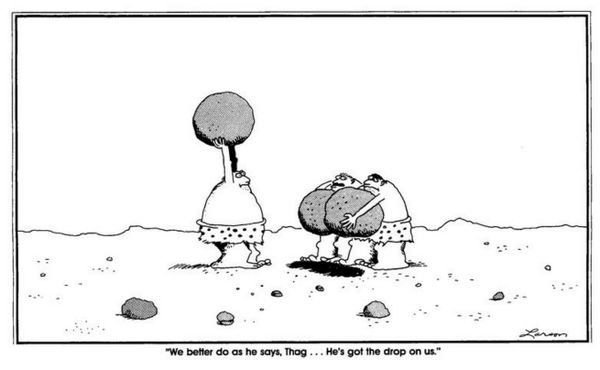
(3) Last question. If judges strike down a law that restricts judges’ authority to hold people in contempt, then they get to continue holding people in contempt. Right? Legally, they’ve “got the drop” on that law, right?

The Gulf of America, pt. 2


For the text of the executive order, click here.

Renaming the Gulf has one thing going for it, historian Greg Grandin comments.

♦ ♦ ♦ ♦ ♦

Re: oil spillage. This afternoon, while I was bottle-feeding Abel, Daniel got his mitts on our sesame oil. Let’s just say that the kitchen, hallway, and bathroom smell delicious now.

Actually, Daniel and Samuel were pretty good today. I’d worried because it was Karin’s first day back at work – my first full day alone with all three boys.

Daniel took a turn bottle-feeding Abel. He kept getting him to smile.

Abel has dimples.

Update: Samuel and Daniel both poured out the sesame oil. Samuel confessed.

They poured much of it onto Karin’s potted mint plant. That poor thing is subjected to unimaginable abuse. Yet it survives.

Body-text fonts, pt. 22: Caslon no. 540

“Colorado Supreme Court Disqualifies Trump from State’s 2024 Ballot.”

Another in a long list of amazing yet ho-hum headlines about Donald Trump.

♦ ♦ ♦ ♦ ♦

Congrats, again, to Alexander Domínguez for carrying Liga de Quito to a championship – this time, in the domestic league. He stopped two spot kicks in Liga’s shootout victory over Independiente del Valle.

The prodigy Kendry Páez scored IDV’s goal.

♦ ♦ ♦ ♦ ♦

At least four parties to go, and I’m already Christmas-partied out. The partying hasn’t been bad, but the gorging has been. For the first time in years, I’m repulsed by the prospect of eating cookies and potato chips.

Come to think of it, I ate cookies and potato chips today. At home.

♦ ♦ ♦ ♦ ♦

There are thinner and fatter Caslons; of the fatties, my favorite is Caslon no. 540.


The italics are … dramatic. Good for occasional emphasis; bad in bibliographies.


The dubiously named QualiType Caslan is a serviceably priced (i.e. free) imitation of this typeface.

Pre-gaming

On Sunday I’ll root for the Chiefs, but these Eagles seem terrific, so I’ll probably be entertained no matter who wins. I love it when the Super Bowl is contested by the two one-seeds.

In the 2010s, these Super Bowls were contested by both one-seeds:
  • Eagles and Patriots (good game)
  • Broncos and Panthers (bad game)
  • Patriots and Seahawks (awesome game)
  • Broncos and Seahawks (horror show, but very interesting – the Broncos set passing records while getting blown out)
(The games are in reverse chronological order.)

My inbox has been flooded with articles and videos whose subject is the NFL. Here are some of the best things I’ve looked at.

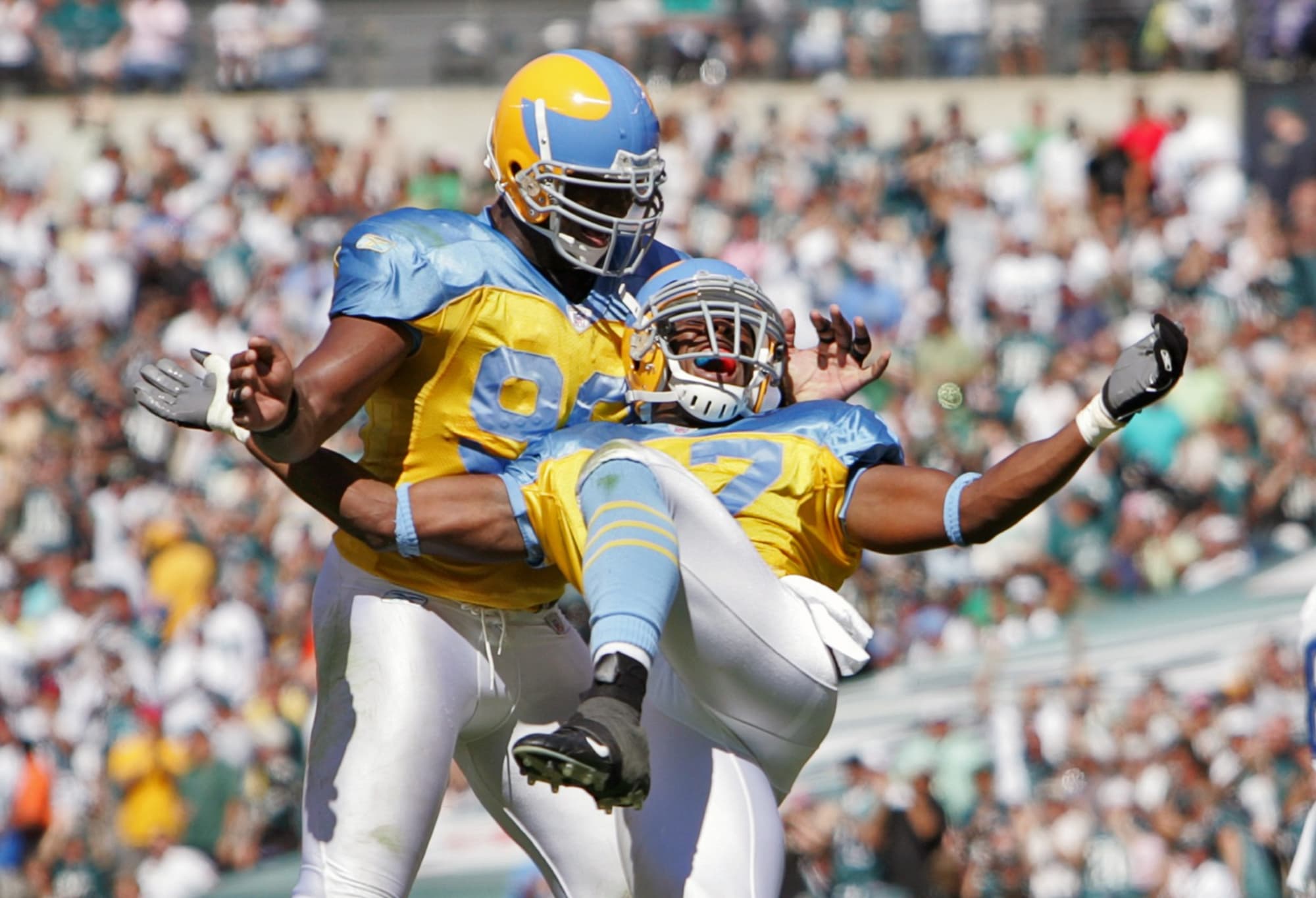
(1) A video of bizarre uniforms. The Eagles’ throwback uniforms of 2007 – which hearken back to the 1930s – might be the craziest NFL uniforms ever.

(2) Malcolm Butler recalls his great moment in the Patriots’ and Seahawks’ Super Bowl. That game was played in Arizona, in the same venue as this year’s Super Bowl.

(3) This article is about how Arizona was supposed to have hosted the Super Bowl in 1993 but didn’t do so. After that state refused to observe a holiday for MLK Jr., the NFL moved the game to California.

I have more to say about the encroachment of politics upon the sporting world, but I’ll wait until next time.

♦ ♦ ♦ ♦ ♦

What with its pageantry, the Super Bowl tends to get me thinking about war – this year, especially, because of a classic but currently unfashionable essay by William James, “The Moral Equivalent of War.” A pacifist, James concedes that war meets a real need felt by its advocates – a need that pacifists have had trouble acknowledging and which they certainly haven’t addressed in a compelling fashion.

The essay predates WW1. James doesn’t foresee that the martial values that he describes so well – hardiness, communal glory, individual subordination – would decline, or at least fall into some disrepute, as a result of the carnage of the twentieth century. But I think he is right that they are permanent, that they point toward things that are of essential significance for humans.

Toward the end of the essay, James tries to redirect the enduring militaristic impulses. He wants them to be productive, not destructive. He seems to have in mind ventures like the Boy Scouts or the (still-to-come) TVA. He says that he wants people to band together to fight against nature, not each other.

Again, he hasn’t had the benefit of witnessing the destruction of the Aral Sea – or, for that matter, that of the Great Salt Lake.

Nor does he foresee that martial itches would be scratched, at personal remove but with clinical efficiency, by such entities as the modern NFL.

Still, it’s a great essay.

To each his own

The chicken-and-beer diet: lose 15 lbs. in 40 days.

I’m not surprised. A half-chicken + Pit-Tatoes® (from Nelson’s) < 400 kcals.

Do you know what else is good? Pollo Gus.

♦ ♦ ♦ ♦ ♦

I read another great little Sciascia novel: To Each His Own (1966), which is as Chronicle-of-a-Death-Foretold-ish as The Day of the Owl. On the evidence of these two shrimpy works I’d say this guy should have been given the Nobel Prize.

“To each his own” is unicuique suum in Latin and a ciascuno il suo in Italian. Reading the book, it helps to know these phrases.


♦ ♦ ♦ ♦ ♦

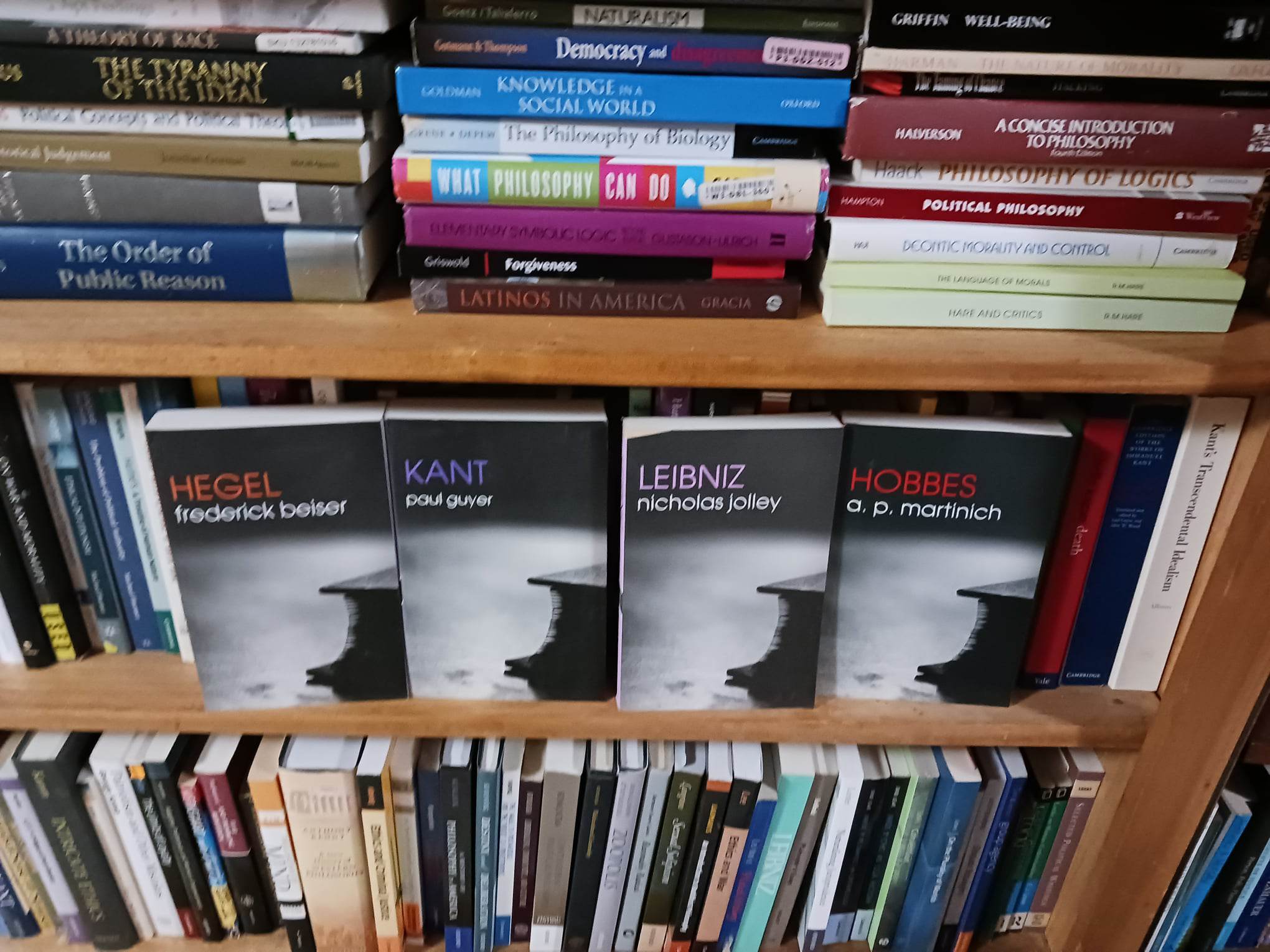
These volumes aren’t supposed to rest on the same shelf, but Samuel decided to line them up together. They do belong to the same series. (He must not have been able to reach the Locke book.)


I wish he’d organize his books.

Feliz cumple to Pervis Estupiñán who twice assisted Brighton & Hove Albion’s goalscorers today.

January’s poem

More raiding of government buildings. This time, in Brazil. Good grief.

Funny thing, Ecuadorians stage actual, effective coups, and I’m not always devoid of sympathy for the insurgents. Some day I really ought to work out the differences between the various cases.

♦ ♦ ♦ ♦ ♦

This month’s poem is by Los Tigres del Norte.

⎯⎯⎯⎯⎯⎯⎯⎯⎯⎯
Yo te regalaba todo
todo lo que me pedías
Sin embargo, me reclamas
(¡Y te daba hasta mi vida!)

Pero tú ¿qué me has dado?
Falsas promesas de amor
Pero tú ¿qué me has dado?
Golpes en el corazón

Yo te regalaba todo
Hoy reñimos (si te olvidas)
Salí mal con mis amigos
porque tú no los querías

Pero tú ¿qué me has dado?
Todo lo perdí por ti
Pero tú ¿qué me has dado?
Solo me has hecho sufrir

Para sanar las heridas
voy a buscar otro amor
Casi arruinaste mi vida
golpeando mi corazón

Yo te regalaba todo
Con mi madre discutía
Me quería abrir los ojos
Perdóname, madre mía

Pero tú ¿qué me has dado?
Falsas promesas de amor
Pero tú ¿qué me has dado?
Golpes en el corazón

Para sanar las heridas
voy a buscar otro amor
Casi arruinaste mi vida
golpeando mi corazón
⎯⎯⎯⎯⎯⎯⎯⎯⎯⎯

Pre-tourney gripes

As if we needed more scandal, the rumor spread on Twitter that supporters of Qatar bribed several Ecuadorian players to lose the opening match. The rumorer, a British-based Bahraini journalist, has been identified and discredited.

Still, it irks.

Meanwhile, The Guardian takes pot shots, as it has been doing since Russia and Qatar rather than England and Australia were awarded the hosting rights for the 2018 and 2022 tournaments. The paper now claims that this World Cup is a ruse for the host nation to be glorified through the Argentinian, Brazilian, and French players employed and rested by Paris Saint-Germain. (The club is owned by Qatari investors.) True or not, the criticism is silly. Is it really unfair that PSG should give Messi some days off before the tournament, when other clubs – and entire leagues – could protect their stars if they so chose?

Other criticisms of the host country, and of the social and political evils of global soccer, are more serious. Of these, some are better supported than others. The Guardian’s tally of deaths of foreign workers is especially contentious, yet it is cited without qualification by other mainstream publications, such as The Atlantic.

There is a lot of noise.

♦ ♦ ♦ ♦ ♦

I listened to an analysis by the Anglo-centric YouTube channel Tifo Football that got Ecuador’s tactics and personnel pretty wrong. I’m not saying we’re world-beaters or that we play the prettiest soccer, or even that we’re better than Qatar or Senegal or the Netherlands. But it’d be nice not to be slandered. When we lose possession, we don’t immediately stack our players behind the ball; on the contrary, we fight to quickly regain possession high up the field. And it’s Moisés Caicedo who attacks and Carlos Gruezo who drops back, not vice versa. Anyone who watches knows this. (This mistake would be less irritating if the analyst hadn’t just name-dropped Caicedo – a Premier Leaguer – as if he knew whom he was talking about.)

As regular readers know, this is the time when my thoughts and blogging are pretty well filled up by the World Cup.

The World Serious

This blog entry’s title is due to Ring Lardner, who, in my estimation, is the all-time greatest Son of Michiana (he was born in Niles and began his reporting career in South Bend). So much lore surrounds baseball, I wish I liked the sport. I try to watch some of the Serious each year, if only to root against the Yankees (or, lately, the Astros); often, I end up rooting against almost everyone in the stadium, but I do cheer for this or that player. A pitcher in his late, late thirties, usually. One who glares like Clint Eastwood.

This year, the Astros and the Phillies have split the first two games. It’s been exciting. (But then, watching homemade YouTube videos of marbles racing each other down the gutter can be exciting.) For reasons of moral decency, I want the Phillies to win, even though that Bryce Harper fellow carries himself obnoxiously and, let’s face it, the city’s reputation isn’t good. But perhaps virtue is irrelevant in the World Serious. The sport is hardly without blemish.

“How did MLB get to [the] point where no African American players on a World Series roster isn’t a surprise to many?” asks a Yahoo! columnist, inelegantly.

The answer: economics. “Baseball is a white, suburban game reinforced by foreign labor.” Clubs can pay to develop players, or the players can pay to be developed (I mean, their parents can pay). And so the players come from two sources: academies in countries like the Dominican Republic, where it is cheap for the clubs to operate; and domestic pay-to-play leagues, which are even cheaper, because the clubs don’t pay. Pay-to-play. What an idea. Not only is it exclusionary, it’s, like, one step removed from giving your money to a casino. There’s a lot of that around South Bend, and not just in baseball.

♦ ♦ ♦ ♦ ♦

South Bend novelist makes it big

Here’s a pretty typical “rags to riches” story for this part of the country. One parent works for a Catholic high school; the other works for Notre Dame. Kid gets free tuition. Skips town as soon as possible. Moves to New York, then Los Angeles. Writes debut novel about how challenging it is in the Rust Belt. Becomes establishment darling.

Back in South Bend, the dozen-plus copies in the library system are all in use. People here love to root, root, root for the home team.

Newpaper profile 1 (The Guardian).

Newspaper profile 2 (Los Angeles Times).

Library event.

Two R.I.P.s; October’s reading; my children

Two deaths: (1) the wonderful actor Robbie Coltrane; and, in May, (2) the legal, political, and moral philosopher Joseph Raz, whose important but tough-going oeuvre is now helpfully summarized at pp. 148–155 of this year’s Balliol College Annual Record. (Hat tip: Leiter. Included in the piece: an explanation of how the name “Raz” came to be.) I spent most of one semester of graduate school slogging through The Morality of Freedom. It would’ve been nice to have had this memorial essay to start off with.

♦ ♦ ♦ ♦ ♦

I’d intended, this horror season, to try out The Monk by Matthew Lewis; instead, I’m reading Dracula. I’d put it off for a long time. Now, I can report that, unlike Dorian Gray and Jekyll and Hyde, it’s pretty gripping. There’s genuine horror when Count Dracula is on the scene; there’s a lot of (vaguely troubling) hilarity when he’s absent. Karin was the impetus for this reading. She and her friend Nora have been keeping up with the Daily Dracula, a schedule based upon the dates of the letters and diary entries that make up the novel. Karin and Nora began reading in May and have been advancing at a snail’s pace; I’ll finish reading before they will. The story concludes in November.

I learned this amusing tidbit about Stoker:
In August 1894, at the end of a month-long stay to research his embryonic novel, Bram Stoker wrote in the visitors’ book at the Kilmarnock Arms on the Aberdeenshire coast that he had been “delighted with everything and everybody” and hoped to return soon. …

The feeling was not entirely mutual. Stoker, a genial Irishman usually known for his cheeriness, was experimenting with what would become known as “method acting” to get under the skin of his new character, one Count Dracula. … The author’s links with the London theatre inspired Stoker to try inhabiting his character in a different way.

According to his wife, Florence, everyone – including the hotel staff, and the locals – was frightened of him. He “seemed to get obsessed by the spirit of the thing,” she later said. He “would sit for hours, like a great bat, perched on the rocks of the shore, or wander alone up and down the sand hills thinking it all out.”
I got Karin to agree to watch Herzog’s Nosferatu when we have finished reading Dracula. I saw it many years ago. From what I can recall of it, it’s pretty faithful to the book.

I also am going to read The Island of Doctor Moreau.

♦ ♦ ♦ ♦ ♦

“Hi, there!” – Daniel’s first words? He seemed to repeat them to me immediately after I said them to him. (I don’t count Da, da, da, da, da – typical infantile babble.)

He crawls now, and he can pull himself up onto his feet and stand against the furniture. He also tries to steal Samuel’s food, although he has trouble eating it with his two teeth. Samuel also has trouble eating his food, due to his intense stubbornness.

Tabloids

May 6, 2023: coronation day for Charles and his Queen Consort. Mark your calendars. Who knows when another coronation will occur?
Palace insiders told the Mail on Sunday that the Duke of Norfolk … had been tasked with making it a simpler, shorter and more diverse ceremony that reflects modern Britain. “The King has stripped back a lot of the coronation in recognition that the world has changed in the past 70 years,” a source told the paper.

One change reportedly being discussed is for a more relaxed dress code, with peers possibly dressed in lounge suits rather than ceremonial robes.
… the Guardian says.
The government and royal household will be conscious of the scale of the coronation in the light of the cost of living crisis facing the country.
Such backhanded compliments are often in the news. Guardian readers do not esteem the Royals. Even so, they lap up their lives and rituals like cream. Papers like the Mail aren’t the only ones beholden to the monarchy.

The Guardian is happy to quote the King when it wishes to take shots at the Prime Minister. No one expresses withering, casual contempt better than a thorough snob does. That is one of the most serviceable functions of the aristocracy. Just as civilians need soldiers to fight invaders and police to keep criminals at bay, the people need kings and dukes to show the most exquisite disdain for the politicians they elect, for their fellow human beings.

♦ ♦ ♦ ♦ ♦

Barcelona and Inter contested a thrilling Champions League match yesterday.

Meanwhile, I was viewing a mediocre match between Rangers and Liverpool. I turned it off with less than half an hour to play. Liverpool had just gone up 3 goals to 1, and the benched Mo Salah was about to enter the game.

Much later, I found out that he scored thrice in six minutes. The match ended 7 to 1.

August’s poem (more Mother Goose)

A colleague of Karin’s asked if I fought in the Vietnam War.

I didn’t. I was born in 1981.

POTUS 45’s house was raided by the FBI. Makes you wonder where they got the warrant, Karin’s colleague said.

From the judge, Karin told him. (We don’t watch all those crime shows for nothing.)

On Facebook, one of my friends has been comparing Trump’s “martyrdom” to that of William Wallace, in Braveheart.

♦ ♦ ♦ ♦ ♦

R.I.P. Raymond Briggs, author-illustrator of The Snowman and other books, whose work I didn’t encounter until I had children. He illustrated a rather large volume of Mother Goose. Like Rosemary Wells, he got his texts from the Opies (Iona & Peter).


⎯⎯⎯⎯⎯⎯⎯⎯⎯⎯
There was a little man, and he had a little gun,
And his bullets were made of lead, lead, lead;
He went to the brook, and shot a little duck,
Right through the middle of the head, head, head.
He carried it home to his old wife Joan,
And bade her a fire for to make, make, make,
To roast the little duck he had shot in the brook,
And he’d go and fetch her the drake, drake, drake.
⎯⎯⎯⎯⎯⎯⎯⎯⎯⎯


I am now going to discuss some formal qualities of this fine poem, which I hardly ever do; my remarks will be obvious ones. Each odd-numbered line slant-rhymes its own middle. But the even-numbered lines don’t just rhyme each other: they beat their ending-sounds to death. The effect is tidy and off-kilter – and almost sickeningly jaunty for something that treats the cold-blooded murder of little animals.

Briggs’s (Quino-like) drawing of the bullets replicates this monstrous jollity.

The Opies transcribed lots of chants used for schoolyard games like “Miss Suzie,” jumping rope, etc. This poem has a similar feel, though I’d lay ten to one it was written by an adult.

Fantastic beasts

Here is an interesting note about the Ukrainian artist Maria Prymachenko. It says that her themes and artistic style, as well as her country’s circumstances, were similar to those of Pablo Picasso. (Picasso, it turns out, admired Prymachenko.)

Not an outlandish connection; but right now, I’m primed to associate Prymachenko’s art with Blake’s paintings of fantastic beasts.

(As I’ve mentioned here and here, the Polish writer Olga Tokarczuk has explicitly connected her own work with Blake’s.)

♦ ♦ ♦ ♦ ♦

An update on our infestation:

Jasper has caught and killed three mud-room mice.

Ziva also has been hunting. She caught a mud-room mouse and brought it into the house. It ran away before she got around to killing it, though.

Since then, we haven’t seen any trace of that mouse. It probably didn’t survive long.

Karin found the hole in the mud-room through which the mice have been entering from the yard. We’ll put copper wool over the hole. That should keep them out.

Pre-sleep, pt. 2

Having run laps through the house the previous half-hour – and much of the day – Samuel sleeps. Karin snaps this photo:


He is running laps again this morning; and on his own initiative, he has graduated from the aforementioned biography of Agatha Christie to my prized coffee table book, Agatha Christie: The Art of Her Crimes: The Paintings of Tom Adams. (Adams and the mystery writer Julian Symons comment on Christie in the book; samples of Adams’s cover art are on this Pinterest page.) I have misgivings. The boy handles books rather well, but every month he does tear a couple of pages out of this or that volume. And he always has peanut butter on his hands.

I’ve given up calling him when it’s his nap-time. I simply take a book to another room, put on music, and wait for him to wander over.

♦ ♦ ♦ ♦ ♦

The boy: “Some pizza?”

John-Paul: “We don’t have any pizza.”

The boy: [Cries.]

After this exchange is repeated several times, he comes around to thinking it’s a big joke. He laughs every time I say, “We don’t have any pizza.” Then, more realistically, he says:

“Some beans?”

“Some eggs?”

I am happy to oblige.

Benton Harbor and Saint Joseph; Sample Street

Benton Harbor, Michigan, and St. Joseph, Michigan – adjoining cities one county to the north of us – are featured in this Guardian report. And not for a very lovely reason.

♦ ♦ ♦ ♦ ♦

Fall’s equinox will occur tomorrow. After several bright, hot days, the weather is obligingly misty.

My dad and I moved a carload of books to my new house. We rode along Sample Street, which goes in a straight line forever. One side is bleakly industrial; the other, bleakly residential. The street is dotted with sad little shops and gas stations.

More than any other part of South Bend, this area reminds me of the grim outlands of southern Quito.

When I was younger, I would project a certain romantic feeling onto such places. I guess I still do; but now I face the prospect of spending the rest of my life in one. (Or very near to one; the house’s immediate surroundings aren’t quite like this.) I am a little too old, and too tired, to relish this possibility.

1996, the best year in movie history, pt. 42: La cérémonie

I’m in no hurry to watch all the movies of Claude Chabrol, fascinating though they are. His is a nasty sort of oddness, a peculiarly repulsive amorality. The characters’ depravity is very gradually drawn out, with an effect less horrific than disgusting, as if we’d been led through a well-tended garden to be shown a dead rat.

The other day I saw, on some train tracks, a raccoon’s body neatly sliced in two. Chabrol’s movies feel like that. They even have titles like “A Girl Cut in Two” and “The Butcher.”

La cérémonie, elegant, streamlined, is no different. As Roger Ebert tells us, “The French have a name for the events leading up to death by guillotine. They call it ‘the ceremony.’”

So, in this movie, we have: (A) the exploiters: an industrialist, his pampered wife (an art-dealing ex-model), and their privileged, complacent children; and (B) the proles, played by two splendidly inscrutable actresses: Sandrine Bonnaire as the family’s quiet housemaid, and Isabelle Huppert as the postmistress, the housemaid’s aggressively disreputable friend. Chabrol has said that this is a “Marxist” movie. To what extent should we agree? Yes, there is a revolution; but are these revolutionaries the properly Marxian sort? If the housemaid and postmistress do belong to any Marxian category, they must be lumpenproletariat – the lowest of the low, the bottom-out-of-sights – even though they have jobs and don’t look down-and-out. They are antisocial criminals, rejected by and rejecting everyone else. Marx had little use for such people.

So, yes, Chabrol may be sneering at the upper classes, but perhaps he also is sneering at Marx and at other proponents of revolution. In this movie the rich are condescending and snobbish, but those who overthrow them have even less human feeling, and their actions are monstrous. If Chabrol is taking a side, which is it? Or does he just like to wallow?

Reviewers acknowledge the class conflict to dismiss it. The key dynamic, they insist, is psycho-sexual: the brash postmistress takes over the will of the weakminded housemaid.

I am not convinced. The housemaid may be illiterate, but she is no pushover. In the source novel, Ruth Rendell’s A Judgement in Stone, the housemaid clearly is the stronger figure.

In both the novel and the movie, the postmistress is pretty silly, but the housemaid is about as silly as a cancer.

The novel (set in Britain, not France) begins like this:
Eunice Parchman killed the Coverdale family because she could not read or write.

There was no real motive and no premeditation. No money was gained and no security. As a result of her crime, Eunice Parchman’s disability was made known not to a mere family or a handful of villagers but to the whole country. She accomplished nothing by it but disaster for herself, and all along, somewhere in her strange mind, she knew she would accomplish nothing. And yet, although her companion and partner was mad, Eunice was not. She had the awful practical sanity of the atavistic ape disguised as a twentieth-century woman.
Interpreted psycho-sexually, the movie fits into the tradition I discussed in my review of Normal Life. Interpreted in terms of class struggle, it is more like Parasite.

Only, Parasite is more straightforward and, in a way, more hopeful. It’s understandable enough for the classes in Parasite to exploit each other for their own gain. This is a problem that can be addressed.

The vengeance in La cérémonie is much bleaker.

The costs of not conforming

Ghost World at 20” – an essay in The Guardian about one of the best movies I’ve seen. The hard truth that confronts Enid (Thora Birch) and Rebecca (Scarlett Johansson), two recent high-school graduates, is that in life there are “two basic options: conform or not conform”:
It’s heartbreaking for Enid to learn, over the course of the film, that she and Rebecca don’t share the same answer to that question. When they meet Seymour (Steve Buscemi), a middle-aged record collector with a crummy shared apartment and no romantic prospects, it’s like a visitation from the Ghost of Nonconformist Future. Rebecca recoils in horror. Enid is intrigued.
The movie then details the costs of not conforming. Squalor. Perpetual uncertainty. Ostracism. Alienation. The death of friendship.

Yup, that’s how it is.

I think this is one of the wisest movies, one that understands this basic human predicament.

Roger Ebert’s review.

Meanwhile, in Ecuador …

On Sunday, Ecuadorians voted.

Andrés Arauz is the candidate of the correístas, the followers of that notorious ex-president, Rafael Correa. Arauz received the most votes of all the candidates, but not enough to win outright. A runoff election on April 11 will determine who becomes the new president.

Arauz’s opponent – Sunday’s runner-up – is TBD.

There are two contenders. One is Yaku Pérez, of Pachakutik (the indigenist party). The other is the 2017 runner-up, the banker Guillermo Lasso, who trails Pérez by less than one percentage point.

(Only the top two vote-getters will qualify for the next round. The rules are explained here.)

El Universo’s map of results shows the election playing out along ethnic lines. Pérez leads in virtually every province that has a large percentage of indigenous voters. Elsewhere, Arauz leads. Lasso is ahead only in Pichincha (the capital) and in sparsely populated Galápagos.

(Votes, not provinces, are what matter. Looking at provinces just helps us to understand regional and demographic trends.)

My hunch is that if Lasso were edged out, his supporters wouldn’t turn to Pérez in large enough numbers for Pérez to surge past Arauz in the next round (though Lasso himself would endorse Pérez over Arauz). Similarly, should Pérez fail to qualify for the runoff, his voters wouldn’t likely favor Lasso enough for Arauz to be defeated.

I have left thirty percent of the voters unaccounted for: those who didn’t choose any of the top three candidates. There is reason to think that those favoring Xavier Hervas, the next highest vote-getter, would migrate to Pérez (Hervas’s fellow lefty). Even so, I believe that Arauz will win in the second round.

I’m not at all optimistic about the correístas’ ability to govern. In the past, they have practiced gross patronage. Their economic strategy has been to take oil from indigenous peoples’ lands in order to pay for handouts and public works (and white elephants).

Anti-correístas, though, are in the curious position of having to promote aspects of both the free-market agenda (Lasso’s) and the ecologically-minded, “plurinationalist” agenda (Pérez’s) over that of Arauz, who is arguably the centrist among the three candidates. This is because any joint effort to defeat the correístas will have to bring opposite sides together.

Meanwhile, the international press seems not to have as much to say as in 2017. My mother did send this rather bizarre story from The Guardian detailing the connections between a smear campaign, birdsong, and Colombian guerrilleros. And this report from CNN gives a sense of the appeal of Pérez, the election’s dark horse.