Posts

Showing posts with the label Linda (Aunt)

World Cup groups

… have been drawn. Gratifyingly, there are no weak groups: all are groups “of death.” Literal death.


Just kidding. These are not the groups. (Besides, the tournament has been expanded from 32 to 48 teams.)

(I should acknowledge that I didn’t create this image; I found it on the Internet.)

The actual groups are these:

Group A
Mexico
South Africa
South Korea
TBD: Czechia, Denmark, Ireland, or North Macedonia

Group B
Canada
TBD: Bosnia & Herzegovina, Italy, Northern Ireland, or Wales
Qatar
Switzerland

Group C
Brazil
Morocco
Haiti
Scotland

Group D
USA
Paraguay
Australia
TBD: Kosovo, Romania, Slovakia, or Turkey

Group E
Germany
Curaçao
Ivory Coast
ECUADOR

Group F
The Netherlands
Japan
TBD: Albania, Poland, Sweden, or Ukraine
Tunisia

Group G
Belgium
Egypt
Iran
New Zealand

Group H
Spain
Cape Verde
Saudi Arabia
Uruguay

Group I
France
Senegal
TBD: Bolivia, Iraq, or Suriname
Norway

Group J
Argentina
Algeria
Austria
Jordan

Group K
Portugal
TBD: DR Congo, Jamaica, or New Caledonia
Uzbekistan
Colombia

Group L
England
Croatia
Ghana
Panama

Locations and times have been decided, too. Ecuador will play in: Philadelphia, against the Ivory Coast; then, Kansas City, against Curaçao; and lastly, East Rutherford, New Jersey, against Germany (in what will be Ecuador’s first World Cup rematch; the countries first played in 2006).

Our Aunt Linda in K.C. is keen to host any relations who’ll attend the Curaçao game. But tickets are rapaciously expensive. I can’t imagine I’ll attend unless I win a sweepstakes out of a cereal box.

Besides, if I travel to K.C., I’ll have to spend precious hours away from the television. I’ll miss Japan vs. Tunisia or some other partidazo.

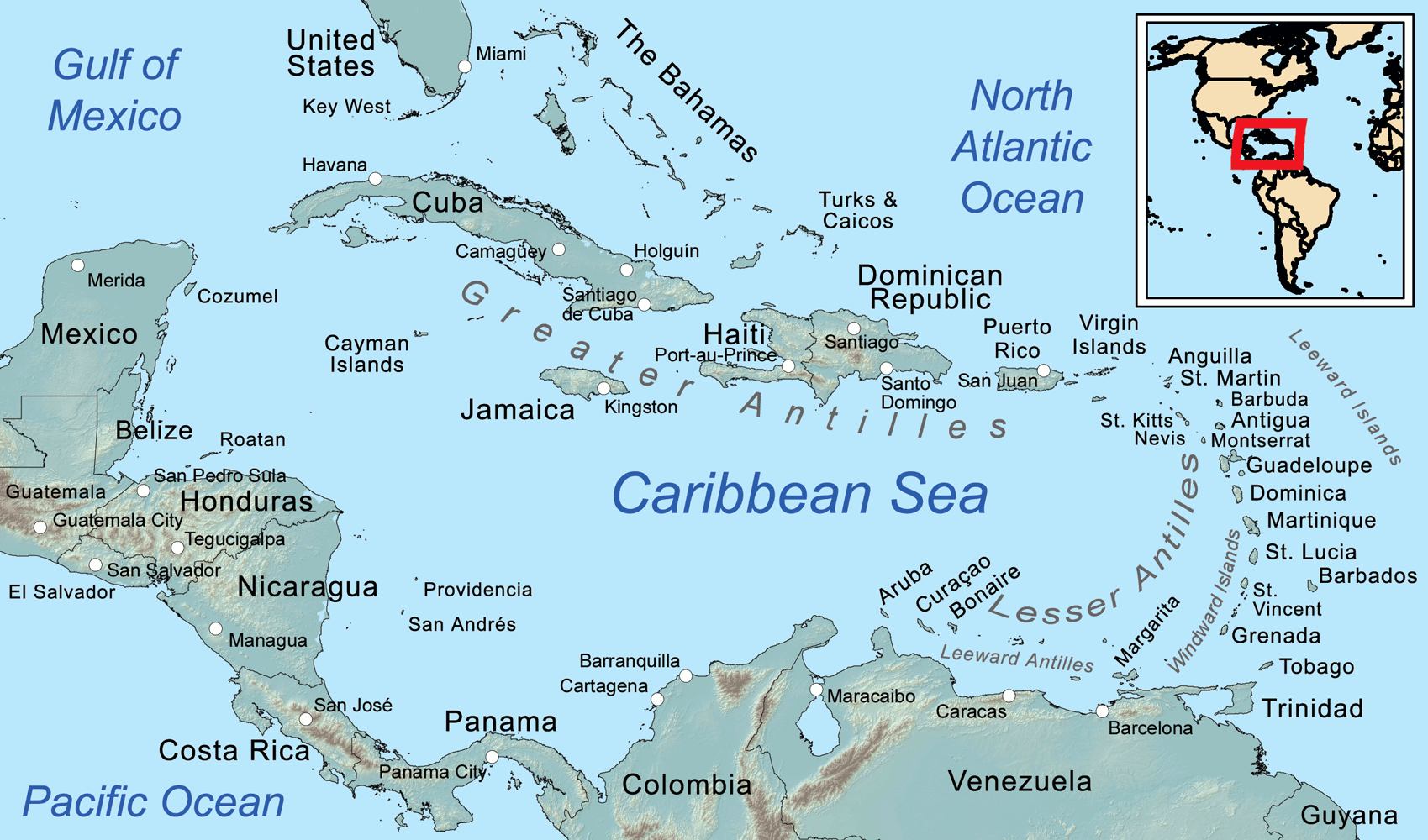
A note on Curaçao, the smallest nation ever to qualify for a World Cup. This hardly ever happens, but … I didn’t know Curaçao’s location on the map. I knew that Curaçao is one of the Dutch Antilles, but, mentally, I grouped it with islands southeast of Puerto Rico. Actually, it’s off the coast of Venezuela – practically in South America.

I’m ashamed not to have known this. In my defense, Curaçao became a sovereign nation only in 2010.

Inflation; remembering the Holocaust; I am a V.I.P.

Karin went to the grocery store. A man in the bread aisle turned to her.

Man: “It’s all so damn expensive!”

Karin: “It’s pretty bad.”

“This is my first time shopping in ten years!”

“It must be bad.”

♦ ♦ ♦ ♦ ♦

As I type, I am listening to a long phone message from the local superindentent of schools urging us all to think about the Holocaust. Appropriately, my mother-in-law just returned my copy of Maus. I’d lent it to her to read to her current foster son, a highschooler whose plan of care includes being read to. He’d been objecting, reasonably enough, to the children’s books my mother-in-law had been reading to him. I suggested Maus. He liked it at first but later refused to sit next to my mother-in-law to look at the pictures. “And it’s pointless to read a graphic novel to someone who won’t look at the pictures,” my mother-in-law explained.

Some future Holocaust reading (for me):

Our Nazi (reviewed here).

Diaries of Victor Klemperer (hat tip: my cousin-in-law Peter and his Facebook friends).

Arendt’s Origins of Totalitarianism (this has been scheduled by my reading group).

♦ ♦ ♦ ♦ ♦

Samuel chose me to accompany him to today’s “V.I.P. breakfast” at his school. The scholars ate fruit and cheese. The grownups had coffee and donuts. They sat at cafeteria tables with their children. I stood while Samuel ran laps around me. “Take me to your friends,” I told him. He’d guide me within five feet of this or that child. Then he’d laugh and run away. I couldn’t always tell whether the child was his classmate.

A few parents introduced themselves. “My child often talks about Sammy,” they’d say. Most parents just looked at us as if we were deranged.

One child (not acquainted with Samuel, apparently) had smuggled Lego bricks into the cafeteria. Samuel kept trying to run away to play with those toys. The mother covered the Lego bricks with a jacket. Samuel lifted the jacket to get to the Lego bricks. I dragged him to the picture-taking area. We posed with an inflatable donut. Samuel took me to his classroom. His teacher put him right to work, and I went home.

Behold him watching football, earlier this week, with his abuelos and his Grandaunt Linda (a rabid Chiefs fan).

My hometown

Samuel, I regret to say, has identified himself with a certain fictional character: Calvin, of Calvin and Hobbes. “Greetings, my name is Calvin,” he proclaims. “GREETINGS, MY NAME IS CALVIN. Ha, ha, ha, ha, ha!”

They do look alike.

♦ ♦ ♦ ♦ ♦

Aunt Linda – my parents’ oldest sibling – is visiting from Missouri. Samuel and Daniel are turning on the charm for her. My parents are at our house, too.

They reminisce about the Ecuador of the 1950s and 1960s. My dad talks about the night his family’s house in Esmeraldas burned down because a kerosene lamp was lighted with what turned out to be gasoline. After the fire, my dad’s family had to stay over with some missionaries who lived on the plot of land where, eventually, the Hotel Cayapas was built. I don’t envy my dad’s family their ordeal, but I am slightly intrigued. I grew up a block from the Hotel Cayapas; it was one of the fixtures of my childhood; it seemed the height of luxury and class (the grass in its yard was cut silently, with a reel mower, by a starched-shirted worker). I ate in the restaurant once or twice and dreamed of spending a night in the hotel. My dad slept there – or on the same land – during his family’s time of greatest need.

It’s strange to think of the hotel not existing. But, of course, travel to Esmeraldas was hardly easy in those days; vacationers certainly didn’t flock there.

♦ ♦ ♦ ♦ ♦

In theory, it wouldn’t be very hard for me to sleep in the Hotel Cayapas now. I look it up on Kayak: a night’s stay costs a little over $50. The hardest part would be traveling to Ecuador. The second-hardest part would be to avoid being kidnapped or killed. In recent years, Esmeraldas has become a hub for foreign drug cartels and their domestic recruits and conscripts.

When I was growing up, I’d go to sleep listening to the loud music of the discotheques on the beach. Now, because of violent crime, that nighlife has pretty well ceased. In the 1980s and early 1990s, that was unthinkable: that sort of thing only happened in Colombia, and Esmeraldas always would be a party town.

A day-trip to Wheaton

Yesterday, I traveled with my parents to Wheaton, Illinois. Brian was graduating from college. He is my youngest cousin. I hadn’t seen him since he was a year old; he grew up in Indonesia.

He was very pleased to meet me, and we were immediately photographed together (I don’t have the picture). Then, we hardly spoke to one another. He is a pleasant young man, but very quiet. I am unpleasant, and also rather quiet.

Here Brian is with his parents, my Uncle Tim and Aunt Aphing (Ah-PING).


(My Uncle Tim is my mom’s brother.)

My Aunt Linda and her daughter, my cousin Tanya, visited from Kansas City.

Aunt Aphing served lots of good Indonesian food. But there weren’t enough seats at the table.

“Where will Brian sit?”

Aunt Aphing: “In his room.”

“But this meal is to honor him!”

Aunt Aphing: “But you are the guests.”

Brian and Aunt Aphing ended up eating in the kitchen, on barstools.

Not all of us went to the ceremony. Tanya and I stayed at home and read detective stories. Later, we livestreamed the ceremony, and my dad joined us. The greatest applause was for the ROTC graduates – which my dad thought bizarre (“at Wheaton, of all places,” he said); I thought it perverse but typical.

Watching this ceremony – and the baccalaureate religious service, earlier in the day – I was strongly reminded of Quito’s English Fellowship Church, in which North American missionaries would gather to use their mother-tongue. Wheaton’s organ music surely helped to remind me of the EFC. But the whole vibe of the place was familiar.

Wheaton’s evangelicals are more straitlaced, more prim, than those with whom I now associate in the United States.

Billy Graham was mentioned during the ceremony, of course, as were the famous missionary martyrs of 1956.