Posts

Showing posts with the label children

April’s poem

Whenever we open the front door, Daniel – clothed or unclothed – runs outside and hollers:

Owwweee-ah-ee-oh! Owwweee-ah-ee-oh!

I was puzzled for weeks but finally came across the source: a scene from Peppa Pig. Peppa, her schoolmates, and their teacher, Madame Gazelle, travel to the Swiss Alps; Peppa’s voice echoes off the mountains; Madame Gazelle demonstrates yodeling to her charges. Later, they pitch their tents and sing campfire songs.

Daniel loves this sort of thing. He also enjoys Story Hour at the library. He’s ripe for pre-K.

He’s fairly advanced, mathematically, too.

If only he’d behave.

This month’s poem is from Peppa Pig.

⎯⎯⎯⎯⎯⎯⎯⎯⎯⎯
Peace and harmony
In all the world
Peace and harmony
In all the world
Peace and harmony
In all the world
Peace
And harmony
⎯⎯⎯⎯⎯⎯⎯⎯⎯⎯


I’m glad that Daniel watches Peppa Pig, a calming influence.

A long-awaited stroll; a latitude, hydrological divides, and other fancies

Snow: mostly melted. Temperatures: in the fifties (F); sixties tomorrow. I take Abel and Daniel strolling. Daniel jumps in all the puddles. He soaks the insides of his boots. I don’t know what he’ll wear if we go out again very soon.

Abel, in the stroller, leans forward, his head as near to the ground as he can get it, as if he were peering into tidal pools.

I halt to check if he’s all right; Daniel races ahead.

♦ ♦ ♦ ♦ ♦

Fun fact I just learned: Canada’s lowest latitude passes through South Bend just a few blocks north of Toad Hall.


(Toad Hall is our house.)

I could pinpoint the location, stroll there, and hop back and forth over the line. “Now I’m south of all of Canada. Now I’m north of a little of Canada.”

I suppose the urge is due to having grown up near the equator.

♦ ♦ ♦ ♦ ♦

I could do this with the nearby drainage divide, too. “Now I’m daining into the Great Lakes. Now I’m draining into the Gulf of Mexico, I mean the Gulf of America.”

It seems a less arbitrary line since it has a basis in physical rather than political reality – until I remember that the Great Lakes drain into the St. Lawrence River and thence into the Atlantic, which encompasses the Gulf of Mexico (I mean, America). So that, ultimately, the distinction between these drainage basins is artificial.

Of course there’s a physical difference between draining one way and draining the other, but if you mark all such differences you end up with insignificant, postage stamp-sized drainage basins.

Artifice – human purposiveness – seems inescapable if much geography is to be done at all.

I remember checking out geography Ph.D. programs when I was very young. There was the respectable but daunting meteorology specialization; all else seemed postmodern free-for-all. A bitter disappointment to someone who’d vaguely entertained the thought that his vocation might consist of memorizing picturesque but unimpeachable facts, e.g. that Czechoslovakia’s capital is Prague.

Self-care checklist

Things I didn’t have time for yesterday, due to parenthood: (I don’t “Wordle.”)
  • showering
  • reading
  • posting
Once the children had started dropping off to sleep, I drafted a tedious account of the night’s culinary failure. But I couldn’t bring myself to post it. Even my banality has limits.

I slept well for a change. I awakened with time to spare, and now I’m posting first thing this morning. Or, rather, sixth thing. The routine must be maintained, or the ship goes to pieces.

That’s not true.

About those Internet puzzles. When you solve one, you want to solve another. Then another. Then you start looking around for other puzzles. It could go on indefinitely. When the urge is very strong, I give myself the equivalent of a cold shower: I take the “Agatha Christie Novels” quiz. And if that doesn’t cure me, I do a crossword. That usually tires me out.

Well, I must stop now. We just opened a bill for $888, for an emergency-room procedure that took 20 seconds and, due to insurance, should have cost $0. I must make a call.

Sweet teeth

For the longest time, Abel had just two teeth, and then this week four more broke through the top gum. How long he’ll keep them is anyone’s guess. We trunk-or-treated last night at the school where my brother Stephen teaches, and I was amazed that so many of the teachers tried to give Abel candy. (He’s only ten months old.) Afterward, as we waited in the McDonald’s drive-thru, Samuel told us that children eat McDonald’s at school on their birthdays. I’m skeptical, but it’s within the realm of possibility. (For his upcoming birthday, he’s asked for McDonald’s, chocolate cake with icing, and a piñata.) Daniel ate sweet toast for breakfast today, like most days, and then asked for ice-cream. I held him off fairly comfortably by pointing out that he’d only eaten half of his toast.

Abel’s pediatrician told me that children’ll eat anything until they start eating sugar, and then that’s all they’ll want.

♦ ♦ ♦ ♦ ♦

Karin uses Duolingo (an app, if you didn’t know) to practice Spanish, Welsh, math, chess, and sometimes piano. The sentences for practicing Spanish are like a high school/​Almodóvar melodrama.
No saldré con él si usa ropa anticuada (I won’t go out with him if his clothes are out of date).

Todas mis amigas son lesbianas (all of my woman friends are lesbians).
Some Welsh sentences, translated:
Owen is eating parsnips in the rain.

After the dragon had eaten Owen, it went to Cardiff.
See this compilation. A literature grad student ought to publish a paper about national stereotyping in Duolingo. But isn’t that what the app is for? When, really, will we have occasion to meaningfully use Icelandic or Korean? Isn’t mental tourism the point?

The inner ring

It seems these days I have to read the New York Post for good news.


(She had a baby.)

♦ ♦ ♦ ♦ ♦

My kindergartener is trendier than I am.

At the library, Samuel started singing “Soda Pop” from Netflix’s KPop Demon Hunters, and some middle schoolers joined in. Glances of mutual recognition passed between Samuel and the middle schoolers.

It was suddenly clear that I was “out” and they were “in.” It evoked a feeling described in C. S. Lewis’s “The Inner Ring” (which I happened to be reading).

I didn’t mind being “out,” but it was all too gratifying to see my child “in” with his betters.

He doesn’t care about being “out” or “in.” He just likes having friends.

He checked out this book because the girl on the jacket reminded him of a friend.


Karin met other friends of Samuel’s today. She took time off from work and joined his class on a field trip.

“It’s my mom!” Samuel told everyone. “And it’s her birthday!”

Happy birthday, Love.

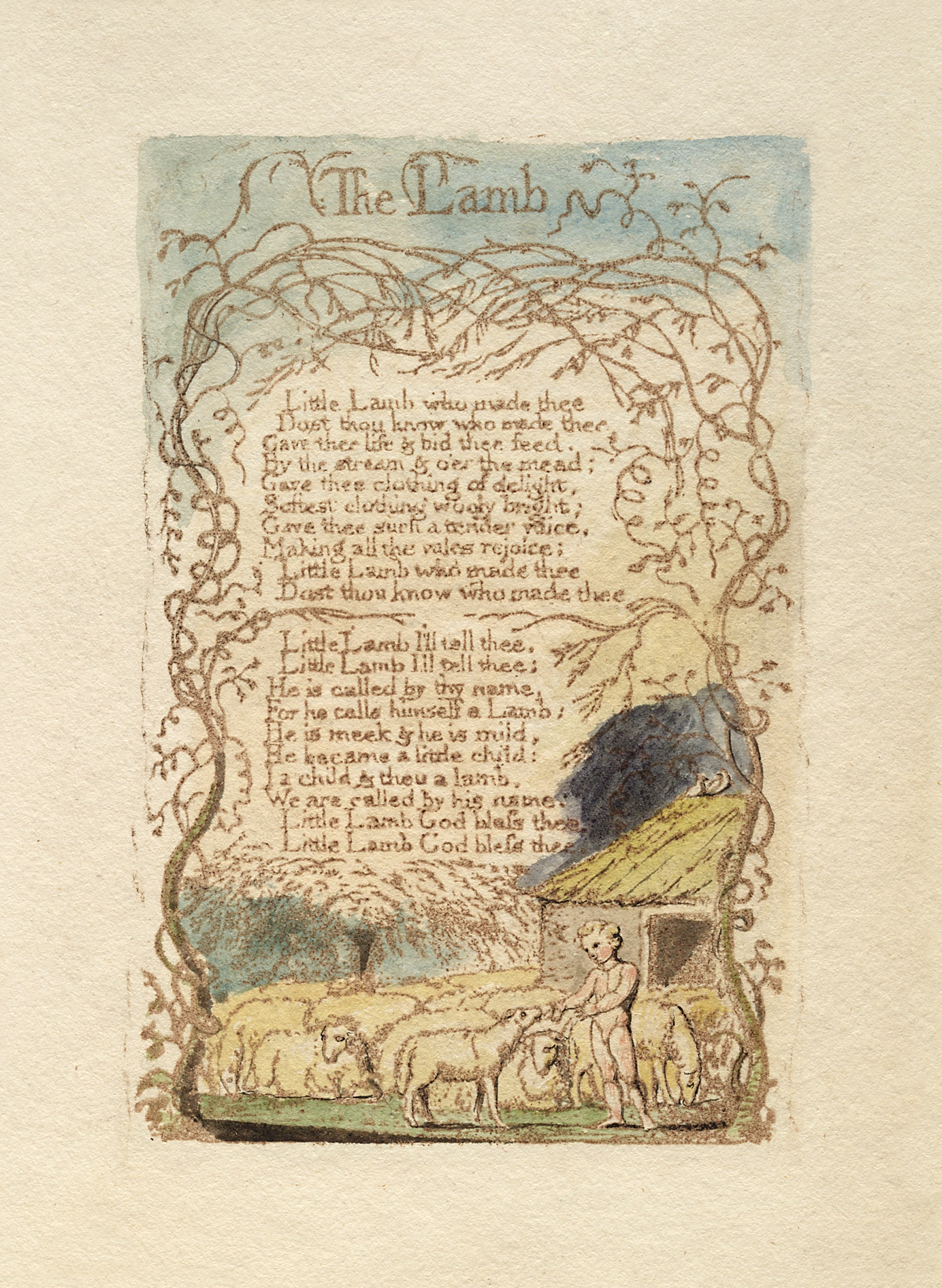
June’s poem

⎯⎯⎯⎯⎯⎯⎯⎯⎯⎯
Little lamb, who made thee?
Dost thou know who made thee,
Gave thee life, and bid thee feed
By the stream and o’er the mead;
Gave thee clothing of delight,
Softest clothing, woolly, bright;
Gave thee such a tender voice,
Making all the vales rejoice?
Little lamb, who made thee?
Dost thou know who made thee?

Little lamb, I’ll tell thee;
Little lamb, I’ll tell thee:
He is callèd by thy name,
For He calls Himself a Lamb.
He is meek, and He is mild,
He became a little child.
I a child, and thou a lamb,
We are callèd by His name.
Little lamb, God bless thee!
⎯⎯⎯⎯⎯⎯⎯⎯⎯⎯

(William Blake)

1996, the best year in movie history, pt. 86: The sweet hereafter


The spiderbitten little girl peers up at her father as he rides with her to the hospital. With one hand, he calms her; with the other, he grasps a knife to cut her throat that she might breathe, that he might not lose her. The girl survives. She grows up and addicts herself to drugs. Her father effectively loses her anyway. He’d once hoped for happiness with his daughter (and with her mother, from whom he also is estranged).

He thinks of the girl as he travels to a remote British Columbian town. A lawyer, he is recruiting plaintiffs for a class-action suit regarding a deadly schoolbus accident. Courting each household in turn, he trots out tired arguments for holding someone accountable, preferably a deep-pocketed entity, a municipality or a corporation rather than an individual. The more nebulous the scapegoat, the more eagerly the victims’ parents join the suit. They’re angry at a universe that has frustrated their expectations for their children, for themselves. (Just one parent resists this way of thinking. He already has had to grieve for a dead wife.)

Movies about grief are the hardest to watch. This is a hard movie. There are passages of startling beauty – flashbacks. They are not comforting. The camera hovers over wintry mountains and rivers, tracking the school bus as it wends toward disaster. Children play. They sleep. A teenager sings sweetly. The memory of these things is not sweet. All is embittered by the knowledge of how these lives will end.

The most piteous character is the lawyer (Ian Holm). The dark implication of his story, if I interpret it correctly, is that losing one’s children is the norm. They needn’t die; alienation suffices. But then, who’ll pay? Whoever is left to pay. Spouses. Neighbors. One’s town. Those with whom one does business. Anyone. The universe. Harboring vengeful thoughts, one becomes the prey of those who traffic in vengeance. The traffickers themselves are in vengeance’s thrall. This is this lawyer’s affliction.

The movie doesn’t object to vengeance as such. One character obtains it, and perhaps rightly: the teenager who sings so sweetly. The actress, Sarah Polley, performs a remarkable about-face. She is winsome, then ice-cold.


Maimed but not killed in the accident, this girl obtains new clarity about the false hope and love that her father (Tom McCamus) instilled in her. She avenges herself on him – and on the town. Arguably, her victims deserve their punishment. We have seen the town’s loyal spouses and its cheats, its wonderful parents and its abusers, equally bent out of shape by grief, equally desirous to inflict damage on third parties. One suspects that they grieve as much for their own frustrated ambitions as for the loss of their children. He would have been a good man, one townsperson, a sympathetic figure, says of a particular dead boy. Maybe so, but this child’s goodness, his special worth to others, is beside the point. The death of the unattractive “slow” boy is just as grievous.

Grief’s piteous distortions on the mind were previously studied in director Atom Egoyan’s great Exotica (1994). The Sweet Hereafter (1997) is interested in these, and in communal distortions. The movie quotes Robert Browning’s “Pied Piper,” in which a selfish town’s children are lured away, leaving the adults bereft. The poem’s significance for the movie is a complicated question. (Egoyan adds lines of his own.) But one clue is that it’s a poem about a community, not just one parent or family. One’s children, one’s hopes, even one’s grief – these things are not one’s exclusive property. Everyone participates.

Throw a kiss, Harry

Samuel’s first spring break. We didn’t go out of town, but we did take the boys to the local Bricks & Minifigs store. I’d never seen them more excited to be anywhere. It’s a pleasant store: clean; well-lighted; not overwhelmingly full of merchandise; inexpensive, as long as one can keep from going hog-wild.

The cashiers were a couple of sad-sacks. Not just bored: despondent.

♦ ♦ ♦ ♦ ♦

The more time I spend with children, the more I marvel at the lifelikeness of Mary Chalmers’s Throw a Kiss, Harry.

Read it here. This is the bowdlerized version from the ’nineties. It’s the version familiar to our household.

The original version, from the ’fifties, is even truer to life: Harry’s mother casually threatens to spank him.

Whether they actually spank or not, parents’ll recognize how tempting (and gratifying) it is to threaten retribution.

Children are simultaneously so naughty and so adorable, so ornery and so affectionate. These are the truths that Throw a Kiss, Harry understands.

The “51st state,” pt. 2

A message from my high school French teacher and gentle fellow blogger, Madame Lorrie:
Good evening, JP – I just read your recent post regarding our sovereign nation. Most Canadians are spitting angry at the US President. I am one of them. We are refusing to purchase goods made in the USA, even groceries, which makes for some creative shopping. Stores are responding and are sourcing fruits and vegetables from countries other than the US with great success. We will not be traveling to the US for the foreseeable future.

I do thank you for the link to the list of Canadian literature. I have read 18 of them, mostly the fiction works, in my CanLit courses and my French courses. Alligator Pie is a fun book that my grandchildren enjoy listening to. Lots of rollicking rhythm and pure silliness that makes us all giggle.

We will not be conquered!

Hope you and your family are doing well.
I really ought to set up a decent commenting function for this blog.

Madame always was the best commenter.

Bless Canada. And Panama, and Greenland (and Denmark).

P.S. And Gaza. And Ukraine.

I shudder to think what other places will be added to the list.

The scholar, pt. 5: “Another one rides the bus”

At last, Samuel has been assigned to a school bus route.

♦ ♦ ♦ ♦ ♦

I took him outside this morning. We waited by the curb, in the dark.

Then the bus flew past us on a different street.

Maybe he’ll get to ride the bus to school tomorrow.

♦ ♦ ♦ ♦ ♦

He did make today’s return journey on the bus.

Daniel and I sat in lawn chairs on the front porch and waited for Samuel to arrive. When the bus pulled up, all the windows but one were empty … and there was Samuel’s curly head. There were his big eyes, staring out expressionlessly.

I was so proud of my little son for enduring this ordeal: his first bus ride, his first solo journey.

As soon as he got indoors, he went to his toy cars. He was virtually mute for an hour or so.

♦ ♦ ♦ ♦ ♦

Eventually, I learned that other children had ridden with him, and that he had enjoyed looking out at the houses.

♦ ♦ ♦ ♦ ♦

His driver seemed very conscientious. When she stopped the bus, she put on latex gloves and went back to help Samuel out of his seat. Then she waited to drive away until after he’d gone into the house.
The school bus is the safest vehicle on the road – your child is much safer taking a bus to and from school than traveling by car. In fact, students are about 70 times more likely to get to school safely when taking a bus instead of traveling by car. That’s because school buses are the most regulated vehicles on the road; they’re designed to be safer than passenger vehicles in preventing crashes and injuries; and in every state, stop-arm laws protect children from other motorists.
(Indiana Criminal Justice Institute)

Children in the dunes

Today my sons climbed upon kitchen counters; removed baking supplies from cabinets; tore open sacks and twisted off bottle caps; dumped flour, sugar, honey, cream of tartar, etc. onto the kitchen and living-room floors (and upon themselves); erected block buildings amidst dunes of flower and sugar; and drove toy cars over the dunes.

This was done not all at once but throughout the day, in recurring cycles of sin, punishment, repentance, and forgiveness. (One doubts the genuineness of the repentance.)

Why did you permit the recurrence of these misdeeds? What were you doing all day?
  • Cleaning this or that part of the house
  • Cleaning this or that child
  • Scolding/threatening this or that child
  • Punishing this or that child
  • Comforting this or that child
  • Eating lunch
  • Lying next to this or that child, trying to lull him to sleep
  • Inadvertently dozing off
What with these distractions, it’s easy enough for the other (unattended) hellion to quietly wreak havoc.

Why wouldn’t you deal with them both together, instead of always leaving one to do mischief?

Believe me, I tried. They were confined together in Baby Jail for a time. It was borderline cruel and unusual.

And, after a child has forfeited his TV privileges, there is little that can hurt him; he may as well go “all out”; nothing remains but to flout the prison guard.

Just let the children play! Let their whims and imaginations run free! They aren’t hurting much.

I tried this, too (it was how I was able to eat lunch). Letting children play is a nice idea. But, eventually, they must come out of this blessed state – the kitchen can’t remain unswept forever – and then, strife is redoubled.

I don’t fancy myself an outstanding parent – my efforts are mostly directed toward survival and the satisfaction of extremely basic needs (theirs, mine) – but some days, I worry I’m downright lousy.

Library “storytime”; Ninja Turtles; Chaplin; Fargo; a philosophy teacher

I took Samuel and Daniel to “storytime” at the local library branch. It was our third session. Thirteen or fourteen children attended: the largest number in two years, the librarian told us.

Strangely, there was just one little girl, and she was the first I’d seen at any of these gatherings. 🤷

Afterward, a few parents hung around while their children read, played, colored, or used the library’s electronic tablets.

One friendly little boy showed me a book about the Ninja Turtles. “What are their names?” he asked. I pointed to each in turn: “Leonardo, Raphael, Michelangelo, Donatello.”

He went to his mother. “That grandpa knows who the Ninja Turtles are.”

“Well, lots of people do,” she explained.

♦ ♦ ♦ ♦ ♦

Karin was unavailable for supper, so I put on Chaplin’s Gold Rush (the 1920s version, not the 1940s re-edit). Samuel and Daniel liked it pretty well, especially when the very hungry gold prospectors eat Chaplin’s shoe for their Thanksgiving dinner.

One prospector, who is a little too hungry, imagines that Chaplin is man-sized dinner-fowl. The boys were astounded. “Not a chicken! Not a chicken!” Daniel kept saying.

The wary Chaplin takes the hungry prospector’s rifle outside and buries it in the snow, kicking a few drifts over it like a chicken scratching the dirt. The prospector comes out with an axe and chases him around the cabin. I got déjà vu. This is Fargo, I thought. Chaplin is Steve Buscemi; the other prospector is Peter Stormare; Buscemi buries something in the snow; a person runs out of a cabin, face covered, hands behind her … like a headless chicken. All for a little money.

♦ ♦ ♦ ♦ ♦

Re: the philosopher Charles Parsons (decd.). His student, Peter Ludlow, has written an amazing remembrance. I’d quote my favorite passages, but they would amount to almost the whole essay.

Read it.


1996, the best year in movie history, pt. 71: War of the buttons

In the fifth and sixth grades, in Esmeraldas, I used to join my Room B classmates in the daily battle against the goons of Room A (and, occasionally, those of Room C, although those boys usually took our side). By “battle,” I mean we’d play soccer, fiercely, in the dirt – school uniforms be damned. I knew some of the boys were getting into trouble at home for this.

A rather rougher feud is the subject of War of the Buttons. The boys of Ballydowse and Carrickdowse, in County Cork, attend different schools; they can’t battle during recess, so they conduct after-hours warfare.

A Carrick boy calls a Bally boy a toss-pot. How bad is that word? To find out, the Bally boys bribe a younger child to say “toss-pot” to the priest. The priest chases the child out of the church.

The Bally boys sneak over to Carrickdowse at night and vandalize a billboard. The Carrick boys retaliate. Soon the two sides are taking prisoners and cutting off each other’s buttons, shoelaces, and neckties. This is hard on the Bally boys, who are poorer; the poorest among them are sure to get thrashed at home.

This only strengthens the resolve of one urchin: Fergus, the Bally boys’ brave leader. He instructs his troops to fight naked to avoid losing buttons; when they object, he imposes a fundraising scheme so they can buy more buttons. This tests their loyalty. Some grumble. Some commit treason. The feud, once two-sided, becomes more complex.

The movie begins with children aping grownups. Eventually, the grownups themselves, with their own resentments, which may have initially inspired the children’s conflict, get dragged into the war. Cutesy entertainment becomes dire parable.


The screenwriter, Colin Welland, won an Oscar for writing the great Chariots of Fire. He also won a BAFTA for acting in Ken Loach’s great Kes, playing a teacher who is kind to an oppressed but spirited little boy. There is a kind schoolmaster in Buttons, too, who looks after the downtrodden Fergus.

Welland himself was a teacher, as was Louis Pergaud, the author of the 1912 novel. A pacifist, Pergaud was conscripted in WW1, wounded, captured, and killed when his own side attacked the field hospital where he was convalescing. His novel was hugely popular in his native France. The French filmed it in 1962 and twice in 2011 – once setting it during WW2, with villagers, Jews, and Nazis.

I don’t know if any Irish strove to adapt the parable to their own society. This seems to have been an English endeavor. I don’t think it matters where it’s set. Like Truffaut’s Small Change, this is a tale of Urchins Everywhere, beginning, predictably, with their gusto and pluck and then slyly turning the spotlight upon their suffering – and on the differences between the boys.

Karin’s tender heart

I am James John
I have my helmet on


One more of Samuel’s imaginary people.

♦ ♦ ♦ ♦ ♦

Happy birthday to my grandpa. He is ninety-six. We went to his house for cake and ice cream.

Upon our return, a friendly kitten greeted us on our lawn. Then, while Karin & I were moving the children from the car to the house, I realized that the kitten, too, had ventured indoors.

Kudos to Jasper & Ziva for not attacking it.

Karin picked up the kitten and cradled it for a bit. I made her put it back outside.

The beastie was very calm with us. I think it’s used to people; it probably belongs to some neighbor. I suspect we’ll see it again. Karin left it some food.

♦ ♦ ♦ ♦ ♦

I may start keeping track of scholarly articles and monographs that acknowledge or are dedicated to me. The number is greater than you’d think. Quite a few mention audiences at Cornell University; I may not have said anything to the philosophers who gave those talks, but I was a member of those audiences.

Today I saw this especially pertinent dedication in Eric Olson’s book, The Human Animal: “To the unemployed philosophers.”

A day at the “farm”

Last night, Daniel outgrew his crib.


For several hours today we trudged through a corn maze. The boys walked most of the time (Daniel was attached to a leash). Advice: Don’t try to walk small children through a corn maze unless you know the way out.

After we found the exit, we encouraged the boys to bounce upon a large, inflated cushion. Then we encouraged them to roll around with other youngsters in a pit filled with uncooked kernels of corn.

We stood in a long line and eventually bought donuts. While Daniel was eating his, he plucked a wasp off the picnic table and tried to eat it; now, his lip is swollen.

I would be remiss not to mention my other precious child, Samuel, whose birthday is tomorrow. He’ll turn four. I remember my own fourth birthday. I suppose that for better or worse, a lot is now happening to Samuel that he’ll remember for the rest of his life.

Sammy, did you like the farm?

Oh, yes.

Would you like to go again next year?

No.


Birthdays; mischief; the Fruit of the Spirit; a word association; a walk; a rogue motorcar

Happy birthday to Karin; to my sister-in-law, Ana; and, apparently, to quite a few of my acquaintances.

Here’s an old photo of Karin and her dad.


My parents baked Karin a cake. Daniel got it all over himself, and we had to toss him into the bath.

We asked Samuel if he wanted to bathe; he demurred. Later – too late – he apprehended that we were respecting his stated wishes, that we in fact didn’t intend to bathe him. He grabbed some fistfuls of cake and judiciously applied them. So we bathed him after all.

Daniel, whom we’d dried and partly dressed, climbed into the water again.

♦ ♦ ♦ ♦ ♦

This morning, I was urging Samuel to be patient, which got him onto his favorite Sunday School topic – the Fruit of the Spirit – and so we read from Galatians 5, which also mentions walking along with (beside, behind, in step with) the Spirit; which made Samuel impatient to take a physical walk; which we did take, along the perimeter of the nearby school. We observed the physical education students riding bicycles upon the running track. I never got to ride a bicycle in P.E. in my day. … Even stranger, a few yards ahead of us, a car casually drove over the grass and mounted the sidewalk and ambled behind the tennis courts and into a parking lot. I could hardly believe I’d seen this, but I checked the grass, and the tracks were there. What was so strange was the nonchalance of it, as if it were a familiar route for that car.

1996, the best year in movie history, pt. 67: The secret of Roan Inish

This gentle movie is the closest I’ve seen to a live-action My Neighbor Totoro or Ponyo. Set and filmed in Ireland with Irish actors, it’s not just Irish. It’s based on a book set in the Outer Hebrides of Scotland; the book’s Canadian-born author, Rosalie K. Fry, lived in Wales. The movie’s director, John Sayles, is from the United States. His movies explore social issues. This one is more primal. Its protagonists are citizens of the sea.

They dwell on a sparsely-peopled coast. They aren’t outcasts or recluses or separatists; they’re pulled spiritually – or naturally (the distinction is blurred) – toward the water. Their numbers have dwindled, and they’ve moved to the mainland, deserting their native Roan Inish (“seal island”). They pine for their old home. They occasionally paddle their fishing boats over to Roan Inish, where the abandoned huts still stand, disheveled but sturdy.

Seals have long frequented this island and communed with the people. Legends say that some of the islanders were born of Selkies (seal-women). Selkie traits have been passed down. Some of the people are fair, some, dark; the dark ones are especially seal-like.

A golden-haired little girl, Fiona, whose family has moved away from the community, returns to live with her grandparents. (Her mother has died and her father is drowning his sorrows in the taverns.) The movie is especially Totoro-like when it observes the child exploring beaches and meadows, gathering mussels, and stirring liquid boat-tar for her grandfather. She listens to the locals’ wondrous tales: Seals save a youth from drowning. A man captures a Selkie and makes her his wife. A baby – Jamie, Fiona’s brother – is pulled out to the sea, by the tide, in a wooden ark-cradle; from time to time, the islanders glimpse a cherubic little boy bobbing on the waves in his cradle or running along the beaches.


These stories are told as if they might be true. Fiona accepts them as true.

The tellings are haunting, as achingly beautiful as any scenes in any movie. The movie is visually beautiful: It was filmed by the great cinematographer Haskell Wexler. The land and sky and sea are beautiful. So is Fiona, the serene little girl.

There is a tradition of literary criticism that says that stories fall into patterns of universal archetypes, and that these patterns can be arranged by season: romance (summer), tragedy (autumn), satire and irony (winter), and comedy (spring). (Never mind that not every culture recognizes the same seasons.) One season leads to the next. Children begin with romance. Romance fixes its gaze on a world apart from ours, idealized and inaccessible (at least right now). Edenic literature is romantic literature.

People outgrow Eden; or, rather, their injuries and sins bar them from it. They move on to sadness, then to cynicism. If they’re fortunate, they’ll achieve comic rebirth. To this end, it may help them to retain some picture of Eden, to acknowledge rather than disavow the imaginative role that romance plays in the cycle.

This is the kind of picture that The Secret of Roan Inish gives us: a picture of innocence, of the most absorbing and hopeful moments of childhood, of natural beauty, of a lost home worth seeking. A romance for adults.

1996, the best year in movie history, pt. 66: Microcosmos

“A documentary on insect life in meadows and ponds” (IMDb).


I’ll try to be brief. This is the rare masterpiece about which the less is said, the better.

First, what it isn’t: a documentary in David Attenborough’s vein. No attempt is made to explain why these creatures are designed as they are, why they behave as they do, or how they are connected to the ecosystem. This is no sociological treatise. It doesn’t exist to sway one’s opinions or to add to one’s store of knowledge.

Very few words are spoken. They are in French.

There is an English version, narrated by Kristin Scott Thomas:
A meadow in early morning, somewhere on Earth. Hidden here is a world as vast as our own, where the weeds are like impenetrable jungles, the stones are mountains, and even the smallest pond becomes an ocean. Time passes differently here: an hour is like a day, a day is like a season, and the passing of a season is a lifetime. But to observe this world, we must fall silent now, and listen to its murmurs.
The creatures and their habitat remain alien, exotic. Perhaps the movie makes them more so. Dragonflies and bees, grasses and flowers and puddles, are so closely and brightly photographed that they look glossy and artificial, as if they were insect-mannequins perched upon display furniture. (By comparison, their synthetic counterparts in Honey, I Shrunk the Kids appear grittily realistic.) But if magnification makes real insects seem curiously more and less genuine, it also bestows personality on their movements. A viewer is tempted to ascribe human-like intentionity to these bugs – and, also, to the plants, which, in speeded-up sequences, curl themselves up or spread themselves out, or wrap themselves around hapless pollinators.

There is music: classical, new-age. There are idyllic panoramic shots. Surprisingly, it matters that the movie is French: I kept half-expecting to glimpse, at the bottom of the screen, that ant-like, Sisyphean pseudo-peasant, Jean de Florette, hauling building materials across a meadow. The lighting at close range is vivid, if not harsh; at a distance, it is softer, not so unlike the lighting and focus of those gorgeous, delicately pervy, tedious offerings of David Hamilton, that English confectioner of French nubile skin.

♦ ♦ ♦ ♦ ♦

My reaction, the first time I viewed Microcosmos, was ho-hum. I’d been hoping for years to see it, ever since it was reviewed by Siskel & Ebert. One afternoon, the Cornell Cinema screened it for children. When I sat down, I noticed a fellow grad student ushering his large brood across the theater row in front of mine. The excited children settled in; the lights were dimmed; clouds appeared on the screen, landscapes came into view, and the first insect protagonists did their numbers. Soon, I was asleep. I slept through the rest of the movie (it isn’t long).

I revisited it last night with Samuel and Daniel, who, insect-like, climbed up and down the furniture and my person the whole while. Even so, they paid attention. Samuel is still talking about Microcosmos today. I, too, itch to see it again.

It’s a good movie to chill out to.

Parenting, round 2; “Bluebeard”

Daniel hasn’t been a great one for sitting still and being read to, but yesterday he badgered me into reading Dr. Seuss’s ABC five times in one hour. Like Samuel before him, he laughed and laughed at the page with the Zizzer-Zazzer-Zuzz.

The rest of the morning, he followed me from one piece of furniture to the next, around and around the house, committing violence against me (and against the house). That, too, reminded me of how Samuel used to behave at that age.

I had to lock Samuel away from Daniel, in the basement, for his own safety.

♦ ♦ ♦ ♦ ♦

Today I am watching Daniel walk down the stairs feet first (which Samuel only started doing a few weeks ago). He isn’t quite tall enough. Wherever a step doesn’t provide him a bannister to hold onto, he slides down on his bottom.

♦ ♦ ♦ ♦ ♦

Are you the right man for me?
Are you safe, are you my friend?
Or are you toxic for me?
Will you betray my confidence?

This is from the Cocteau Twins’ “Bluebeard” …


I post this song as a tribute to Cho Chang.

I continue to read Harry Potter

I keep chipping away, one book each month, 25–50 pp. most days. I’m now reading book 5 of 7 (The Order of the Phoenix). What I like best is the satire of ambition. Children really could profit from this. Look, kid, don’t do like Guilderoy Lockhart. Don’t do like Lucius Malfoy. Or Cornelius Fudge. Or Percy Weasley. And so on. Voldemort isn’t even cool. Look what a pompous windbag he is at the end of book 4. Too many people reach adulthood not having absorbed these simple lessons.

Also, the books are so obviously Christian in spirit, it’s a mystery to me how anyone who’s read them could think the wizards – the good ones, anyway – were batting for Team Satan.

Although I have no desire to get caught up in the spinoffs, fan theories, fan fiction, etc., I did buy two “Harry Potter and philosophy” anthologies to read after I’ve finished the series. Let’s see if the philosophers get Harry Potter right or if they muck it up. I can’t say I’m looking forward to the chapters on metaphysics. How is it possible to apparate (levitate, time-travel, etc.)? How could someone be a man and a dog? How do potions work? So far, there isn’t much to go on in the texts. The really pressing question, for me, is what the Sorting Hat’s basis is for grouping people into these four character-trait clusters – whether these clusters are bogus like those of the Zodiac or whether they really exist (I suppose they could be stipulated to exist just in the world of the story, but that wouldn’t be very interesting); also, why people who belong to supposedly different trait clusters must inhabit different parts of the castle and ceaselessly compete against one another. The best justification I can come up with is based on the utility of some sort of Millian “experiment in living”; but the danger, here, is that the Slytherins will absorb or destroy the other groups no matter what. Anyway, it’s no surprise that so much has been written about the politics of Harry Potter. (The Wikipedia article I’ve just linked to doesn’t even mention the hilarious number of articles about Harry Potter in the National Review, whose writers seem obsessed with the topic.)