Posts

Showing posts with the label animals

Body-text fonts, pt. 54: Poliphilus

Way back when, I’d often mistake Poliphilus for Bembo. “Old Bembo” is how I thought of it. Of course both are derived from the work of Francesco Griffo.

Poliphilus lacks its own italic but usually is paired with Blado.

This specimen is from Aesop, whose fables I like to read to Samuel at bedtime when he’s too tired to stay awake for anything longer.


“A lion and an ass made a partnership and went out to hunt.” It’s surprising how many fables begin that way. (Sometimes a fox joins them.)

It’s surprising, too, how often the lion is not just strongest but also wisest. Aesop has something of a “might makes right” streak in him.

I literally wrote this blog entry in my sleep.

“The jellyfish that has cracked the secret to immortality”

From the Guardian:
[Turritopsis dohrnii] “is unique,” [says marine biologist Maria Pia Miglietta,] “because when faced with unfavourable conditions – and I mean high temperature, physical cutting, starvation, chemicals in the water, you name it – when you try to kill the jellyfish, it doesn’t die.”

Most normal jellyfish start off life as larvae. They metamorphose into polyps (tiny, stationary soft bodies) that bud off swimming medusas, which grow up to become adult jellies. Eventually, after reproducing, most will stop swimming, crumble a little and then die.

But the immortal jellyfish escapes that fate. It reverts to a juvenile form, and starts its life cycle again.

The process is called “cellular transdifferentiation,” Miglietta says. The jellyfish looks like it’s dying and sinks to the bottom. Then – like a butterfly returning to a caterpillar – it shrinks into a ball, and within 24 to 48 hours, buds off a new polyp with the same identical genome, she says. …

In the lab, where Miglietta studies them, these jellies can theoretically live for ever. However, for some in the wild, getting eaten may eventually end that dream run.
(My italics.)

Some more quotes:

James Lenman (“On Becoming Extinct,” p. 254):
The Second Law of Thermodynamics will get us in the end in the fantastically unlikely event that nothing else does first.
Peter van Inwagen (“The Possibility of Resurrection,” p. 121):
Perhaps at the moment of each man’s death, God removes his corpse and replaces it with a simulacrum which is what is burned or rots. Or perhaps God is not quite so wholesale as this: perhaps He removes for “safekeeping” only the “core” person – the brain and central nervous system – or even some special part of it.
John 3:3:
Verily, verily, I say unto thee, Except a man be born again, he cannot see the kingdom of God.
And see Lewis’s Mere Christianity – especially its last chapter, “The New Men,” to which everything in the book conduces.

Dory

The kitten – now named Dory – is still with us. She came through her surgery just fine.

She’s a sweetheart. The children love her.


This photo is cute, but it doesn’t show how long-bodied and scrawny Dory is.

We mostly confine her to the bathroom. We’re introducing her to the house and to the other cats a little at a time, as advised in books. We’ll keep her if: (a) she and Jasper and Ziva get along, and (b) we don’t find anyone else who would like a cat.

A photo of Karin and Dory:


As you can tell, Dory already has ruined some of our blinds.

Cat people

My 2025–2026 reading cycle has ended. On the last day, I finished reading six books. I came up three books short. (The final tally was fifty-seven.)

I thank Karin for her tolerance.

I caught Samuel trying to put one of my books on its shelf. He couldn’t slide it into the space; he was jamming it in. I stopped him before he could wrinkle the cover.

He’d brought the book downstairs from his play-room.

“Why did you take my book upstairs?” I asked.

He said: “I just wanted to copy out some of the text.”

I didn’t object to that answer. Indeed, I was rather pleased.


We have a new cat in our house: a young “queen” that Karin rescued from a gang of “toms.” We’re keeping her in our bathroom. The plan is to get her spayed ASAP; we’ll then consider whether to give her up or keep her. She’s starved but friendly, a year or so old. She may be the offspring of the winsome, irresponsible cat that lives across the street.

The “toms” have been prowling outside our house all day. I just saw them have their way with another “queen.” One can’t save them all.

Jasper and Ziva are none too pleased, perhaps because a new cat is in the house, perhaps because Karin medicated all three cats against fleas.

Body-text fonts, pt. 50: Baskerville (metal type, mid-20th c.); Baskerville 10 (digitization)

My favorite Baskerville specimens from the previous century are in Charles Williams’s novels (e.g., War in Heaven [1930]).

This, too, is representative:


Rose Macaulay
The Towers of Trebizond (1956)

From the 2003 NYRB Classics introduction by Jan Morris:
There was a time when the opening line of this book entered the common parlance of educated English and American people. Nearly everyone I knew could quote it, and “‘Take my camel, dear,’ said my Aunt Dot” became a commonplace of badinage or social pleasantry. The line still gets into dictionaries of quotations, but it is years since I have heard it used in conversation.
It’s too bad that we’ve moved from the gracious “Take my camel, dear” to the boorish “Hold my beer.”

(František Štorm’s Baskerville 10 is the font’s closest digital approximation.)

Veronika of Austria; Bible reading; time capsules

Cows are smarter than people think, according to the BBC.
Despite about 10,000 years of humans living alongside cattle, this is the first time scientists have documented a cow using a tool.

The researchers say their discovery shows that cows are smarter than we think and that other cows could develop similar skills, given the chance.
I’m too tired to work out the details, but I suspect that trouble lurks here for Hume’s account of testimonial knowledge.

♦ ♦ ♦ ♦ ♦

Bible reading report. I’m caught up reading Acts, but I’m three or four chapters behind in each of Genesis, Nehemiah, and Matthew. It’s not as dire as it sounds. Acts is by far the most thoroughly annotated of these books. The notes discuss every historical character (there’s a surprising amount of information about Sergius Paulus), every city that Paul visits, logistical reasons for travelers’ detours and delays, etc.

How, exactly, were worms involved in Herod Agrippa’s death? The possibilities are spelled out. (Bonus tidbit: the guy used to party with Caligula.)

Fascinating but long.

If I don’t begin reading before Abel wakes in the morning, I don’t finish by the end of the day.

♦ ♦ ♦ ♦ ♦

Less demanding is my re-reading of Jay Bennett’s Deathman, Do Not Follow Me (1968). I read it in 1995, when I was 13 or 14. It seemed dated then. But now more years have gone since I first read it than between that reading and when it was first published. And the book feels, if anything, more fresh.

I had a similar feeling the other day, showing Steve McQueen’s Bullitt, also from 1968, to my family. That movie used to seem antediluvian. Now, its hospitals and airports remind me of my childhood; they look how hospitals and airports should look.

R.I.P. “Minnie”

… a.k.a. Cinnamon Sprinkle, a.k.a. Cinnamon Sparkle: Cornell’s beloved miniature horse, who arrived on campus the year I moved away. (See, also, this earlier piece.)

Now that’s the kind of alumni reporting I’d like more of.


Had I known Minnie was at Cornell, I would have taken Karin to see her when we traveled to campus for my PhD defense.

♦ ♦ ♦ ♦ ♦

Happy New Year. Today, the USA attacked Venezuela and captured its head of state.

All day long, I worried about geopolitics, not least about soccer.

What will FIFA do about the World Cup? It would be consistent to ban the USA, since Russia is banned for attacking Ukraine.

If only.

What will CONMEBOL do about the Copa América? The USA is a hosting candidate but has just attacked a CONMEBOL member.

I went on Facebook to see what my “friends” are saying about the attack.

The Ecuadorian church leaders are silent. I don’t object to that. Not everything needs to be discussed.

Other Ecuadorians are making jokes about Venezuelans. Many Venezuelan refugees live in Ecuador. The jokes hint that now is the time for Venezuelans to return en masse.


(A Venezuelan says goodbye to her Ecuadorian sugar daddy.)

My U.S. “friends” who used to live in Ecuador are debating whether the coup is a canny U.S. foreign policy move; whether it’s good for Venezuela; whether Venezuelans, in preponderant numbers, support it; whether Maduro was entitled to rule; and whether “individualism” is better than “collectivism.”

I’ve seen none of these “friends,” none of them, say anything like this:

The geopolitical order is an order of sovereign states. An order of sovereign states forbids particular states from unilaterally attacking other states and deposing their leaders, even bad leaders.

It’s amazing how this simple norm, so dear to Latin Americans – including Venezuelans (even, I daresay, opponents of Maduro) – appears not to figure in ex-missionaries’ thinking.

What were they doing in Ecuador, all those years?

Not reading the room, it would seem.

Another holiday at home

Merry Christmas. How plentiful the children’s recaudo was! (I raked in plenty, too.) During the unwrapping, a stomach bug struck Samuel, so I remained with him while Karin took Daniel and Abel to her mother’s. Thus, Samuel and I re-enacted our Thanksgiving.

Then I got sick. Dry cough; chills.

COVID test: negative.

Please excuse the brevity of this post.

♦ ♦ ♦ ♦ ♦

Oh, yes, I want to note Abel’s delight in barnyard books, e.g. Duck on a Bike …


… and in babies.

We gave him a pack of wooden barnyard animals, as well as a baby doll.

Luke 2:8–12 (NIV):
And there were shepherds living out in the fields nearby, keeping watch over their flocks at night. An angel of the Lord appeared to them, and the glory of the Lord shone around them, and they were terrified. But the angel said to them, “Do not be afraid. I bring you good news that will cause great joy for all the people. Today in the town of David a Savior has been born to you; he is the Messiah, the Lord. This will be a sign to you: You will find a baby wrapped in cloths and lying in a manger.”
I’ve never heard it remarked how natural the story of Jesus’s birth must seem to the youngest listeners. Of course the hero is a baby; of course he first appears among the sheep.

Postmen vs. dogs, pt. 2

(Cf. “Dumb Witness,” the entry before last.)

From the second “Adrian Mole” book (The Growing Pains of Adrian Mole):
Monday June 14th
Moon’s Last Quarter

Our usual postman has been replaced by another one called Courtney Elliot. We know his name because he knocked on the door and introduced himself. He is certainly no run-of-the-mill postman, he wears a ruffled shirt and a red-spotted bow tie with his grey uniform.

He invited himself into the kitchen and asked to be introduced to the dog. When the dog had been brought in from the back garden Courtney looked it in the eye and said, “Hail fellow, well met.” Don’t ask me what it means; all I know is that our dog rolled over and let Courtney tickle its belly. Courtney refused a cup of instant coffee, saying that he only drank fresh-ground Brazilian, then he gave my father the letters saying, “One from the Inland Revenue I fear, Mr Mole,” tipped his hat to my mother and left. The letter was from the tax office. It was to tell my father that they had “received information” that during the previous tax year he had been running a spice rack construction company … from his premises, but that they had no record of such a business and so could he fill in the enclosed form? My father said, “Some rotten sod’s shopped me to the tax!” I went off to school. On the way I saw Courtney coming out of the Singhs’ eating a chapati.
Did you know that the first two books made Sue Townsend “the bestselling novelist of the 1980s?” (according to the author bio). (Would that be YA novelist, British novelist, or novelist full stop? No idea.)

Dumb witness

I may have mentioned that this year, I’ve been finishing the dozen Agatha Christie novels I hadn’t previously read from beginning to end.

My current read is Dumb Witness (1937), a.k.a. Poirot Loses a Client. The hero – apart from Poirot – is a little Scottish terrier named Bob. (Hastings narrates.)
“I don’t know why dogs always go for postmen, I’m sure,” continued our guide [Hastings and Poirot are touring a house].

“It’s a matter of reasoning,” said Poirot. “The dog, he argues from reason. He is intelligent; he makes his deductions according to his point of view. There are people who may enter a house and there are people who may not – that a dog soon learns. Eh bien, who is the person who most persistently tries to gain admission, rattling on the door twice or three times a day – and who is never by any chance admitted? The postman. Clearly, then, an undesirable guest from the point of view of the master of the house. He is always sent about his business, but he persistently returns and tries again. Then a dog’s duty is clear, to aid in driving this undesirable man away, and to bite him if possible. A most reasonable proceeding.”

He beamed on Bob.

“A most intelligent person, I fancy.”
Sometimes, I want to hug Poirot.

“Engagement”

This is nicely put by Marco, who was a few years ahead of me at school.


It’s Cunningham’s “Law” (somebody comments). Wikipedia:
[Ward] Cunningham is credited with the idea: “The best way to get the right answer on the Internet is not to ask a question; it’s to post the wrong answer.” This refers to the observation that people are quicker to correct a wrong answer than to answer an unanswered question.
It’s (kind of?) interesting to ponder the ethics of asserting a falsehood in order to elicit the truth. Lying is wrong. (Ditto for other kinds of dishonesty.) But, plausibly, there are exceptions (e.g., to keep persecutors from tracking down their victims). What about the following case? A lie sparks crowd-sourced inquiry and, thereby, is predictably truth-conducive in the long run.

And mightn’t it matter in what institutional setting the lie is asserted? Police interrogators lie to elicit the truth, with society’s blessing. And if I publish an academic paper that asserts a thesis that’s almost certainly false – so that other scholars in this publish-or-perish economy are spurred to publish rebuttals explaining why the thesis is false – am I doing a bad thing? Don’t I advance respectable epistemic goals? (And is it so terrible if I elicit the truth in this manner for non-epistemic reasons: to get hired, promoted, grant-funded, etc. – i.e., for money – so that I can feed my children and mentor college students, who are as innocent as babes?)

But I see what Marco means. I do encounter the sort of thing he describes. I found a particularly shameless example tonight.


Most of the commenters were like, What happened to the state of New York? The Ivy League is dumb.

They made some troll richer by commenting, is what happened.

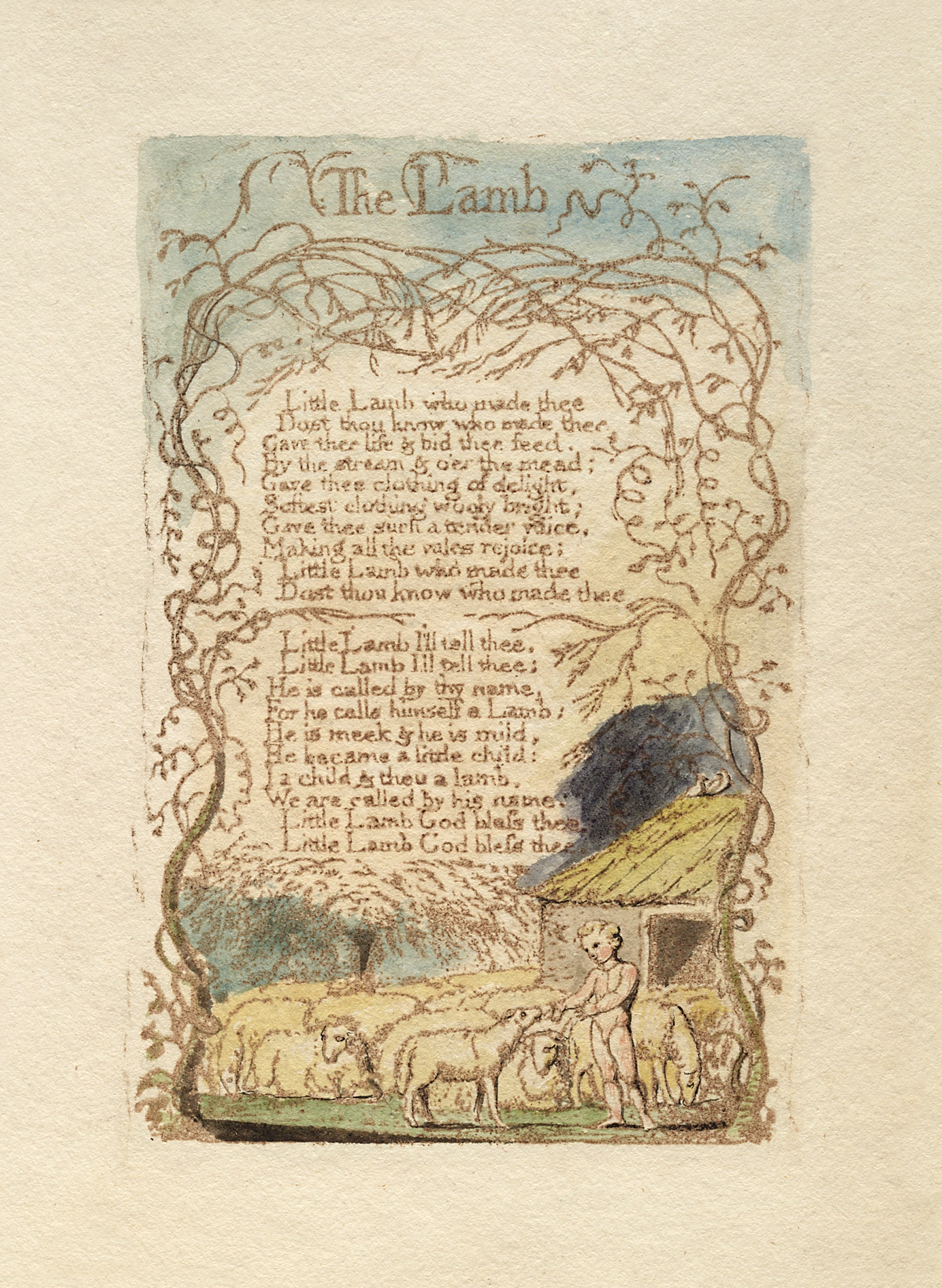
June’s poem

⎯⎯⎯⎯⎯⎯⎯⎯⎯⎯
Little lamb, who made thee?
Dost thou know who made thee,
Gave thee life, and bid thee feed
By the stream and o’er the mead;
Gave thee clothing of delight,
Softest clothing, woolly, bright;
Gave thee such a tender voice,
Making all the vales rejoice?
Little lamb, who made thee?
Dost thou know who made thee?

Little lamb, I’ll tell thee;
Little lamb, I’ll tell thee:
He is callèd by thy name,
For He calls Himself a Lamb.
He is meek, and He is mild,
He became a little child.
I a child, and thou a lamb,
We are callèd by His name.
Little lamb, God bless thee!
⎯⎯⎯⎯⎯⎯⎯⎯⎯⎯

(William Blake)

March’s poems

… are by Dennis Lee and have been chosen in solidarity with Canada (which, apparently, is near Louisiana).

⎯⎯⎯⎯⎯⎯⎯⎯⎯⎯
Alligator pie, alligator pie,
If I don’t get some I think I’m gonna die.
Give away the green grass, give away the sky,
But don’t give away my alligator pie.

Alligator stew, alligator stew,
If I don’t get some I don’t know what I’ll do.
Give away my furry hat, give away my shoe,
But don’t give away my alligator stew.

Alligator soup, alligator soup,
If I don’t get some I think I’m gonna droop.
Give away my hockey-stick, give away my hoop,
But don’t give away my alligator soup.
⎯⎯⎯⎯⎯⎯⎯⎯⎯⎯

(I’ve actually eaten alligator.)

⎯⎯⎯⎯⎯⎯⎯⎯⎯⎯
Mumbo    Jumbo
Christopher Colombo
I’m sitting on the sidewalk
Chewing bubble gumbo.

I think I’ll catch a WHALE …
I think I’ll catch a snail …
I think I’ll sit around awhile
Twiddling my thumbo.
⎯⎯⎯⎯⎯⎯⎯⎯⎯⎯

⎯⎯⎯⎯⎯⎯⎯⎯⎯⎯
Mississauga rattlesnakes
Eat brown bread.
Mississauga rattlesnakes
Fall down dead.
If you catch a caterpillar
Feed him apple juice;
But if you catch a rattlesnake
Turn him loose!
⎯⎯⎯⎯⎯⎯⎯⎯⎯⎯

Body-text fonts, pt. 35: Monotype Baskerville

After three phone calls to city officials, a heavy snowfall, a thaw, and another freeze, the unhappy (or happy?) cat remains in a cardboard box outside our house. We removed it from our curb. The house across the street is for sale, and we don’t want to deter prospective buyers.

Reader, come, buy this house and be my friend.

♦ ♦ ♦ ♦ ♦

I’ve reached the eighth of nine scheduled books by E. M. Forster:
  • Where Angels Fear to Tread
  • The Longest Journey
  • A Room with a View
  • Howards End
  • The Celestial Omnibus
  • Maurice
  • A Passage to India
  • Aspects of the Novel
  • The Eternal Moment
These will be enough for now. Someday, I may read Arbinger Harvest and Two Cheers for Democracy.

It hasn’t been an unpleasant project. And yet Forster has slipped into the perhaps unenviable category inhabited by Stephen King and David Lodge, of novelists whose discourses on the novel are more pleasurable than their novels. There’s some delightful stuff in Aspects, not least the quotations. This one, from Moll Flanders, has me itching to read that book.


Aspects’s above edition (Pelican/​Penguin) can be read here; a PDF with Aspects’s original pagination is here.

A chilly death

A snowy week. Some days have been frigid. But in the “Little House” books the prairie settlers do just fine at 20-below (°F). It’s at 40-below that they have trouble. Today I wore shorts to take Samuel to his bus stop. It was 5 °F. The bus was 10 minutes late. I barely felt the cold (there wasn’t much wind). Samuel and I joked around: I sang, he punched. On the way back to the house I passed the cardboard box containing the frozen cat I’d put out by the curb, on Monday. Karin found the corpse in our shed. The Animal Resource Center promised to pick it up but never did. It’s no longer so distressing. The cat is under a blanket of snow. I know to look for a single paw that sticks out of the box; that’s how I can tell the cat is still there. Children pass it trudging to and from school. Sorry about this bummer of an entry.

August’s poem

What with “back to school” sales, Karin & I had a look inside T.J. Maxx. It was my first visit in a decade or so. Prices seemed conspicuously higher, and I was surprised to see so many fashionistas combing through the goods. The air was downright rarefied. The merchandise, as before, was not.

But I must give credit where it’s due. When one buys children’s “board” books, T.J. Maxx should be among one’s first stops. There were lots of marked-down copies of Corduroy – an appropriate ware, since that story is set in what appears to be the T.J. Maxx of its day.

Here is some store-art that tempted us.


Which brings me to this month’s poem, T. S. Eliot’s “The Naming of Cats”:

⎯⎯⎯⎯⎯⎯⎯⎯⎯⎯
The Naming of Cats is a difficult matter,
It isn’t just one of your holiday games;
You may think at first I’m as mad as a hatter
When I tell you, a cat must have THREE DIFFERENT NAMES.
First of all, there’s the name that the family use daily,
Such as Peter, Augustus, Alonzo, or James,
Such as Victor or Jonathan, George or Bill Bailey –
All of them sensible everyday names.
There are fancier names if you think they sound sweeter,
Some for the gentlemen, some for the dames:
Such as Plato, Admetus, Electra, Demeter –
But all of them sensible everyday names.
But I tell you, a cat needs a name that’s particular,
A name that’s peculiar, and more dignified,
Else how can he keep up his tail perpendicular,
Or spread out his whiskers, or cherish his pride?
Of names of this kind, I can give you a quorum,
Such as Munkustrap, Quaxo, or Coricopat,
Such as Bombalurina, or else Jellylorum –
Names that never belong to more than one cat.
But above and beyond there’s still one name left over,
And that is the name that you never will guess;
The name that no human research can discover –
But THE CAT HIMSELF KNOWS, and will never confess.
When you notice a cat in profound meditation,
The reason, I tell you, is always the same:
His mind is engaged in a rapt contemplation
Of the thought, of the thought, of the thought of his name:
His ineffable effable
Effanineffable
Deep and inscrutable singular name.
⎯⎯⎯⎯⎯⎯⎯⎯⎯⎯

Zuleika; LOTR; Farmer boy

One of my favorite chapter openings, almost as good as “The grandmother didn’t want to go to Florida”:
Her actual offspring does not suffice a very motherly woman. Such a woman was Mrs. Batch. Had she been blest with a dozen children, she must yet have regarded herself as also a mother to whatever two young gentlemen were lodging under her roof. …
The same is true of Karin: not with lodgers but with pets and strays.

This time, ’twas a spider. It spun its web on the prongs of our “Medusa” lamp.

Karin once feared spiders – maybe she still does – but she treated this one oh so tenderly. She brought it ants and flies.

Last night, she brought it a live Junebug. That cracked something inside of her. She was anguished for the Junebug: “It just fought so hard to live.”

She carefully removed the spider from our house.

♦ ♦ ♦ ♦ ♦

Her actual offspring are with their grandfather tonight. A respite for us.

This morning I hazarded a library outing with them. They were loud, and I had to drag them home when Daniel wouldn’t stop running through the stacks. But it was gratifying that at first they shunned the e-⁠tablets. Samuel built with blocks from a Jenga-like game. Daniel filled, emptied, and refilled the Connect Four grid.

I kept an eye on them and read Tolkien. Pippin tries to sneak off with the palantír. Gandalf scolds him; then they ride away in the night, on Shadowfax.
As he fell slowly into sleep, Pippin had a strange feeling: he and Gandalf were still as stone, seated upon the statue of a running horse, while the world rolled away beneath his feet with a great noise of wind.
Thus ends LOTR bk. III. Tolkien is at his best in the concluding paragraphs of the “books.” So far, he has always concluded with a scene of hobbits. There are grand things in this story, but they are best viewed through hobbits’ eyes; they are too grand for anyone less humble. Tolkien himself may have been a bit of a hobbit, recording momentous and homely detail, for homely folk.

♦ ♦ ♦ ♦ ♦

I also am reading the Little House books. Nine-year-old Almanzo, in Farmer Boy, isn’t quite a hobbit, but he is driven to and fro by industrious larger creatures. The temperatures are frigid; the work is hard; but all is worthwhile because it is fueld by mountains of rich food, described unstintingly.

The accidental Hoosier

I guess it’s all right, now, to disclose that Ana, David, Ada, George, and Russell (the dog) have sold their house in Texas and will move to South Bend this weekend. So, we siblings – John-Paul, David, Mary, and Stephen – and our respective households, as well as our parents, will all have settled in the same metro area (two adjacent cities) for the first time since 2000 (the previous millennium). Odd to think that South Bend/​Mishawaka, and not, say, Quito, Esmeraldas, Guayaquil, or even Santo Domingo de los Tsáchilas, should have proved our stubbornest anchor. It’s not as if our ancestors hailed from this part of the state. My dad’s dad grew up closer to Lafayette; my dad’s mom, closer to Fort Wayne. They never lived together in the South Bend area. (Neither of my mom’s parents was a Hoosier.) My parents got together as students in Chicagoland. They became missionaries, moved to Ecuador, had their children, and spent furloughs in Illinois (twice) and Missouri. They – we – never all lived together in Indiana.

But, soon, we shall.

I’ve lived some fifteen years, off and on, in the state. Hoosiers still seem strange to me. Not as horrifying as Missourians – whom I think I actually understand better – but less relatable than, say, Upstate New Yorkers, and not nearly as endearing as Minnesotans or Wisconsinites.

I look at the institutions and positions that confer prestige here, and think, that doesn’t appeal to me at all. But then, I might think that anywhere.

I look at what people here do for enjoyment, and think, that doesn’t appeal to me, either. That’s worse.

I think how, last year, a chicken trapped itself in our yard, and the officer who removed it told me it was a gamecock. This weekend we had friends – Michiganders I’d known in Quito – in the yard. We heard roosters crowing, and I thought, I may not approve of cockfighting, but my heart is warmed to know it’s practiced in the neighborhood where I now live.

Toads

Now viewing Cane Toads: An Unnatural History (1988) with Daniel, a.k.a. Toad. He likes movies with “little animals.” We rotate through various David Attenborough productions. The reptiles-and-amphibians series (Life in Cold Blood) has been an especial hit. Hence my search for more toad-content. Cane Toads, dir. by Mark Lewis, is basically what an animal doc would be if helmed by Errol Morris. (I guess Morris has made a couple of near-animal docs: Gates of Heaven, and one-third of Fast, Cheap, and Out of Control.) The toad movie has talking heads (politicians, scientists), historical “re-enactments,” dramatizations of humans’ encounters with toads, and sentimental old Queenslanders on their back lawns waxing lyrical and tearful about the cane toad’s essential decency.

♦ ♦ ♦ ♦ ♦

The next stop on my fantasy reading tour is The Hobbit, to which I’m returning after some decades. The first 120 pp. have been pretty much as I remember them, almost line-for-line. Disappointing, in a way. But then comes the “Beorn” chapter with quite the wittiest passage so far:
“If you must know more [said Gandalf], his name is Beorn. He is very strong, and he is a skin-changer.”

“What! a furrier, a man that calls rabbits conies, when he doesn’t turn their skins into squirrels?” asked Bilbo.

“Good gracious heavens, no, no, NO, NO!” said Gandalf. “Don’t be a fool Mr. Baggins if you can help it … He is a skin-changer. He changes his skin: sometimes he is a huge black bear, sometimes he is a great strong black-haired man with huge arms and a great beard …
There is a fearful hour – 9:30pm, more or less – when, his brother having dozed off, Daniel – normally so sweet, so docile – a virtual Dr. Henry Jekyll – transforms into someone (or something) more like the wicked Mr. Edward Hyde.

That hour is now upon us.

May’s poem

My precious History of Art by H. W. Janson remained intact for one month. Samuel climbed the bookcase yesterday and hauled it down, ripping off its cover.

Our superglues have all dried out.

♦ ♦ ♦ ♦ ♦

Our household, minus kitties, went to the zoo with Karin’s mom, who is making the most of her grandparental season-pass (she went again the next day). In the African section, the wild dogs were in fine form, running laps, in contrast to our by-then-unenthused children. Lions, gators, snakes, and sloths practiced immobility. Kangaroos stirred more than usual.

My favorites are the huge animals: the bison, the rhino, the giraffes. The latter, in zoos, often languish down in some ditch, on the same eye-level as their observers; but at our zoo, one can walk up to their feet and let oneself be towered over.


This month’s poem, in honor of Mother Karin’s Day and our wedding anniversary (May 21), is “Pharaoh Story”; the lyrics are by Tim Rice. I’ve come, reluctantly, during our marriage, to like it.

⎯⎯⎯⎯⎯⎯⎯⎯⎯⎯
Pharoah, he was a powerful man
With the ancient world in the palm of his hand
To all intents and purposes he
Was Egypt with a capital “E”
Whatever he did, he was showered with praise
If he cracked a joke, then you chortled for days
No one had rights or a vote but the king
In fact you might say he was fairly right-wing

When Pharoah’s around
Then you get down on the ground
If you ever find yourself near Rameses
Get down on your knees

Down at the other end of the scale
Joseph is still doing time in jail
For even though he’s in with the guards
A lifetime in prison seems quite on the cards
But if my analyis of the position is right
At the end of the tunnel is a glimmer of light
For all of a sudden indescribable things
Have shattered the sleep of both peasants and kings

Strange as it seems
There’s been a run of crazy dreams
And a man who can interpret could go far
Could become a star

Strange as it seems
There’s been a run of crazy dreams
And a man who can interpret could go far
Could become a star!
Could be a star!
⎯⎯⎯⎯⎯⎯⎯⎯⎯⎯