Posts

Showing posts with the label Germany

World Cup groups

… have been drawn. Gratifyingly, there are no weak groups: all are groups “of death.” Literal death.


Just kidding. These are not the groups. (Besides, the tournament has been expanded from 32 to 48 teams.)

(I should acknowledge that I didn’t create this image; I found it on the Internet.)

The actual groups are these:

Group A
Mexico
South Africa
South Korea
TBD: Czechia, Denmark, Ireland, or North Macedonia

Group B
Canada
TBD: Bosnia & Herzegovina, Italy, Northern Ireland, or Wales
Qatar
Switzerland

Group C
Brazil
Morocco
Haiti
Scotland

Group D
USA
Paraguay
Australia
TBD: Kosovo, Romania, Slovakia, or Turkey

Group E
Germany
Curaçao
Ivory Coast
ECUADOR

Group F
The Netherlands
Japan
TBD: Albania, Poland, Sweden, or Ukraine
Tunisia

Group G
Belgium
Egypt
Iran
New Zealand

Group H
Spain
Cape Verde
Saudi Arabia
Uruguay

Group I
France
Senegal
TBD: Bolivia, Iraq, or Suriname
Norway

Group J
Argentina
Algeria
Austria
Jordan

Group K
Portugal
TBD: DR Congo, Jamaica, or New Caledonia
Uzbekistan
Colombia

Group L
England
Croatia
Ghana
Panama

Locations and times have been decided, too. Ecuador will play in: Philadelphia, against the Ivory Coast; then, Kansas City, against Curaçao; and lastly, East Rutherford, New Jersey, against Germany (in what will be Ecuador’s first World Cup rematch; the countries first played in 2006).

Our Aunt Linda in K.C. is keen to host any relations who’ll attend the Curaçao game. But tickets are rapaciously expensive. I can’t imagine I’ll attend unless I win a sweepstakes out of a cereal box.

Besides, if I travel to K.C., I’ll have to spend precious hours away from the television. I’ll miss Japan vs. Tunisia or some other partidazo.

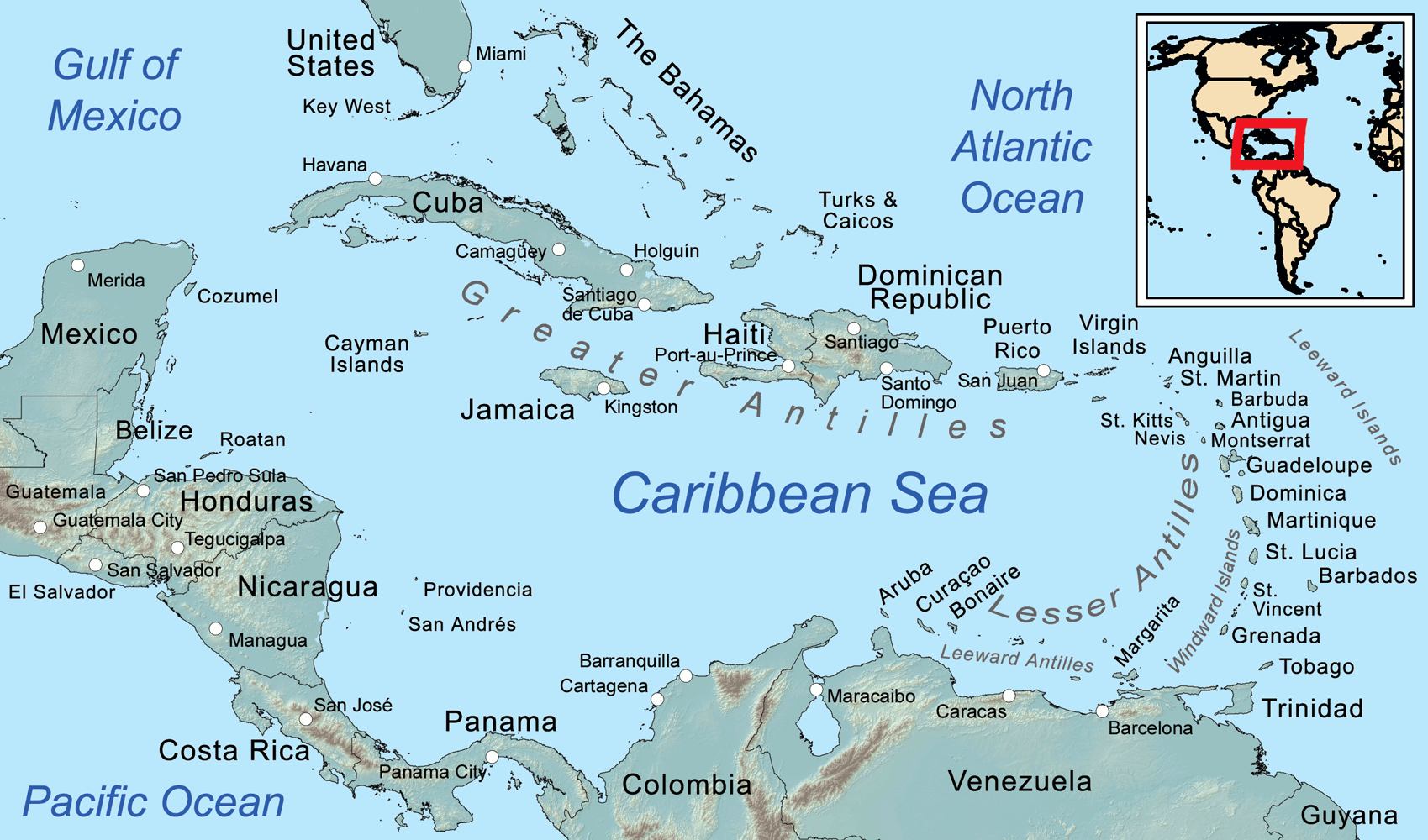
A note on Curaçao, the smallest nation ever to qualify for a World Cup. This hardly ever happens, but … I didn’t know Curaçao’s location on the map. I knew that Curaçao is one of the Dutch Antilles, but, mentally, I grouped it with islands southeast of Puerto Rico. Actually, it’s off the coast of Venezuela – practically in South America.

I’m ashamed not to have known this. In my defense, Curaçao became a sovereign nation only in 2010.

More results

Copa América quarterfinals

Argentina 1 (4), Ecuador 1 (2). We outplayed the world champions but lost the shootout. Pity.

We almost were knocked out by soccer kindergarteners, one Argentinian journalist complained.

Our coach, Félix Sánchez Bas, a Spaniard, resigned afterward. Rumor has it, his wife and children have been unhappy in Ecuador; they may even have been bullied by fans. I’m very sorry if this is the case. Sánchez is likely to take another job in Qatar.

Brazilians and Uruguayans are scoreless as of this writing. Canada beat Venezuela in another shootout, and Colombia thumped Panama, 5–0, in the Darién Classic.

UK general elections

Labour thumped the Tories. No Tories won seats in Wales.

Euros

Türkiye 2, Austria 1. A good game. Afterward, the Turkish goalscorer, Merih Demiral, was suspended. The Dutch eliminated the Turks today.

Spain 2, Germany 1. A good game. Alas, yellow cards were distributed willy-nilly, and various players were suspended. Spain’s is the only pleasing team left in these Euros.

The French are still tedious to watch, and the English are still putrid. Both teams have reached the semifinal round. Both could reach the final. Wouldn’t that be nice.

I liked what the Mexican commentators said about the English and Dutch fans: For all their color, they’re tepid once the game starts, probably because they’re already soused.

This would explain why the Turks outcheer pretty much everyone during the games.

Euros

Congrats to Turkey – now Türkiye – and to Georgia for contesting the best match, so far, of these Euros. Thrilling stuff, especially the closing minutes.


Congrats to Romania. Congrats to Germany for rising from the dead. Anti-congrats to Ukraine, England, and (shudder) Scotland.

The French underwhelmed in their first match – except for N’Golo Kanté, now of the Saudi league, who returned to the national side after a two-year absence. He was astounding. I think he covered every square inch of grass. He made his excellent teammates, Rabiot and Camavinga, look ordinary.


If he keeps it up, he’ll be the tournament’s best player.

“But how does one stream all of this soccer, John-⁠Paul?”

Subscribe to ViX ($6.99/month); access:
  • the Euros
  • the Copa América (beginning Thursday)
  • Argentina’s and Brazil’s World Cup home qualifiers
  • the UEFA Champions League (fall, winter, spring)
  • various domestic leagues (Mexican, Colombian, etc.)
  • telenovelas
  • telenovelas about soccer
Should you choose not to subscribe, there is some free content as well.

I am not being paid to recommend ViX.

I had an entertaining dream last night. As well as I can recall, it involved hostage-taking, jewel-thieving, and deportation to Texas under the witness protection program.

Mitfords, pt. 5

Another monstrosity: Pigeon Pie, a war novel.

At first, it seems a subdued, almost contrite work: an about-face from the fervid, jolly cynicism of Wigs on the Green.

It doesn’t stay that way. By the end, it outdoes its predecessor.

It was written in 1939. Nancy’s sister, Unity, the Hitler enthusiast, had just tried to commit suicide. The war had just begun. Heady days.

Dunkirk … the Battle of Britain … the Blitz … all were forthcoming.

The novel mocks Germans, Lord Haw-Haw, aristocratic volunteerism, the Cabinet, the House of Lords, parachutists, and real and pretending spies. The titular pigeons are messenger pigeons. None is actually baked in a pie. Some, bearing intelligence to the Nazis, are shot down over the Channel.

A surprising number of Germans drown underneath London, in the drains.

The heroine is an utter nitwit.

I confess I am very glad to have read this book.

♦ ♦ ♦ ♦ ♦

Daniel went to the physician again today (his own doctor, not the WIC doctor) and got shots. Karin had promised him a treat. She bought him some McDonald’s. They wouldn’t sell her a chicken McGriddle (the best kind). Maybe they don’t sell chicken at breakfast-time anymore. A bore, as the characters say in Mitford. I stayed home with Samuel, who played enthusiastically and in peace.

Since last week, we have had 60-degree (F) temperatures, then snow, then 60-degree temperatures (likely to climb to 70); snow is expected two days from now.

Wodehouse and Lewis

I’ve never read a novel or even a story by P.G. Wodehouse, but his Wikipedia biography impressed me greatly. The sad turning-point in his life was, of course, the Second World War. Stranded in German-occupied France, he was (uncomfortably) interned in various places and eventually transported to (comfortable) accommodation in Berlin. There, in 1941, he delivered a series of humorous, very ill-considered radio broadcasts (How to Be an Internee without Previous Training). These outraged the British; after the war, he emigrated to the United States, where he lived out his days, never returning to his native land.

But first he was briefly detained by the French. Malcolm Muggeridge, then with MI6, visited him in Paris and became fond of him. Muggeridge wrote:
The broadcasts, in point of fact, are neither anti- nor pro-German, but just Wodehousian. He is a man singularly ill-fitted to live in a time of ideological conflict, having no feelings of hatred about anyone, and no very strong views about anything. … I never heard him speak bitterly about anyone – not even about old friends who turned against him in distress. Such temperament does not make for good citizenship in the second half of the Twentieth Century.
Wodehouse had said in one of the broadcasts:
I never was interested in politics. I’m quite unable to work up any kind of belligerent feeling. Just as I’m about to feel belligerent about some country I meet a decent sort of chap. We go out together and lose any fighting thoughts or feelings.
Around the same time, C.S. Lewis was giving the broadcasts in England that would become Mere Christianity, in which this remarkable passage appears:
I have often thought to myself how it would have been if, when I served in the First World War, I and some young German had killed each other simultaneously and found ourselves together a moment after death. I cannot imagine that either of us would have felt any resentment or even any embarrassment. I think we might have laughed over it.
Lewis was rather more belligerent than Wodehouse, and not only because of his stated willingness to kill. But the same spirit of chuminess was in both men.

What also struck me about Wodehouse was his work ethic. He was prolific and meticulous:
Before starting a book Wodehouse would write up to four hundred pages of notes bringing together an outline of the plot; he acknowledged that “It’s the plots that I find so hard to work out.” … He always completed the plot before working on specific character actions. For a novel the note-writing process could take up to two years, and he would usually have two or more novels in preparation simultaneously. After he had completed his notes, he would draw up a fuller scenario of about thirty thousand words, which ensured plot holes were avoided, and allowed for the dialogue to begin to develop.
Wodehouse remarked:
When in due course Charon ferries me across the Styx and everyone is telling everyone else what a rotten writer I was, I hope at least one voice will be heard piping up, “But he did take trouble.”

Europe vs. South America; a new phone for Karin; mischief

I just realized: of all the World Cup winners, Argentina has the second-fewest people; only Uruguay is smaller. Spain boasts more souls than Argentina, and so did the old West Germany – even the West Germany of the 1950s.

Contrary to popular belief, Europe vs. South America isn’t mainly a contest of old vs. new, rich vs. poor, sophisticated vs. naïve, scientific vs. intuitive, central vs. peripheral, networked vs. disconnected, etc. (and not all of those dichotomies correctly describe the two regions, anyway). No, it’s mainly just bigger countries vs. littler ones.

♦ ♦ ♦ ♦ ♦

Daniel has been throwing things into the toilet. He clogged it up for a couple of weeks. We had to hire a plumber.

Last week, he threw Karin’s phone into the toilet. Karin bought a new phone.

Tonight, Karin and the children have been taking selfies and filtering them through TikTok. I’ve never heard Samuel laugh so hard for so long.


One more. No, it isn’t Daniel’s face on Samuel’s t-shirt; the filter gave a new face to Thomas the Tank Engine.


I had no idea a phone could do this sort of thing.

1996, the best year in movie history, pt. 58: Little Dieter needs to fly

R.I.P. Joseph Ratzinger – Pope Benedict XVI.

R.I.P. Pelé.

♦ ♦ ♦ ♦ ♦

Little Dieter Needs to Fly

When Dieter Dengler was a boy, the Allies bombed his village in the Black Forest. He was awestruck. He immediately felt that he must become a pilot.

I never wanted to go to war, he tells Werner Herzog in this documentary. But he had to, to fly.

He traveled to the United States. He joined the Air Force, was made to peel potatoes for two years, and figured out that to fly he needed to join the Navy instead.

In due course, he was sent to fly over Laos. He was shot down and taken prisoner. He escaped.

Most of the documentary shows the older Dieter back in Laos. He recounts his harrowing months as a POW. He re-enacts certain episodes.


(Uh, oh, he says in this scene, this feels a little too close to home.)

He revisits ricefields, riverbeds, jungle trails, villages. He is supplied with props. He gives a short demonstration of lighting a fire with bamboo, and another of getting loose from a set of handcuffs.


Some of the props are human beings: locals who have been hired to dress up as soldiers or villagers.


It gets weird. Dieter recalls an especially nasty confrontation which resulted in the maiming of a villager. After he tells this story, Dieter embraces the villager-prop who has been standing next to him.

You still have all your fingers, Dieter notes.

By the time these people appear in the movie, we’ve been primed to accept their status as foregrounded props. In an earlier scene at an airfield, Dieter has been posed next to a mannequin. The mannequin is irrelevant to what the scene ostensibly is about – piloting – yet it dominates the sequence.


Like the mannequin, the performers who are dressed as villagers and soldiers pose silently next to Dieter while he does the talking. They are almost purely decorative – more decorative, anyway, than the locals employed by Herzog in such jungle movies as Aguirre and Fitzcarraldo.

There is another layer of artifice. Yes, it’s Dieter who speaks, and yes, the movie recounts the story of his life, but it’s uncertain to what extent he is the author of what he says. It turns out that some of his speeches are due to Herzog. (This isn’t revealed in the documentary itself.) And some of Dieter’s behaviors – e.g., obsessively opening and closing his front door to remind himself that he is free – also were invented by Herzog. Even though Dieter is a memorable individual, it turns out that in some parts of the movie, he is Herzog’s puppet.

How free is Dieter, really?

His participation in the documentary is consensual, yet it is Herzog, not Dieter, who pulls the strings.

He is no longer in shackles or without food, but his daily existence is arranged as if he were terrified of reverting to those conditions.

Moreover, even before he became a prisoner in Laos, he was governed by a compulsion. He needed to fly.

He reminds me of no one else in the movies so much as the Japanese WW2 aircraft designer in Miyazaki’s The Wind Rises – another character who has experienced the horror of cities’ destruction, and who nonetheless goes on to contribute to bombing and killing. The aircraft designer and Dieter are both drawn irresistably to a particular craft. A vocation. Or so one would wish to call it, without quite being able to: each of these craftsmen is insufficiently reflective upon, if not totally insensitive to, whether his craft is to be used for good or ill.

Modern warfare – technically sophisticated, ultra-destructive warfare – would be impossible without such dedicated craftsmen as these.

♦ ♦ ♦ ♦ ♦

I am reminded of one other Miyazaki movie: Porco Rosso. Dieter visits an apparently unending “graveyard” of disused military planes.


A heaven for pilots, is how Dieter describes it.

There is a heaven for pilots in Porco Rosso. Those who have seen that movie will know what I mean.

Little Dieter opens with this quotation from Revelation 9:6: “And in those days shall men seek death, and shall not find it, and shall desire to die, and death shall flee from them.” Like Porco, Dieter is a survivor who thinks constantly of those who have died, who wonders why he still lives.

♦ ♦ ♦ ♦ ♦

After Dieter died in 2001, Herzog released a “postscript” consisting of footage of Dieter’s military funeral. Then, ten years after the documentary’s initial (1997) release, Herzog brought out a feature movie about Dieter’s experiences as a POW: Rescue Dawn, starring Christian Bale. I haven’t seen that movie. I wonder if it shows Dieter in a different light.

Does Herzog regret having used Dieter as his puppet? His protagonist in the documentary Grizzly Man (2005) is not used in that way. Herzog makes interjections in that documentary, too, but it is always clear that they’re his: there is no blending of his voice and the protagonist’s. (Of course, Grizzly Man’s protagonist died before Herzog became involved with his story.)

For more on Little Dieter, Grizzly Man, Rescue Dawn, and other movies, see this book.

In Group F, South Korea flogs Germany, two goals to zero

… KO’ing Die Mannschaft from the World Cup.

This is a happy day, except in Germany.

The one sad thing is that the Germans were KO’d while wearing their classic green “away” uniforms. I’d waited well over a decade for the Germans to bring back those uniforms. I hope that the color doesn’t fall out of favor with them again.

♦ ♦ ♦ ♦ ♦

The result developed as follows:

Sweden and Mexico weren’t scoring (their game was being played at the same time as Germany vs. South Korea).

Germany and South Korea weren’t scoring.

Up until that point, the Germans were on course to qualify for the second round at Sweden’s expense.

Then, the Swedes scored, leapfrogging the Germans and Mexicans in Group F and obliging the Germans to defeat South Korea.

Then, the Swedes scored again, for insurance, with a penalty kick.

Then, the Mexicans scored against themselves.

The Germans needed just one goal to go ahead of the Mexicans (they still would’ve trailed the Swedes).

The Koreans defended tenaciously.

The Germans became desperate.

The Koreans scored.

The Germans sent all their players, including their goalkeeper, Manuel Neuer, down the field to chase the victory they needed. The Koreans stole the ball from Neuer and launched it into the space he’d vacated. South Korea’s star forward, Son Heung-min, reached the ball first and tapped it in.

This lifted South Korea above Germany in Group F. Germany finished butt-naked last.


The Mexicans wept all over the field, grateful that the Koreans’ defeat of Germany had allowed them to qualify for the next round (in which they surely will be KO’d by Brazil).

The Germans tried hard not to weep, but some of them did.

The Swedes looked about the same as ever.

The Koreans celebrated as if they’d won the World Cup, even though Mexico’s failure to defeat Sweden ensured that they, too, were eliminated.

♦ ♦ ♦ ♦ ♦

At the beginning of the tournament, it was understood that Son Heung-min, who plays for Tottenham Hotspur, would have to leave that club to complete his military service – unless the Korean team performed especially well, in which case he would be granted an exemption.

Well, the Koreans are now disqualified. But they’ve performed a service to their country – and to the globe – by KO’ing the Germans.

I hope that the Korean government recognizes Son’s contribution and lets him off the hook.

♦ ♦ ♦ ♦ ♦

The Germans may have been KO’d, but the Argentinians raised themselves from the dead against Nigeria. Messi scored a wondergoal. Then, when the game had nearly expired, Argentina scored again to stave off elimination. (In the stands, Maradona celebrated both goals very strangely.)

When Argentina shows more grit than Germany, you know there’s something in the water.

Some frightening teams

Leave it to Alejandro Moreno, the worst commentator I’ve ever listened to, to defend Neymar for weeping out on the field … like a spoiled child … after scoring a tap-in against Costa Rica.

If the Brazilians win this World Cup – and, with all of their talent, they’re poised to do so – I hope they win with Neymar on the bench.

♦ ♦ ♦ ♦ ♦

The Colombians may have lost their first game, but yesterday they showed that they’re one of the planet’s scariest teams. They turned on the style in their rout of Poland.

The Colombians also have enough talent to win this World Cup.

♦ ♦ ♦ ♦ ♦

The Uruguayans have enough talent and more than enough grit. They won’t fear anyone. They’re used to grinding out results, which bodes well for their fate in the later rounds.

They ground out results against Egypt and Saudi Arabia. Then, this morning, they decided not only to clinch the first place in Group A, but to emphasize how dangerous they are. And so they casually routed the host nation.

♦ ♦ ♦ ♦ ♦

Another frightening team is Germany – not for having played well, but for having come back from the dead against the Swedes.

Before Toni Kroos scored his last-minute goal, the citizens of all the other countries had been licking their chops. The Mexicans, especially: their team would’ve qualified for the next round if Sweden had held Germany to a draw.

Instead, Group F remains unsettled. Germany, Mexico, and Sweden all will be excellently positioned if they win their respective upcoming games. Theoretically, even the Koreans could advance.

♦ ♦ ♦ ♦ ♦

Also frightening – but still unproven – are the Croatians, the Belgians, and the English, all of whom have easily qualified for the knockout stage. They all looked quite good against their group opponents, but I wonder how they’d fare against Colombia or Germany, or even Mexico.

A sputtering start

Who will seize control in this World Cup? So far, none of the “powers” has seemed capable. Germany has lost to Mexico; Portugal and Spain have drawn against each other (these teams have shown perhaps the best potential); Argentina and Brazil have drawn against Iceland and Switzerland, respectively. Only France has won – against Australia – but hardly in a convincing fashion.

Russia, the host nation, scored five times against the dismal Saudis without playing especially well. I expect the Russians to qualify for the next round, and then to get knocked out.

Only Uruguay – not a “power,” but still a team to be reckoned with – defeated its opponent, Egypt, in its usual manner. It eked out a 1–0 victory in added time, with a goal by a central defender. Uruguay will be very comfortable in games like those that have occurred so far.

Belgium, England, Colombia, and Poland have yet to play any games. It’s too early to say how they will do.

Delfín 4, Liga de Quito 1; Portugal 2, Mexico 1; Germany 1, Chile 0; a futile exercise in pickup soccer

The important news is that Delfín S.C. clinched the top spot in the first semester of the Ecuadorian tournament. In so doing, the “Cetaceans” qualified to play in December’s grand finale – and in the group stage of next year’s Copa Libertadores.

This is historic. Delfín will be the first-ever Copa Libertadores team from the longsuffering province of Manabí.

♦ ♦ ♦ ♦ ♦

In the Confederations Cup, in the game for third place, the Portuguese scored a couple of late goals to defeat the Mexicans. Then, in the final game, the Germans tapped the ball into the net after stealing it from one of the Chilean defenders. After that, the Germans simply waited for the game to end.

♦ ♦ ♦ ♦ ♦

I missed the second half of that game because I was playing pickup soccer. It was not one of my best experiences playing soccer.

It was dismal to play as a fatty. I had the strength for just one sprint, and I didn’t want to expend it right away, so I let the opposing players dribble past me. Then, after an old man dribbled past me, I was like, “No more of this.” So when he tried again I got in his way and kicked the ball out of bounds. I did this several times.

I tried to stay on the wing, a region of the field from which the other team would never score any goals. Alas, my teammates failed to occupy the fullback’s area just behind me. (Perhaps they assumed that I was the fullback.) Since I didn’t run back to cover that area – and since I couldn’t have guarded anyone even if I had run back – this was fatal.

After a while, my friend Brandon – another fatty, who was playing for the other team – came over to my side of the field to guard me. I decided to perform my only sprint. I ran into the open space behind Brandon. I called for the ball. It was passed elsewhere.

A little later I decided that it was time for me to go home.

Germany 4, Mexico 1

This semifinal never was in doubt. The Germans claimed a strong lead, 2 goals to 0, by minute 8. They let the Mexicans keep the ball during the rest of the game. The other goals were incidental.

Australia 1, Chile 1; Germany 3, Cameroon 1

Because I went to church, I didn’t watch either of yesterday’s Confederations Cup games.

Karin filmed this half-minute video of Ziva and Jasper. They’re observing a fly.

Australia 1, Cameroon 1; Chile 1, Germany 1

Two good games today. The first was dominated by the Cameroonians, who, failing to win, hurt their chances of advancing to the second round. Defending, they made their opponents seem quite toothless (the Australian striker, Tim Cahill, whom the announcers covered in glory, hardly got any touches). But when they were attacking, the Cameroonians weren’t precise enough; and with one clattering foul, they gifted the Australians the penalty kick which was the tying goal.

In the second match, the veteran Chileans employed their usual suffocating press against the youthful German B-team. It brought them their early goal. Then they kept on employing the press, and the Germans passed their way through it and scored their goal.

What I’d like is for the Chileans to reach the final and to be whalloped so hard by this German B-team that they fall apart in World Cup qualifying. Ecuador needs someone to overtake.

(If you are not Germany, and you don’t have a factory of talent to depend on, these useless little tournaments lead only to distraction, despair, and death.)

Father’s Day; Mexico 2, Portugal 2; Chile 2, Cameroon 0; Germany 3, Australia 2

I didn’t watch yesterday’s games. I was in Goshen, Indiana, attending a Father’s Day event. I gave my father-in-law a card, and he gave me a book of Abraham Lincoln’s speeches that he bought during a recent trip to Washington, D.C.

I, Karin, and Karin’s sister, Lily, walked for an hour down a pleasant creekside path in Goshen. I wondered how it would be to live in that city. Where would I work? There are some Mennonite colleges in the area. Could I be a good Mennonite? I doubt it. I have too much feeling for the nations.

These are the games I missed:

Mexico 2, Portugal 2;

Chile 2, Cameroon 0.

One thing made the news: Video Assistant Replay, which is being tested during this Confederations Cup. It led to the annulment of this Portuguese goal (and, I believe, to the validation of a Chilean goal that the referee initially had annulled).

Its use did not seem intrusive. I opposed VAR before this tourney, but now I’m coming to favor it.

Today Germany and Australia played. The Germans got an early goal. The Australians equalized near the end of the first half. The Germans – few of them habitual first-teamers – responded with a flurry of excellent play, quickly scoring two more goals. But not long afterward the Australians punched in another goal, keeping the Germans from leaving them in the dust. All around, it was a good show.

Yet another Confederations Cup

It used to be that in each four-year cycle, the world would get to peek at an Oceanian team only twice: (1) during a brief World Cup qualification playoff, which the Oceanian team would lose; and (2) during the Confederations Cup.

This year, however, there are two traditional Oceanian teams in the Confederations Cup: New Zealand and Australia. The latter team defected to Asia some years ago and recently won the championship of that continent. But we all know better. Australia is not in Asia.

An honorary third Oceanian contestant is Chile, by virtue of its claims upon Easter Island and Antarctica.

Like Oceania, Europe supplies three contestants: Russia, Portugal, and Germany. The field is rounded out with Mexico and Cameroon.

So much for the contestants. Now, their division into groups.

A: Mexico, New Zealand, Portugal, and Russia.

B: Australia, Cameroon, Chile, and Germany (this is the Group of Death).

Notice that alphabetically Group B has the first four teams, and Group A has the last four. This is appropriate, just as it is that an Oceania-heavy tourney should be played in Russia. It’s the World Turned Upside-Down.

I plan to report on this important tourney.

Learn ’em up good

At last the dreary fall weather has arrived, which has put me into a very good mood. Also, my Spanish students – both groups, the Beginners and the Intermediates – have figured out that to get decent grades, they must memorize when to use the different verb tenses. And so their quiz scores are becoming more respectable.

For that matter, my command of Spanish grammar is becoming more respectable. I can now tell you what the pluscuamperfecto is. Before, I couldn’t have done so, though I would’ve had no trouble using that tense.

Having run out of episodes of Law and Order: Special Victims Unit to watch (I’ve now seen most of them two or three times), I’ve been casting my net wider. Karin & I tried out and rejected CSI Miami. It was rather soulless. Last night, on YouTube, I watched an episode of the long-running German/Austrian/Swiss police-procedural show, Tatort. It was very good: it had some vacant buildings in it, and a lot of rain, and the detectives themselves were adequately weathered. But I realized that scenery and weather weren’t enough for me. I also needed to understand the dialogue. This particular episode had English subtitles, but I would need to learn German to view all of the 900+ episodes.

Semifinals

In their Quito leg, Independiente del Valle defeat Boca Juniors, 2–1. The Goodness Gracious moment comes at the end of the first half. IDV’s goalkeeper appears to step completely into his own goal, carrying the ball with him. But there is no goal-line technology to denounce him.

The Buenos Aires leg will be played on the 14th.

♦ ♦ ♦ ♦ ♦

Germany’s semifinals, these last ten years:

0–2 vs. Italy, 2006;
3–2 vs. Turkey, 2008;
0–1 vs. Spain, 2010;
1–2 vs. Italy, 2012;
7–1 vs. Brazil, 2014.

Not one drab contest among them.

This year’s semi against the French is, I think, hands-down the best game of these Euros. The Germans play artfully, airily, especially in the first period. But it is “Little Prince” Griezmann who puts in the goals.

♦ ♦ ♦ ♦ ♦

On a tip from Karin (by request of Karin, with Karin), I am watching Holes, a wonderful, strange movie about children forced to dig holes, for their own moral good.

On a tip from Coetzee, I am reading and re-reading “Death Fugue”:
Black milk of daybreak we drink it at evening / we drink it at midday and morning we drink it at night / we drink and we drink / we shovel a grave in the air there you won’t lie too cramped / A man lives in the house he plays with his vipers he writes / he writes when it grows dark to Deutschland your golden hair Marguerite / he writes it and steps out of doors and the stars are all sparkling / he whistles his hounds to come close / he whistles his Jews into rows has them shovel a grave in the ground / he orders us strike up and play for the dance

Black milk of daybreak we drink you at night / we drink you at morning and midday we drink you at evening / we drink and we drink / A man lives in the house he plays with his vipers he writes / he writes when it grows dark to Deutschland your golden hair Margeurite / your ashen hair Shulamith we shovel a grave in the air there you won’t lie too cramped / He shouts jab this earth deeper you lot there you others sing up and play / he grabs for the rod in his belt he swings it his eyes are blue / jab your spades deeper you lot there you others play on for the dancing

Black milk of daybreak we drink you at night / we drink you at midday and morning we drink you at evening / we drink and we drink / a man lives in the house your goldenes Haar Margeurite / your aschenes Haar Shulamith he plays with his vipers / He shouts play death more sweetly Death is a master from Deutschland / he shouts scrape your strings darker you’ll rise then in smoke to the sky / you’ll have a grave then in the clouds there you won’t lie too cramped

Black milk of daybreak we drink you at night / we drink you at midday Death is a master aus Deutschland / we drink you at evening and morning we drink and we drink / this Death is ein Meister aus Deutschland his eye it is blue / he shoots you with shot made of lead shoots you level and true / a man lives in the house your goldenes Haar Margarete / he looses his hounds on us grants us a grave in the air / he plays with his vipers and daydreams / der Tod is ein Meister aus Deutschland / dein goldenes Haar Margarete / dein aschenes Haar Shulamith

Adoptionday

Tonight we’ll feed a piece of chicken to Bianca, the best-loved member of our household. It was exactly one year ago when Martin & Mary adopted her from the Humane Society. (Most of these pictures are from Mary’s Facebook page.)

Bianca’s first day in the house. How small she was!


Another photo with Martin, her favorite human.


A sad sight: Mary dries Bianca after her first (and only) bath.


Beast and mistress: a tender moment.


Bianca in her box, watching the World Cup.


Bianca with John-Paul (and a mouse). See how JP’s calves reflect the light.


A portrait by Edoarda.

Soccer, pt. 2,855

Ever since FIFA created the Puskas Award for the year’s most beautiful goal in 2009, it has been my dream that an own goal would one day win it. And with goals like this, we’re definitely getting closer to that day.
[Brooks Peck]
After the World Cup, life goes on. Stephen and I have been watching the semifinals of the Copa Libertadores. In the South American leagues, the players dribble a lot — unlike the World Cup players, e.g., the Germans, who averaged 1.1 seconds in possession.

Still, it’s fun to watch these unremarkable South Americans: their play is more expressive, more spontaneous. Less scripted. Less like synchronized swimming.


Trouble is, in soccer, spontaneity and improvisation take too long to do; they require too much thinking. It’s a losing strategy. As the sport develops, play will become more clinical, more robotic. There’ll be fewer moments of inspiration.


Like vultures, we’ll have to get our kicks relishing misfortune.