Posts

Showing posts with the label poetry

August’s poem

… is “If – ” – by Kipling, of course.

⎯⎯⎯⎯⎯⎯⎯⎯⎯⎯
If you can keep your head when all about you
Are losing theirs and blaming it on you;
If you can trust yourself when all men doubt you,
But make allowance for their doubting too;
If you can wait and not be tired by waiting,
Or, being lied about, don’t deal in lies,
Or, being hated, don’t give way to hating,
And yet don’t look too good, nor talk too wise:

If you can dream – and not make dreams your master;
If you can think – and not make thoughts your aim;
If you can meet with Triumph and Disaster
And treat those two impostors just the same;
If you can bear to hear the truth you’ve spoken
Twisted by knaves to make a trap for fools,
Or watch the things you gave your life to broken,
And stoop and build ’em up with worn-out tools:

If you can make one heap of all your winnings
And risk it on one turn of pitch-and-toss,
And lose, and start again at your beginnings
And never breathe a word about your loss;
If you can force your heart and nerve and sinew
To serve your turn long after they are gone,
And so hold on when there is nothing in you
Except the Will which says to them: “Hold on!”

If you can talk with crowds and keep your virtue,
Or walk with kings – nor lose the common touch,
If neither foes nor loving friends can hurt you;
If all men count with you, but none too much;
If you can fill the unforgiving minute
With sixty seconds’ worth of distance run,
Yours is the Earth and everything that’s in it,
And – which is more – you’ll be a Man, my son!
⎯⎯⎯⎯⎯⎯⎯⎯⎯⎯

One of the best poems. Kipling thought it too popular for its own good. No doubt the parodies irked him. Some are clever indeed: see Elizabeth Lincoln Otis’s “An ‘If’ for Girls” (but her last couplet is nothing as fine as Kipling’s; it’s his “my son” that makes the difference).

Body-text fonts, pt. 53: Equity

… which is Matthew Butterick’s update of the classic Ehrhardt typeface.

Equity (darker version; lighter version) is excellent – and underused. I’ve seen it “out in the wild” only in books by Butterick or by his enthusiasts: e.g., in Bryan A. Garner’s Legal Writing in Plain English.


(Of course, Ehrhardt already is good enough for most uses. Perhaps Equity is superfluous.)

♦ ♦ ♦ ♦ ♦

Equity is this month’s featured font because private equity is in the soccer news. Infantino is trying to make room for investors – Trump associates! – to buy a substantial share in FIFA’s tournaments.

Some FIFA member nations expect to benefit from the deal. Others – those that have no trouble paying for their soccer operations – staunchly oppose ceding business control to outsiders.

The European nations have resolved, unanimously, to boycott all FIFA competitions unless Infantino’s proposal is withdrawn or voted down.

I hope they get their way – without the boycott. I am not taken with Europe’s “principles.” Europe has a long history of thinking itself too good to play with anybody else.

Tim Vickery, in this video, explains:


Vickery’s diagnosis and proposal are very nearly my own, and so I’ll leave the matter there. But this is not to treat it lightly. The World Cup’s continuance is in danger.

Surely the Second Coming is at hand.

♦ ♦ ♦ ♦ ♦

P.S. Tens of thousands of Moroccans illegally crossed into the tiny Spanish semi-exclave of Ceuta yesterday. Spain and Morocco, along with four other countries, are slated to host the 2030 World Cup together.

July’s poem

This poem is for the eliminated World Cup teams. The thing about international soccer is, you can’t just go out and buy the crucial missing pieces. You make do with what you have. (But if you’re France, you’ve already “imported” so many pieces that everybody else is scrambling for your castoffs.)

It’s demoralizing knowing that, however well you use what you have, you or whoever beats you will eventually surrender to France.

⎯⎯⎯⎯⎯⎯⎯⎯⎯⎯
For want of a nail the shoe was lost,
For want of a shoe the horse was lost,
For want of a horse the rider was lost,
For want of a rider the battle was lost,
For want of a battle the kingdom was lost –
And all for the want of a horseshoe nail.
⎯⎯⎯⎯⎯⎯⎯⎯⎯⎯

(From The Oxford Dictionary of Nursery Rhymes, edited by Iona & Peter Opie. Recited, in The Clocks, by Hercule Poirot. Previous versions due to: Benjamin Franklin, in Poor Richard’s Almanack; the poet George Herbert; the Germans; and the French.)

♦ ♦ ♦ ♦ ♦

Is the “want of a horseshoe nail” an “INUS” condition? (That is: an insufficient but necessary part of an unnecessary but sufficient condition; in ordinary English: a cause. See: J. L. Mackie.)

Losing the battle might suffice for losing the kingdom, even if the kingdom could be lost in other ways: e.g., due to a meteor strike.

Losing the rider might suffice for losing the battle, even if the battle could be lost in other ways: e.g., due to a meteor strike.

And so on, for each preceding line. (Let’s say the meteorite gets smaller and smaller.)

Or is causation better analyzed in some other way? I’m getting too old for this.

♦ ♦ ♦ ♦ ♦

Q: What was the “horseshoe nail” that Ecuador wanted?

A: Goals. And (controversially), according to some journalists, avoiding getting death threats from Mexican cartels.

June’s poem

Wilfred Owen’s:

⎯⎯⎯⎯⎯⎯⎯⎯⎯⎯
Bent double, like old beggars under sacks,
Knock-kneed, coughing like hags, we cursed through sludge,
Till on the haunting flares we turned our backs,
And towards our distant rest began to trudge.
Men marched asleep. Many had lost their boots,
But limped on, blood-shod. All went lame; all blind;
Drunk with fatigue; deaf even to the hoots
Of gas-shells dropping softly behind.

Gas! GAS! Quick, boys! – An ecstasy of fumbling
Fitting the clumsy helmets just in time,
But someone still was yelling out and stumbling
And flound’ring like a man in fire or lime. –
Dim through the misty panes and thick green light,
As under a green sea, I saw him drowning.
In all my dreams before my helpless sight,
He plunges at me, guttering, choking, drowning.

If in some smothering dreams, you too could pace
Behind the wagon that we flung him in,
And watch the white eyes writhing in his face,
His hanging face, like a devil’s sick of sin;
If you could hear, at every jolt, the blood
Come gargling from the froth-corrupted lungs,
Obscene as cancer, bitter as the cud
Of vile, incurable sores on innocent tongues, –
My friend, you would not tell with such high zest
To children ardent for some desperate glory,
The old Lie: Dulce et decorum est
Pro patria mori.
⎯⎯⎯⎯⎯⎯⎯⎯⎯⎯

♦ ♦ ♦ ♦ ♦

Better to chase glory in the World Cup than in war.

It’s Iran’s privilege to do both. The soccer team will be forced to fly into and out of the United States, each game day, to keep appointments.

Africa’s top-rated referee – a Somali – has been refused entry by the U.S. government.

May’s poem

… is from Bernard Mandeville’s Fable of the Bees (the poem, “The Grumbling Hive,” was first published in 1705).

⎯⎯⎯⎯⎯⎯⎯⎯⎯⎯
The worst of all the multitude
Did something for the common good.
This was the state’s craft, that maintain’d
The whole of which each part complain’d:
This, as in music harmony
Made jarrings in the main agree,
Parties directly opposite,
Assist each other, as ’twere for spite;
And temp’rance with sobriety,
Serve drunkenness and gluttony.
The root of evil, avarice,
That damn’d ill-natur’d baneful vice,
Was slave to prodigality,
That noble sin; whilst luxury
Employ’d a million of the poor,
And odious pride a million more:
Envy itself, and vanity,
Were ministers of industry;
Their darling folly, fickleness,
In diet, furniture, and dress,
That strange ridic’lous vice, was made
The very wheel that turn’d the trade.
Their laws and clothes were equally
Objects of mutability!
For, what was well done for a time,
In half a year became a crime;
Yet while they altered thus their laws,
Still finding and correcting flaws,
They mended by inconstancy
Faults, which no prudence could foresee.
Thus vice nurs’d ingenuity,
Which join’d the time and industry,
Had carry’d life’s conveniences,
Its real pleasures, comforts, ease,
To such a height, the very poor
Liv’d better than the rich before.
And nothing could be added more.
⎯⎯⎯⎯⎯⎯⎯⎯⎯⎯

(Lines 167–203)

Speaking of changes in fashion: time was, there was a market for satirical political philosophy written in verse, and now there is none.

April’s poem

Whenever we open the front door, Daniel – clothed or unclothed – runs outside and hollers:

Owwweee-ah-ee-oh! Owwweee-ah-ee-oh!

I was puzzled for weeks but finally came across the source: a scene from Peppa Pig. Peppa, her schoolmates, and their teacher, Madame Gazelle, travel to the Swiss Alps; Peppa’s voice echoes off the mountains; Madame Gazelle demonstrates yodeling to her charges. Later, they pitch their tents and sing campfire songs.

Daniel loves this sort of thing. He also enjoys Story Hour at the library. He’s ripe for pre-K.

He’s fairly advanced, mathematically, too.

If only he’d behave.

This month’s poem is from Peppa Pig.

⎯⎯⎯⎯⎯⎯⎯⎯⎯⎯
Peace and harmony
In all the world
Peace and harmony
In all the world
Peace and harmony
In all the world
Peace
And harmony
⎯⎯⎯⎯⎯⎯⎯⎯⎯⎯


I’m glad that Daniel watches Peppa Pig, a calming influence.

March’s poem

⎯⎯⎯⎯⎯⎯⎯⎯⎯⎯
A song the whilst
BASSANIO
comments
on
the caskets
to
himself

Tell me where is fancy [love based only on the senses, especially the sight] bred,
Or in the heart, or in the head?
How begot, how nourishèd?
Reply, reply.
It is engend’red in the eyes,
With gazing fed, and fancy dies
In the cradle where it lies.
Let us all ring fancy’s knell.
I’ll begin it. – Ding, dong, bell.

ALL
Ding, dong, bell.
⎯⎯⎯⎯⎯⎯⎯⎯⎯⎯

The Merchant of Venice III.ii 63–72. Text and note from The Complete Signet Classic Shakespeare.

February’s poem

Happy St. Valentine’s Day.

Massive Attack, “One Love”:

⎯⎯⎯⎯⎯⎯⎯⎯⎯⎯
It’s you I love
And not another
And I know our love
Will last forever
You I love
And not another
And I know we’ll always
Be together
Some men have one love
Two and three love
Four and five
And six love
But I believe
In one love
I believe
In one love

Some men don’t feel secure
Unless they have a woman on each arm
They have to play the field
Prove they have charm
They say, Don’t lay your eggs in one basket
If the basket should fall, all your eggs’ll be broken
But I believe
In one love
I believe
In one love
Oh girl
I believe
In one love
I believe
In one love
Oh girl

It’s not the everyday you find the woman of your dreams
Who will always be there – no matter how bad things seems
Ever so faithful
Ever so sure
No man could ever
Ax for more
I believe
In one love
I believe
In one love
Oh girl
I believe
In one love …

I believe …
⎯⎯⎯⎯⎯⎯⎯⎯⎯⎯


Vocalist: Horace Andy.

January’s poem

⎯⎯⎯⎯⎯⎯⎯⎯⎯⎯
Indiana, our Indiana
Indiana, we’re all for you
We will fight for
The cream and crimson
For the glory
Of old IU
Never daunted, we cannot falter
In the battle, we’re tried and true
Indiana, our Indiana
Indiana, we’re all for you
⎯⎯⎯⎯⎯⎯⎯⎯⎯⎯

Lyrics by Russell P. Harker. Tune based on Karl King’s “Viking March” – circus music.

December’s poems

Say it isn’t so! Loveless by My Bloody Valentine has been removed from Spotify.


John-Paul: “What’s Spotify even for, if Loveless isn’t included?”

Karin: “A lot, considering how many hours Spotify is used in this house.”

♦ ♦ ♦ ♦ ♦

Here are reggae lyrics from The Growing Pains of Adrian Mole. Bear in mind, the diarist/​poet is in his younger teens.

⎯⎯⎯⎯⎯⎯⎯⎯⎯⎯
Hear what he saying by A. Mole

Sisters and Brothers listen to Jah,
Hear his words from near and far,
Haile Selassie he sit on the throne.
Hear what he saying. Hear what he saying. (Repeated 10 times.)
JAH! JAH! JAH!

Rise up and follow Selassie, the king.
A new tomorrow to you he will bring. (Repeat.)
E-thi-o-pi-a,
He’ll bring new hope to ya.
Hear what he saying. Hear what he saying. (Repeated 20 times.)
⎯⎯⎯⎯⎯⎯⎯⎯⎯⎯

Not a Christmas poem, exactly, but certain themes are characteristic of the season.

♦ ♦ ♦ ♦ ♦

Another quasi-Christmas poem:

⎯⎯⎯⎯⎯⎯⎯⎯⎯⎯
Little boy, O so small,
Please don’t pull upon my mole.
It’s attachèd to my neck.
When you pull, it hurts like heck.
⎯⎯⎯⎯⎯⎯⎯⎯⎯⎯

Karin wrote it.

♦ ♦ ♦ ♦ ♦

Mother Goose:

⎯⎯⎯⎯⎯⎯⎯⎯⎯⎯
When good King Arthur ruled this land,
He was a goodly King;
He bought three pecks of barley-meal,
To make a bag-pudding.

A bag-pudding the King did make,
And stuffed it well with plums,
And in it put great lumps of fat,
As big as my two thumbs.

The King and Queen did eat thereof,
And noblemen beside;
And what they could not eat that night,
The Queen next morning fried.
⎯⎯⎯⎯⎯⎯⎯⎯⎯⎯

Not only have I run out of “mole” poems, I must give up the “Christmas” pretense.

1996, the best year in movie history, pt. 93: Il postino (The postman)

Quintessential small “prestige” picture. Italian-French-Belgian adaptation of a Chilean novel, set on a small Mediterranean island. Scored by an Argentinian (Luis Bacalov); directed by an Englishman (Michael Radford); co-starring a Frenchman (Philippe Noiret) as history’s most revered Chilean: Pablo Neruda.

Released in 1994. Released in the United States in 1995.

Nominated for five 1996 Oscars: Picture, Director, Adapted Screenplay, Actor (Massimo Troisi, who’d died), and Score (Bacalov won).

(Not unusual for Miramax thirty years ago.)

But the movie’s success is due to Troisi’s tricky performance.

♦ ♦ ♦ ♦ ♦

Troisi is Mario, the (fictitious) part-time postman to Neruda, who is in political exile. Mario and Neruda become friends. This is very much at Mario’s instigation. He intrudes at all hours, with or without mail.

Victor Hugo remarked about his Channel Island years:
What a pity I was not exiled earlier! I could have achieved so many things which I fear I shall not have the time to complete.
Or as Simon Leys (ibid.) puts it:
The poet [Hugo] found himself left with only two interlocutors – but with these at least, he felt on the same footing: God and the ocean. … No wonder these years of solitude and contemplation were the most productive of his life.
Neruda seems determined to follow Hugo’s example. He devotes himself to beauty, politics, and his female companion. He is only pulled away from these things at the insistence of his tactless regular visitor.

♦ ♦ ♦ ♦ ♦

Roger Ebert:
The first time we see Mario … we think perhaps he is retarded. He is having a conversation with his father, who seems to be retarded, too, or perhaps just engrossed in his soup.

We realize in the next scene or two that Mario is of normal intelligence, but has been raised in a place that provided him with almost nothing to talk about.
I don’t think it’s the place that makes Mario inarticulate. It’s that what he seeks isn’t easily describable.

The island’s other postal worker (Renato Scarpa) has plenty to say. He has political opinions. He admires Neruda as a famous fellow Communist. Of Neruda’s poetry, he knows almost nothing; he’s utterly mundane. Similarly, Mario’s father thinks only of fishing; and there’s an old widow, an innkeeper, who’s downright suspicious of whatever is purported to transcend daily concreteness.

Mario couldn’t care less about fishing. He doesn’t really care about politics, either. The island must import water; its provision is irregular; the authorities really ought to intervene. Mario understands this problem but shrugs it off.

Practicalities – earning a decent wage, having water to drink – have no grip on his imagination.

♦ ♦ ♦ ♦ ♦

What does?

Not the wider world.

Not whatever must be read about. Mario is more literate than most islanders but deciphers sentences haltingly. He’ll never devour pages of prose.

What, then?

If he knew the term, he might say: Blessedness.

A kind of holiness or beauty. Saintly beauty, but not of deeds. Beauty of being.

And not just any beauty of being – not at first. There’s plenty of natural beauty all around Mario, but scenery leaves him unaffected.

No, it’s supernatural beauty that he’s groping after, although it doesn’t occur to him to say as much, or even to try to formulate the concept. (His priest is useless.)

♦ ♦ ♦ ♦ ♦

The closest thing to Blessedness that Mario knows about – the most exalted thing he can imagine – is Woman. Granted, he knows little of actual women. There are few on the island. His mother is long-dead.

Mario does go to the pictures. But this isn’t the story of a man’s love affair with the screen. There is another famous romance co-starring Philippe Noiret – Cinema Paradiso – in which an older man initiates a younger into the practice of using art to reach out to what is longed for. Mario doesn’t seem much affected by screen beauties, however. Just as he’s indifferent to mountains and seas, he doesn’t pine after actresses. He’s after something more transcendent.

What Mario notices, sorting Neruda’s mail, is that women adore the poet. Not just a woman. Women. He badgers Neruda: first, for autographs that he might show to women; then, for advice on wooing.

You have to talk to women, Neruda tells him. Neruda is deft with metaphor and rhythm. Mario takes note. Together they walk the hills and beaches, discussing the elements of figurative speech. Mario learns to attend to nature, and to use language to evoke feelings and happenings that have no names.

He listens to a recorded message from Neruda’s Chilean comrades. He acquires a sense of duty to his fellows.

He sees the world through his friend’s eyes.


Then Mario meets the prettiest girl on the island: the old innkeeper’s niece (Maria Grazia Cucinotta), fittingly named Beatrice. Here, at last, is Woman. Blessedness. He woos her with words. Some are Neruda’s; some are his own. This is the movie’s most conventional passage.

There is a wedding. Neruda signs the document as a witness. He wishes his friend well. Then, he returns to Chile.

♦ ♦ ♦ ♦ ♦

It’s at this point, in its last half-hour, that the movie reveals its ingenuity. Mario is drawn into politics, and into the daily running of the inn. He recites Neruda’s poetry while slicing onions and tomatoes. The mundane chores, more sensuous to him now that he has learned the language of poetry, recall Neruda to him.

He waits, in vain, to hear from his friend.

The story, hitherto so conventionally sweet, turns bitter.

This is an extraordinary development, and this is where Troisi’s anguished acting is extraordinary. Troisi, in fact, was near death. He put off a heart operation to make the movie and died one day after its completion.


There is a parallel with Mario’s story. The actor and the character both sacrifice themselves doing their respective labors of love.

This isn’t one of my favorite movies, but it has one of my favorite endings. It is very wise and very true. There is the friend who concerns himself with Great Causes, Great Sayings, and Great Deeds, who inadvertently or perhaps deliberately elevates those around him; and then there is the Great Friend, the one who loves his friend not for what he stands for or accomplishes but for who he is.

November’s poem

Tonight I recall Amy Macdonald’s stirring intonation, fifteen years ago, of “Flower of Scotland” (it preceded a defeat at Hampden Park).


I heard the anthem sung again today before Scotland played Denmark. Too rousing, I thought. Just watch, the Scots’ll come out pistols blazing and then get drubbed again. And, after McTominay scored a chilena in minute 3, Denmark did outplay the Scots, up and down the field – even, from m. 61, a man short. But the Scots, against the run of play, converted a tap-in (from a near-olímpico), then a blast from outside the box, and finally a lob from the center circle. They won, 4 to 2, and qualified for the World Cup. Yes, they were poor, but they clattered over the line. ESPN’s Scottish pundits were delighted.

⎯⎯⎯⎯⎯⎯⎯⎯⎯⎯
O Flower of Scotland
When will we see
Your like again
That fought and died for
Your wee bit hill and glen
And stood against him
Proud Edward’s army
And sent him homeward
To think again

The hills are bare now
And autumn leaves
Lie thick and still
O’er land that’s lost now
Which those so dearly held
That stood against him
Proud Edward’s army
And sent him homeward
To think again

Those days are past now
And in the past
they must remain
But we can still rise now
And be the nation again
That stood against him
Proud Edward’s army
And sent him homeward
To think again
⎯⎯⎯⎯⎯⎯⎯⎯⎯⎯

(Roy Williamson, 1967)

Not Robbie Burns, not William McGonagall, just ordinary folk dreaming of having thrashed the English centuries ago and of maybe doing it again some day.

October’s poem

Not a horror poem but a love poem.

⎯⎯⎯⎯⎯⎯⎯⎯⎯⎯
Had I the heavens’ embroidered cloths,
Enwrought with golden and silver light,
The blue and the dim and the dark cloths
Of night and light and the half light,
I would spread the cloths under your feet:
But I, being poor, have only my dreams;
I have spread my dreams under your feet;
Tread softly because you tread on my dreams.
⎯⎯⎯⎯⎯⎯⎯⎯⎯⎯

(William Butler Yeats, “Aedh Wishes for the Cloths of Heaven”)

♦ ♦ ♦ ♦ ♦

October is for baseball, too.

Shohei Ohtani enjoyed an historic night in the NLCS. He pitched six innings and struck out ten batters, allowing two hits and zero runs. He batted three times and hit three home runs.


(Very roughly, it’s as if Erling Haaland or Pelé had tended goal for sixty minutes in a Champions League semifinal, stopped several good shots, given up a few corners, kept a clean sheet … and scored three goals.)

September’s poem

… is “Strange” by Galaxie 500.

⎯⎯⎯⎯⎯⎯⎯⎯⎯⎯
Why’s everybody actin’ funny?
Why’s everybody look so strange?
Why’s everybody look so nasty?
What do I want with all these things?

I went alone down to the drugstore
I went in back and took a Coke
I stood in line and ate my Twinkies
I stood in line; I had to wait

Why’s everybody actin’ funny?
Why’s everybody look so strange?
Why’s everybody look so pretty?
What do I want with all these things?

I went alone down to the drugstore
I went in back and took a Coke
I stood in line and ate my Twinkies
I stood in line; I had to wait
⎯⎯⎯⎯⎯⎯⎯⎯⎯⎯

August’s poem

A favorite poem of Simone Weil’s: George Herbert’s “Love” (III).

⎯⎯⎯⎯⎯⎯⎯⎯⎯⎯
Love bade me welcome: yet my soul drew back,
Guiltie of lust and sinne.
But quick-eye’d Love, observing me grow slack
From my first entrance in,
Drew nearer to me, sweetly questioning,
If I lack’d any thing.

A guest, I answer’d, worthy to be here:
Love said, You shall be he.
I the unkinde, ungratefull? Ah my deare,
I cannot look on thee.
Love took my hand, and smiling did reply,
Who made the eyes but I?

Truth Lord, but I have marr’d them: let my shame
Go where it doth deserve.
And know you not, sayes Love, who bore the blame?
My deare, then I will serve.
You must sit down, sayes Love, and taste my meat:
So I did sit and eat.
⎯⎯⎯⎯⎯⎯⎯⎯⎯⎯


Abel has learned to crawl; the tops of his toes have calluses.

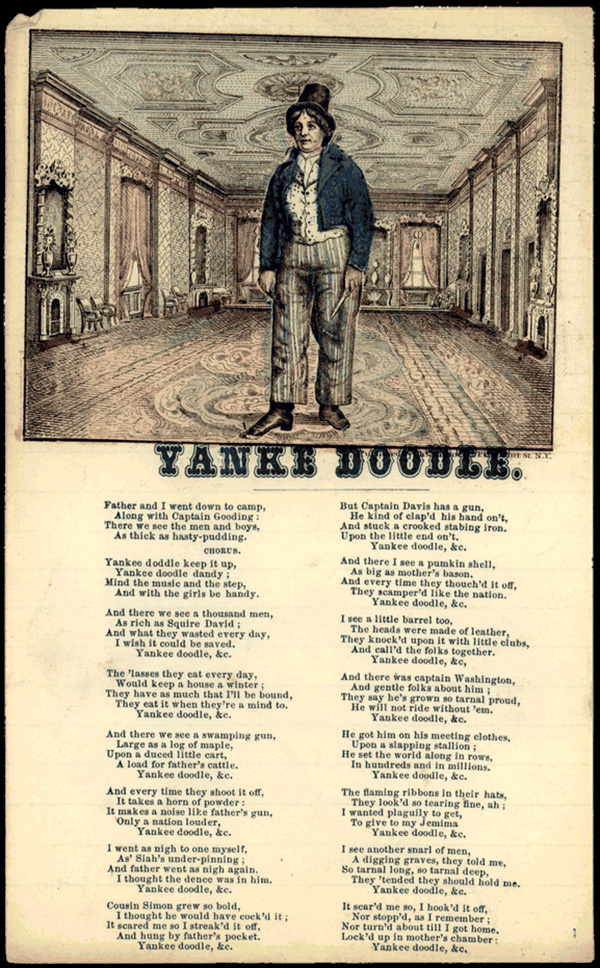
July’s poem

⎯⎯⎯⎯⎯⎯⎯⎯⎯⎯
Yankee Doodle went to town
A-riding on a pony
Stuck a feather in his cap
And called it macaroni

Yankee Doodle, keep it up
Yankee Doodle dandy
Mind the music and the step
And with the girls be handy

Father and I went down to camp
Along with Captain Gooding
And there we saw the men and boys
As thick as hasty pudding

Yankee Doodle, keep it up
Yankee Doodle dandy
Mind the music and the step
And with the girls be handy

And there we saw a thousand men
As rich as Squire David
And what they wasted every day
I wish it could be savèd

Yankee Doodle, keep it up
Yankee Doodle dandy
Mind the music and the step
And with the girls be handy

The ’lasses they eat every day
Would keep a house a winter
They have so much, that I’ll be bound
They eat when they’ve a mind to

Yankee Doodle, keep it up
Yankee Doodle dandy
Mind the music and the step
And with the girls be handy

And there I see a swamping gun
Large as a log of maple
Upon a deucèd little cart
A load for Father’s cattle

Yankee Doodle, keep it up
Yankee Doodle dandy
Mind the music and the step
And with the girls be handy

And every time they shoot it off
It takes a horn of powder
And makes a noise like Father’s gun
Only a ’nation louder

Yankee Doodle, keep it up
Yankee Doodle dandy
Mind the music and the step
And with the girls be handy

I went as nigh to one myself
As Siah’s under-pinning
And Father went as nigh again
I thought the deuce was in him

Yankee Doodle, keep it up
Yankee Doodle dandy
Mind the music and the step
And with the girls be handy

Cousin Simon grew so bold
I thought he would have cock’d it
It scar’d me so I shrink’d it off
And hung by Father’s pocket

Yankee Doodle, keep it up
Yankee Doodle dandy
Mind the music and the step
And with the girls be handy

And Cap’n Davis had a gun
He kind of clapt ’s hand on’t
And stuck a crooked stabbing iron
Upon the little end on’t

Yankee Doodle, keep it up
Yankee Doodle dandy
Mind the music and the step
And with the girls be handy

And there I see a pumpkin shell
As big as mother’s basin
And every time they touch’d it off
They scampered like the ’nation

Yankee Doodle, keep it up
Yankee Doodle dandy
Mind the music and the step
And with the girls be handy

I see a little barrel too
The heads were made of leather
They knock’d on it with little clubs
And call’d the folks together

Yankee Doodle, keep it up
Yankee Doodle dandy
Mind the music and the step
And with the girls be handy

And there was Cap’n Washington
And gentle folks about him
They say he’s grown so ’tarnal proud
He will not ride without ’em

Yankee Doodle, keep it up
Yankee Doodle dandy
Mind the music and the step
And with the girls be handy

He got him on his meeting clothes
Upon a slapping stallion
He sat the world along in rows
In hundreds and in millions

Yankee Doodle, keep it up
Yankee Doodle dandy
Mind the music and the step
And with the girls be handy

The flaming ribbons in his hat
They look’d so tearing fine, ah
I wanted dreadfully to get
To give to my Jemima

Yankee Doodle, keep it up
Yankee Doodle dandy
Mind the music and the step
And with the girls be handy

I see another snarl of men
A-digging graves, they told me
So ’tarnal long, so ’tarnal deep
They ’tended they should hold me

Yankee Doodle, keep it up
Yankee Doodle dandy
Mind the music and the step
And with the girls be handy

It scar’d me so, I hook’d it off
Nor stopp’d, as I remember
Nor turn’d about till I got home
Lock’d up in mother’s chamber

Yankee Doodle, keep it up
Yankee Doodle dandy
Mind the music and the step
And with the girls be handy
⎯⎯⎯⎯⎯⎯⎯⎯⎯⎯

Transcribed, accurately, more or less, from Wikipedia; resembles this version, more or less.

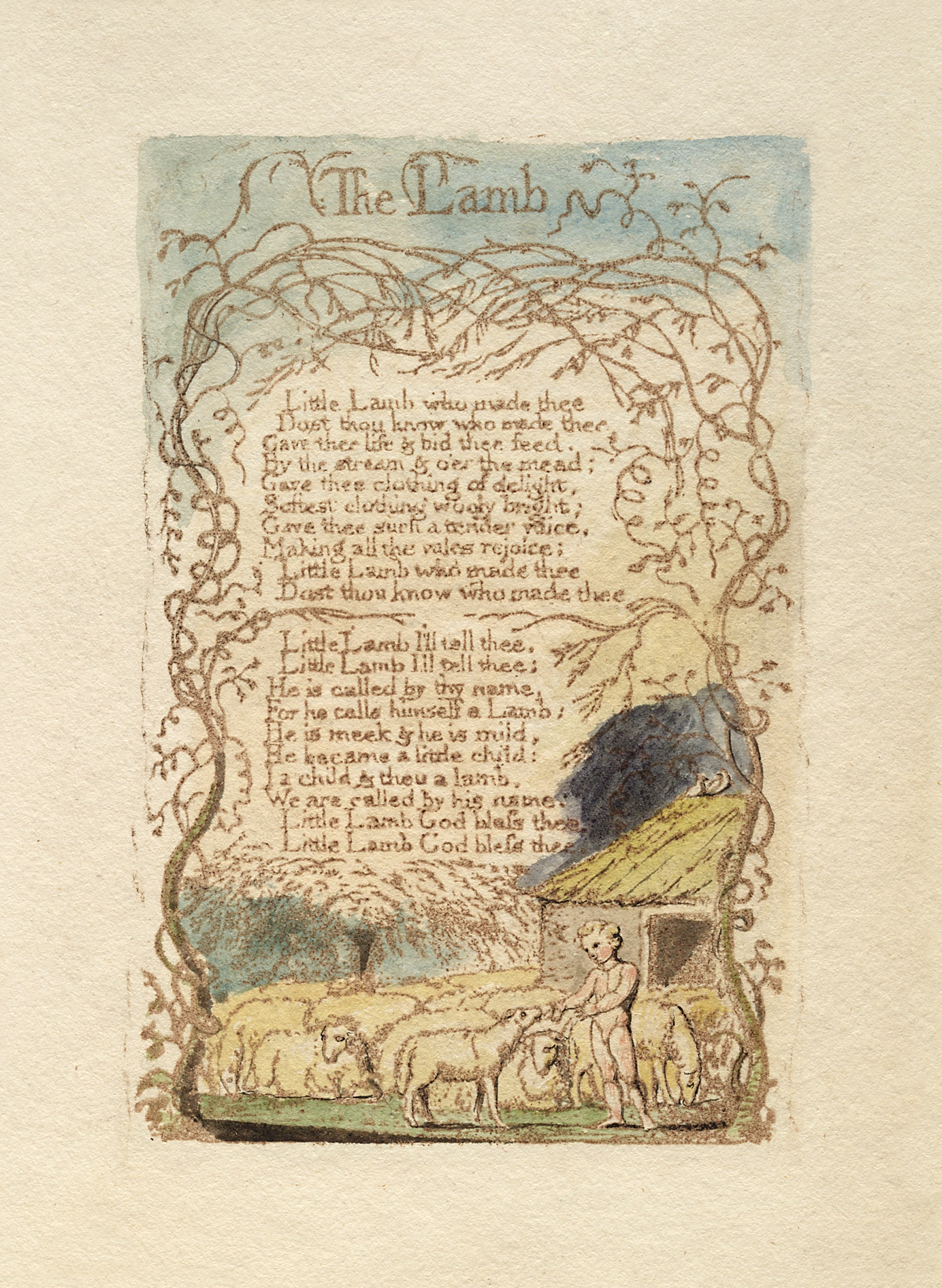
June’s poem

⎯⎯⎯⎯⎯⎯⎯⎯⎯⎯
Little lamb, who made thee?
Dost thou know who made thee,
Gave thee life, and bid thee feed
By the stream and o’er the mead;
Gave thee clothing of delight,
Softest clothing, woolly, bright;
Gave thee such a tender voice,
Making all the vales rejoice?
Little lamb, who made thee?
Dost thou know who made thee?

Little lamb, I’ll tell thee;
Little lamb, I’ll tell thee:
He is callèd by thy name,
For He calls Himself a Lamb.
He is meek, and He is mild,
He became a little child.
I a child, and thou a lamb,
We are callèd by His name.
Little lamb, God bless thee!
⎯⎯⎯⎯⎯⎯⎯⎯⎯⎯

(William Blake)

May’s poem

… is from the first scene of John Marston’s play, The Dutch Courtezan (c. 1604).

⎯⎯⎯⎯⎯⎯⎯⎯⎯⎯
The darke is my delight,
So ’tis the nightingale’s.
My musicke’s in the night,
So is the nightingale’s.
My body is but little,
So is the nightingale’s.
I love to sleep next prickle 🌵
So doth the nightingale.
⎯⎯⎯⎯⎯⎯⎯⎯⎯⎯

Quoted in Anthony Powell, Temporary Kings (the eleventh novel of A Dance to the Music of Time).

When the play is staged, these lines are sung with recorder music for 2 min. 30 sec. (give or take a minute). Don’t listen; the tune’ll take root in your head.

♦ ♦ ♦ ♦ ♦

The new pope, Leo XIV, is a Chicago South Sider and a naturalized citizen of Peru who lived in the north of that country – in Chiclayo. These places are mere stone’s throws from South Bend and Guayaquil. So, Leo and I couldn’t be much closer to each other, provenance-wise. (I actually know people who used to live in Chicagoland and in Chiclayo; but they’re disqualified: they’re Lutherans.)

I’ve read that Leo named himself after the previous leonine pope. Uh, huh. We all know which Leo he really had in mind. Yes. The GOAT. (Who, it turns out, was named for Lionel Richie.)

1996, the best year in movie history, pt. 86: The sweet hereafter


The spiderbitten little girl peers up at her father as he rides with her to the hospital. With one hand, he calms her; with the other, he grasps a knife to cut her throat that she might breathe, that he might not lose her. The girl survives. She grows up and addicts herself to drugs. Her father effectively loses her anyway. He’d once hoped for happiness with his daughter (and with her mother, from whom he also is estranged).

He thinks of the girl as he travels to a remote British Columbian town. A lawyer, he is recruiting plaintiffs for a class-action suit regarding a deadly schoolbus accident. Courting each household in turn, he trots out tired arguments for holding someone accountable, preferably a deep-pocketed entity, a municipality or a corporation rather than an individual. The more nebulous the scapegoat, the more eagerly the victims’ parents join the suit. They’re angry at a universe that has frustrated their expectations for their children, for themselves. (Just one parent resists this way of thinking. He already has had to grieve for a dead wife.)

Movies about grief are the hardest to watch. This is a hard movie. There are passages of startling beauty – flashbacks. They are not comforting. The camera hovers over wintry mountains and rivers, tracking the school bus as it wends toward disaster. Children play. They sleep. A teenager sings sweetly. The memory of these things is not sweet. All is embittered by the knowledge of how these lives will end.

The most piteous character is the lawyer (Ian Holm). The dark implication of his story, if I interpret it correctly, is that losing one’s children is the norm. They needn’t die; alienation suffices. But then, who’ll pay? Whoever is left to pay. Spouses. Neighbors. One’s town. Those with whom one does business. Anyone. The universe. Harboring vengeful thoughts, one becomes the prey of those who traffic in vengeance. The traffickers themselves are in vengeance’s thrall. This is this lawyer’s affliction.

The movie doesn’t object to vengeance as such. One character obtains it, and perhaps rightly: the teenager who sings so sweetly. The actress, Sarah Polley, performs a remarkable about-face. She is winsome, then ice-cold.


Maimed but not killed in the accident, this girl obtains new clarity about the false hope and love that her father (Tom McCamus) instilled in her. She avenges herself on him – and on the town. Arguably, her victims deserve their punishment. We have seen the town’s loyal spouses and its cheats, its wonderful parents and its abusers, equally bent out of shape by grief, equally desirous to inflict damage on third parties. One suspects that they grieve as much for their own frustrated ambitions as for the loss of their children. He would have been a good man, one townsperson, a sympathetic figure, says of a particular dead boy. Maybe so, but this child’s goodness, his special worth to others, is beside the point. The death of the unattractive “slow” boy is just as grievous.

Grief’s piteous distortions on the mind were previously studied in director Atom Egoyan’s great Exotica (1994). The Sweet Hereafter (1997) is interested in these, and in communal distortions. The movie quotes Robert Browning’s “Pied Piper,” in which a selfish town’s children are lured away, leaving the adults bereft. The poem’s significance for the movie is a complicated question. (Egoyan adds lines of his own.) But one clue is that it’s a poem about a community, not just one parent or family. One’s children, one’s hopes, even one’s grief – these things are not one’s exclusive property. Everyone participates.

April’s poem

… is Boney M.’s “Rasputin.”

⎯⎯⎯⎯⎯⎯⎯⎯⎯⎯
There lived a certain man in Russia long ago
He was big and strong, in his eyes a flaming glow
Most people looked at him with terror and with fear
But to Moscow chicks, he was such a lovely dear
He could preach the Bible like a preacher
Full of ecstacy and fire
But he also was the kind of teacher
Women would desire

Ra, ra, Rasputin
Lover of the Russian Queen
There was a cat that really was gone
Ra, ra, Rasputin
Russia’s greatest love machine
It was a shame how he carried on

He ruled the Russian land (and never mind the Tsar)
But the kasachok he danced really wunderbar
In all affairs of state, he was the man to please
But he was real great when he had a girl to squeeze
For the Queen, he was no wheeler-dealer
Though she’d heard the things he’d done
She believed he was a holy healer
Who would heal her son

But when his drinking and lusting and his hunger for power became known to more and more people, the demands to do something about this outrageous man became louder and louder

“This man’s just got to go!” declared his enemies
But the ladies begged, “Don’t you try to do it, please!”
No doubt, this Rasputin had lots of hidden charms
Though he was a brute, they just fell into his arms
Then, one night, some men of higher standing
Set a trap; they’re not to blame
“Come to visit us,” they kept demanding
And he really came

Ra, ra, Rasputin
Lover of the Russian Queen
They put some poison into his wine
Ra, ra, Rasputin
Russia’s greatest love machine
He drank it all and said, “I feel fine!”

Ra, ra, Rasputin
Lover of the Russian Queen
They didn’t quit: they wanted his head
Ra, ra, Rasputin
Russia’s greatest love machine
And so, they shot him till he was dead

Oh, those Russians
⎯⎯⎯⎯⎯⎯⎯⎯⎯⎯