Posts

Showing posts with the label Trump (Donald)

Iran at the World Cup?


Again, I wish FIFA would choose a host that did care.


Iran’s withdrawal is likely. Maybe we’ll know more after the U.S. completes the expected four-to-five weeks of bombardment. Because then the war’ll be done-and-dusted, won’t it? Because, as Trump himself professes, Iran already “is a very badly defeated country.”

If Iran does play in the World Cup, this eye-popping scenario will be possible:
Iran is currently scheduled to play New Zealand in Los Angeles on June 15, Belgium in Los Angeles on June 21 and Egypt in Seattle on June 26. If both the U.S. and Iran finish second in their respective groups, the two countries could face off in a July 3 elimination match in Dallas.
The two countries played what were, in effect, elimination matches (in the group stage) in 1998 and 2022. Iran won the first meeting; the U.S. won the second one.

1996, the best year in movie history, pt. 96: Wag the dog

What with the ongoing sex scandal and, now, a war, Wag the Dog (1997) is the obvious choice for this month. (Well, either it or Canadian Bacon [1995].)

Actors:
  • De Niro
  • Dunst
  • Harrelson
  • Heche
  • Hoffman
  • Macy
and
  • Willie Nelson (who, in scenes reminiscent of Nashville, directs a studio choir that records patriotic music)
Wag the Dog is funny. It ticks a lot of boxes, satire-wise.

Trouble is, it’s not cynical enough.

Nowadays, this is a quaint, almost feel-good movie.

The country, nowadays, is that much worse.

The nineties were a gentler time.


Melania

The title of this post will have raised some eyebrows. Did he watch the documentary? Is he going to review it? And so I must immediately temper expectations. No, I didn’t watch it. Perhaps I shall, some day. I’m in no hurry.

I just want to note what strikes me as an extraordinary response by the public and the critics.

♦ ♦ ♦ ♦ ♦

Melania has an aggregate rating of 1.3 from 10 at the IMDb. Some 49 thousand votes have been submitted.

Surely it isn’t that bad? Even Caligula (1979) manages a rating of 5.3.

Ah, here we go. “Our rating mechanism has detected unusual voting activity on this title,” the website disclaims.

♦ ♦ ♦ ♦ ♦

“Trump Film is a Gilded Trash Remake of
The Zone of Interest

The Guardian opines. Quite a good dig, that.

(The Zone of Interest, if you didn’t know, depicts the opulence of an Auschwitz commandant’s household.)

Again, the vitriol is excessive. Or not? Time will tell.

No, it really is excessive, no matter how things turn out. Melania evidently is no Triumph of the Will. It doesn’t show a nation’s diabolic fervor. It’s just a vanity project. This sort of thing has been done before and will be done again. Sometimes, a despot commisions it (cf. Turkmenistan); sometimes, it’s just the excrescence of some rich dude, as when Charles Foster Kane pays for his wife to be an opera lead. I expect Melania is in between.

Here’s a more sympathetic Guardian review.

Timothy Dexter

Ecuador is mentioned in the first sentence of the main body of the Harper’s Weekly Review.

♦ ♦ ♦ ♦ ♦

The Facebook bots kindly shared a mini-bio, in Spanish, of Timothy Dexter (1747–1806), history’s hombre más suertudo (luckiest man). It was intriguing enough that I went on to read Dexter’s Wikipedia bio. Then I read that bio aloud to Karin.

Certain commonalities with our President suggested themselves. Dexter, however, made money instead of losing it. And he didn’t start out with money from his father; he extracted it from his rich wife, whom he abused.

In business, he seems to have been lucky and devilishly intuitive, e.g. he turned a profit literally “shipping coal to Newcastle” (the proverbial expression for exporting to a saturated market).

I don’t intend to read any full-length biographies of Timothy Dexter. But I went looking anyway. The major ones are from the 1800s. The last notable book, the most recent edition of which is 65 years old, is by John P. Marquand – like Dexter, of Newburyport, Mass. – the author of the “Mr. Moto” fictions and of the Pulitzer-winning, satirical Late George Apley. I wonder how serious his treatment of Dexter is.

“NOW IS THE TIME FOR PEACE!”


Hot today, huh? I mowed this morning: it was only going to get hotter. I left ten percent unmowed. I felt like collapsing.

I lent the mower to our neighbor, and he mowed his lawn and felt like collapsing. When he returned the mower he told us about his recent excursions to Kroger. The security guard there embroiled himself in a dispute, and a half-dozen shoppers slipped away without paying. Another shopper loaded a hundred dollars’ worth of meat into his cart and fled without paying. Our favorite worker got fired for shoving someone in a dispute; he’ll get rehired, our neighbor expects. Our neighbor “almost got into it” with the butcher, then with the deli worker. Then he “almost got into it” with the worker who shelves the sleeves of bread (who’d nearly run him over in the parking lot). “Sounds like you need to chill out,” I told our neighbor. We like him, we get along great, but the better we know him, the more people he tells us he’s “almost gotten into it” with. He’s a chill guy, he assures us.

I worry that our Kroger will close down, because that’s something that happens to less-than-upscale supermarkets like ours. Please pray that it doesn’t close down. We love and need our Kroger.

Were I a lawyer

… I might know what to think of terrifying essays like this one:


… which discusses the following measure in the One Big Beautiful Bill Act (OBBBA):
SEC. 70302. RESTRICTION OF FUNDS.

No court of the United States may use appropriated funds to enforce a contempt citation for failure to comply with an injunction or temporary restraining order if no security was given when the injunction or order was issued pursuant to Federal Rule of Civil Procedure 65(c), whether issued prior to, on, or subsequent to the date of enactment of this section.
“Translated,” Reich tells us, the measure ensures that “no federal court may enforce a contempt citation”:
The measure would make most existing injunctions – in antitrust cases, police reform cases, school desegregation cases and others – unenforceable.

Its only purpose is to weaken the power of the federal courts.

As Erwin Chemerinsky, UC Berkeley School of Law dean and distinguished professor of law, notes, this provision would eliminate any restraint on Trump.

“Without the contempt power, judicial orders are meaningless and can be ignored. There is no way to understand this except as a way to keep the Trump administration from being restrained when it violates the Constitution or otherwise breaks the law …

“This would be a stunning restriction on the power of the federal courts. The Supreme Court has long recognized that the contempt power is integral to the authority of the federal courts. Without the ability to enforce judicial orders, they are rendered mere advisory opinions which parties are free to disregard.”

In other words, with this single measure, Trump will have crowned himself king.

If it is enacted, no Congress and no court could stop him. Even if a future Congress were to try, it could not do so without the power of the courts to enforce their hearings, investigations, subpoenas and laws.
The House approved OBBBA by one vote. Suppose that after debating, revising, etc., the Senate and the House were to turn OBBBA – or some version of OBBBA containing this measure – into law.

Questions:

(1) Could judges strike down this measure as unconstitutional?

(2) If judges were to do this – and here my ignorance really shows – would they thereby strike down all of OBBBA?

Put differently, does a law behave like a logical conjunction that is shown to be false (invalid) if even a even single part is shown to be false (invalid)? Or might a law with some invalidated parts remain valid in its other parts? This is something people oughta know, but I don’t know it.

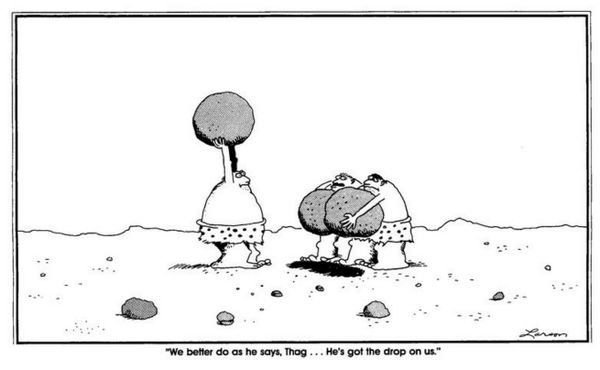
(3) Last question. If judges strike down a law that restricts judges’ authority to hold people in contempt, then they get to continue holding people in contempt. Right? Legally, they’ve “got the drop” on that law, right?

R.I.P. Alasdair MacIntyre

Call me a casual fan: an embarrassing status to admit to in South Bend, where fans are rabid.

The only book by MacIntyre I’ve read, cover to cover, is After Virtue (summarized here). I’ll say this: the book has staying power. Bits of it recommend themselves repeatedly and in diverse contexts. Many bits are provocative. Many of the provocative bits are silly. More impressive, to me, are the book’s constructive attempts to reestablish contact with forgotten moral traditions; to say what virtues are; to sketch social conditions for tractable attributions of rightness; and to make room for pairs of genuine obligations that genuinely and tragically conflict (e.g., Antigone’s obligations to her brother and to her city).

I’ve read a number of MacIntyre’s papers. I prefer his writing in that less digressive format. (In books he’s relentlessly allusive, and one struggles to keep up with him.) I never set out to read any collection of his papers straight through (e.g., this one, this one, or this one); I’ve taken on his shorter writings “piecemeal,” as this or that issue has arisen. “Is Patriotism a Virtue?” is justly famous. “The Very Idea of a University: Aristotle, Newman, and Us” is a gem. (Whether the book-length treatment improves on it, I couldn’t say.) “Notes from the Moral Wilderness,” which I haven’t read, is “the best starting point for contemporary ethics,” according to the tenth comment in this online discussion; “one might update [that essay] by replacing the name ‘Stalin’ with ‘Trump’.” (My reading group’s next meeting is “Trump Fest”: participants are to report on whatever they’ve chosen to read about Donald Trump. I wonder if it’d be beyond the pale to report on “Notes from the Moral Wilderness” instead.)

More Arendt

… which I’m sure you were itching to read this morning.

But first, an item of local interest: a graduate of nearby Goshen College is the author of the Library of America’s latest “story of the week.”

♦ ♦ ♦ ♦ ♦

From Origins, chapter 7:
It took the Boers several decades to understand that [British] imperialism was nothing to be afraid of, since it would neither develop the country as Australia and Canada had been developed, nor draw profits from the country at large, being quite content with a high turnover of investments in one specific field [gold mining]. Imperialism therefore was willing to abandon the so-called laws of capitalist production and their egalitarian tendencies, so long as profits from specific investments were safe. This led eventually to the abolition of the law of mere profitableness and South Africa became the first example of a phenomenon that occurs whenever the mob becomes the dominant factor in the alliance between mob and capital.

In one respect, the most important one, the Boers remained the undisputed masters of the country: whenever rational labor and production policies came into conflict with race considerations, the latter won. Profit motives were sacrificed time and again to the demands of a race society, frequently at a terrible price. The rentability of the railroads was destroyed overnight when the government dismissed 17,000 Bantu employees and paid white wages that amounted to 200 per cent more; expenses for municipal government became prohibitive when native municipal employees were replaced with whites; the Color Bar Bill finally excluded all black workers from mechanical jobs and forced industrial enterprise to a tremendous increase of production costs. The race world of the Boers had nobody to fear any more, least of all white labor, whose trade unions complained bitterly that the Color Bar Bill did not go far enough.
The racism described here is race-rule. Boer clans subsisted by forcing native tribes to farm for them. They didn’t want this arrangement upset by the development of industry or bureaucracy. (They got their wish.)

“Mob” in Arendt refers to the agglomeration of misfits: people excluded from the workings of a polity: people fulfilling no communal organizational or economic function. Mere hoarders of wealth; speculators; subsistence farmers; unemployed workers (the individualistic ones, not those moved by solidarity).

As separatist farmers, Boer clans belonged to the mob. So did people involved in the gold rush: investors as well as individual miners. Rich and poor.

Mob-rule occurs when such people use politics to prevent the development of “normal” governance and commerce. For example: Jews
settled down permanently into a unique position for a white group. [Footnote: “Jews constituted roughly one-third of the total immigration to South Africa in the twenties, and … in sharp contrast to all other categories of uitlanders, settled there permanently; their share in the annual emigration is less than a per cent.”] They neither belonged to the “lifeblood” of Africa nor to the “poor white trash.” Instead they started almost immediately to build up those industries and professions which according to South African opinion are “secondary” because they are not connected with gold. Jews became manufacturers of furniture and clothes, shopkeepers and members of the professions, physicians, lawyers, and journalists. In other words, no matter how well they thought they were adjusted to the mob conditions of the country and its race attitude, Jews had broken its most important pattern by introducing into South African economy a factor of normalcy and productivity, with the result that when Mr. Malan introduced into Parliament a bill to expel all Jews from the Union he had the enthusiastic support of all poor whites and of the whole Afrikander population.
The timeless lesson is that it behooves the most speculative and exploitative businessmen – captains of mostly useless industries (extraction of ornamental minerals, space exploration, gambling, luxurious transportation and housing) – to maintain a dysfunctional society: to lord it over desperate, disconnected, disaffected workers and voters. Plodding but sound officials and workers who bring order to chaos are best eliminated. Energetic immigrants who do so are best kept out. You can see how this describes our own moment.

As I read, I’m tempted to draw analogies between past and present, almost to treat Arendt as an oracle. Of course I don’t know enough to judge whether she gets the past right. And the analogies that suggest themselves in certain moods seem farfetched in others. How closely can Obama really be likened to Arendt’s Disraeli? I don’t know.

The origins of totalitarianism (1951)

A slog of a book, with prophetic flashes. Here’s one.

“I would annex the planets if I could” (Cecil Rhodes said this). Arendt comments in ch. 5:
The imperialist-minded businessman, whom the stars annoyed because he could not annex them, realized that power organized for its own sake would beget more power. When the accumulation of capital had reached its natural, national limits, the bourgeoisie understood that only with an “expansion is everything” ideology, and only with a corresponding power-accumulating process, would it be possible to set the old motor into motion again. At the same moment, however, when it seemed as though the true principle of perpetual motion had been discovered, the specifically optimistic mood of the progress ideology was shaken. Not that anybody began to doubt the irresistibility of the process itself, but many people began to see what had frightened Cecil Rhodes: that the human condition and the limitations of the globe were a serious obstacle to a process that was unable to stop and to stabilize, and could therefore only begin a series of destructive catastrophes once it had reached its limits. …

By “Victory or Death,” the Leviathan can indeed overcome all political limitations that go with the existence of other peoples and can envelop the whole earth in its tyranny. But when the last war has come and every man has been provided for, no ultimate peace is established on earth: the power-accumulating machine, without which continual expansion would not have been achieved, needs more material to devour in its never-ending process. If the last victorious Commonwealth cannot proceed to “annex the planets,” it can only proceed to destroy itself in order to begin anew the never-ending process of power generation.
There it is: why Elon Musk wants to colonize space and destroy the U.S. government.

I’d say “there in brief,” only it could be briefer.

I have a friend, a Trump/​Musk fanboy, who says he needs the “CliffsNotes” version whenever he’s directed to an explanation of why Trump/​Musk’s actions are illegal, repugnant, not in the country’s best interest, and so on. Usually I want to say: Just read the article (the legal document, etc.).

But I admit we need CliffsNotes for Arendt.

Here’s my own summary and application – not so brief, alas, but with plainer language.

It used to be that businessmen driven to make wealth from wealth didn’t involve themselves in national politics. (Arendt goes on about this at length.) If the government kept things stable enough for business, businessmen didn’t care who ruled the country. But countries are too small. Eventually, businessmen would use up their countries’ resources and saturate their countries’ markets. So they couldn’t indefintely keep growing their businesses at home. They’d have to go elsewhere.

Businessmen tried speculating abroad as private agents, but conditions proved too risky – too unstable. So they brought in their countries’ armies to guarantee stability. (And a leg up – although I don’t recall Arendt saying this; anyway, she doesn’t emphasize it.) Deploying armies required businessmen to involve themselves in governing their own countries as well as the new lands where they did business. So, eventually, businessmen came to dominate the business of governing (in no small part, by promoting the myth that businessmen are the best rulers). But, eventually, they’d run into trouble with other countries (ruled by their businessmen). Besides, the planet was too small. Country-scale problems of exhaustion and saturation were bound to recur on a global scale; as it’s shrewdly noted on James Bond’s familial coat-of-arms, “the world is not enough.” So, one “Bond villain,” Musk – possibly with Rhodes’s words in mind, Rhodes having been a big cheese in Musk’s home of southern Africa – tried colonizing other planets. But that was stupid. So, instead, he just took over the world’s most powerful government and destroyed as much of it and the rest of the globe as he could so that he could get more wealth for himself doing what governments used to do. This was less stupid, insofar as it profited him (tabulation is ongoing), but it sure was petulant, and the casualties were enormous.

I want to stress that I’m not endorsing ideas, just formulating them.

War plans; an inauspicious debut

From The Atlantic. If you can access it, read it. It describes shocking security breaches, callous disregard for human life, reckless emoji use, etc. Also shocking (but not surprising) is the current administration’s hatred of … Europe. Someone should force the Vice President and his cronies to turn off their phones, sit still, and watch some alluring travel videos by Rick Steves. …

This has been the wildest news story of the week.

♦ ♦ ♦ ♦ ♦

I take it back. Wilder, if less consequential, was Ecuador’s decision to start 17-year-old Darwin Guagua against Chile tonight. The boy hadn’t even debuted at the senior level for Independiente del Valle, his club.

The soccer federation appears to be trying to show off young Ecuadorian players so that European clubs will buy them. Federation officials probably are cutting backroom deals with local clubs and then pressuring the national team’s coach to field certain players.

Guagua had been about to enter Friday’s game as a late substitute. But when the Venezuelans scored, our coach, Sebastián Beccacece, left him on the bench. So, tonight, Guagua got to start. (I doubt it was what Beccacece wanted.)

The Chileans ate Guagua alive. We effectively ceded our left flank to them for half of the game.

Apart from that, our performance was … good. Kind of awesome. Unbalanced though we were, we contained the Chileans until halftime and dominated them afterward. The result was a goalless draw. Enner put the ball into the net but was narrowly offside.

We remain in second place. No other team gained ground on us this week, except Argentina.

Incidentally, guagua, in the indigenous languages of the Andes, means baby.

The “51st state,” pt. 2

A message from my high school French teacher and gentle fellow blogger, Madame Lorrie:
Good evening, JP – I just read your recent post regarding our sovereign nation. Most Canadians are spitting angry at the US President. I am one of them. We are refusing to purchase goods made in the USA, even groceries, which makes for some creative shopping. Stores are responding and are sourcing fruits and vegetables from countries other than the US with great success. We will not be traveling to the US for the foreseeable future.

I do thank you for the link to the list of Canadian literature. I have read 18 of them, mostly the fiction works, in my CanLit courses and my French courses. Alligator Pie is a fun book that my grandchildren enjoy listening to. Lots of rollicking rhythm and pure silliness that makes us all giggle.

We will not be conquered!

Hope you and your family are doing well.
I really ought to set up a decent commenting function for this blog.

Madame always was the best commenter.

Bless Canada. And Panama, and Greenland (and Denmark).

P.S. And Gaza. And Ukraine.

I shudder to think what other places will be added to the list.

On the “51st state”

Winter, for practical purposes, has ended.


Trump’s bizarre second term keeps lighting up the blogosphere. Will or won’t he annex Greenland and Canada? Is he serious? Who knows? Does he know if he’s serious?

What’s eye-opening, to me, is how seriously Canadians regard this bluster. But then Canadians have long feared annexation in one guise or another. There’s quite a literature on this. I never knew!

This book by George Grant is a notable example.

I’m tempted, now, to re-read Charles Taylor’s philosophy in light of the imperialist threat.

This list of Canada’s “most important” books (part one; part two) also is worth consulting. (Grant’s book is #41.) We may as well read what Canadians have to say, before we conquer them.

♦ ♦ ♦ ♦ ♦

In the hullabaloo I’d forgotten that outstanding YouTube channel, Un mundo inmenso. Its latest video is about Bangladesh. Speak of a neglected nation! Did you know that one of every twenty people on Earth is Bangladeshi? That the country is cricket- and soccer-mad? That Argentina’s soccer team has more fans in Bangladesh than in Argentina? (Big deal, cosmologists would say: the size of the universe guarantees that Argentina’s fans are many times more numerous on other planets …)

The Gulf of America, pt. 2


For the text of the executive order, click here.

Renaming the Gulf has one thing going for it, historian Greg Grandin comments.

♦ ♦ ♦ ♦ ♦

Re: oil spillage. This afternoon, while I was bottle-feeding Abel, Daniel got his mitts on our sesame oil. Let’s just say that the kitchen, hallway, and bathroom smell delicious now.

Actually, Daniel and Samuel were pretty good today. I’d worried because it was Karin’s first day back at work – my first full day alone with all three boys.

Daniel took a turn bottle-feeding Abel. He kept getting him to smile.

Abel has dimples.

Update: Samuel and Daniel both poured out the sesame oil. Samuel confessed.

They poured much of it onto Karin’s potted mint plant. That poor thing is subjected to unimaginable abuse. Yet it survives.

Names on the land

(Titled after this book.)

By now you’ve probably heard of President Trump’s orders to rename Mt. Denali “Mt. McKinley” and the Gulf of Mexico “Gulf of America.”

Genius!


He could have done better, though. How about “Mt. ExxonMobil McKinley?” “Gulf Oil Gulf of America?” Or, concessively, “Gulf MX Gulf of America?” For, say, twenty years, with renewal options?

I’ve been looking at maps of various countries’ administrative divisions, translated literally. Here’s Argentina – omitting the Malvinas and the Antarctic claim – with provincial names in English.

(Click to enlarge.)


The provinces’ actual names:


Etymology is fascinating. Did you know that “Mendoza” (cold mountain) is from the Basque language? That the origin and meaning of “Córdoba” are uncertain? (The above translation is just somebody’s guess.)

You may have known that “Formosa” means beautiful. Q: Beautiful, how? A: Shapely.

As for “La Rioja,” it’s not riverland, exactly; the name is for a place in Spain, which is named for the Río Oja. Or maybe it’s for the wine.

R.I.P. Dr. Root, acquisitions librarian

His obituary is here.

I knew him best as the director of Bethel’s library, in which capacity he employed me as his student assistant. I also took a course from him, on Russian history.

He was very kind to students, as the following examples will show.

(i) He got back in touch with me in 2018 and urged me to finish writing my long-overdue dissertation. He was hardly the first person to urge this. But his intervention did the trick. He asked to read what I’d written so far, and he commented on a number of sections.

After this jump-start, I wrote regularly. I completed the Ph.D. the next summer.

(ii) A college acquaintance told me, long after the fact, that he and other young bucks once rashly denounced the quality of Bethel’s library holdings, in a letter posted on the “Wittenburg Door.”

(The “Wittenburg Door” was a cafeteria bulletin board. It was the college’s most picturesque – and cringeworthy – public forum.)

Dr. Root invited the young bucks to his office. He treated their concerns seriously and graciously, solicited advice, and ordered books they asked for. Little did they know, the library’s resources were severely constrained. Dr. Root didn’t complain of this to students; even I, his assistant, learned it from other sources.

♦ ♦ ♦ ♦ ♦

In his dress and in his politics, Dr. Root was a 1970s conservative. He hung a large portrait of Nixon over his student workers’ desk. Bold! But he didn’t do it to taunt the libs; that wasn’t his way. He genuinely admired Nixon’s statesmanship.

He grieved – privately, to me, at least – that the Republican Party, which he staunchly supported, had turned Trumpist.

He venerated missionaries. One of his pet projects was the indexing of Jim Elliot’s journals. I worked on this, occasionally, when there was nothing else to do; it was a relief when Jim and Betty finally tied the knot and Jim got courtship off his mind.

Dr. Root spent his life in midwestern towns and cities and shared his midwestern pleasures with his student workers. The end-of-term banquets were especially generous: I still savor the memory of one of them, an Amish dinner in the countryside. The summer workers were treated to daily donuts and the occasional lakeside outing; we’d observe a surprisingly lively Dr. Root playing volleyball and croquet. I was amused, too, when he’d return with stories of his holidays. Sometimes, he’d go abroad; usually, he’d stay in a friend’s Manhattan penthouse. For a few days each year, he’d change into a wild baseball- and theatre-goer, sushi eater, and book buyer. Book buying was his job, of course, but he relished the hunt.

It occurs to me that my time helping him to buy books for the library was what made me the habitual bargain hunter I am today.

Then again, he may have chosen me as his student worker because he already perceived that tendency. One day, he invited me into a back office to take what I wanted from the surplus of donated books. He must have liked the gusto with which I went about choosing, because that was when he offered me my job – much of which would consist of filling out forms from bargain book catalogs.

There’s a scene in Evelyn Waugh’s Decline and Fall in which the ne’er-do-well Captain Grimes is offered his dream job of traveling from pub to pub to sample and rate the beer. (He has to turn it down for personal reasons, of course.) Something comparable, involving low-budget book buying, might have been my ideal job – the realization of my “true self.” Dr. Root did that job. Lucky man! I’m glad I was able to do it with him for a time.

Nesting-time

From a friend’s Facebook page:


Yeah, well, Trump and Vance reside in counties that went to Harris. So there. 👅

Life goes on. “Pip” is due to be born in three-and-a-half weeks. Fellow churchgoers have been giving diapers and other tokens. At home, the task of the season – instinctive for Karin, imperative for me – is “nesting,” i.e. reconfiguring one’s living quarters for the baby. The most urgent time for this appears to be 10:00 or 11:00 p.m.

Anyway, that’s why I didn’t post last night – I was busy “nesting.”

Physically, things are progressing well, except that “Pip” still needs to flip upside-down. Karin lays frozen veggies on herself to goad him.

Copa América

Biden and Trump are debating, but I’m watching Bolivia vs. Uruguay.

♦ ♦ ♦ ♦ ♦

Uruguay and Argentina are the cream of this tournament and should reach the final. I’d say that apart from them, only the Colombians have much of a chance (but I’d be speculating, since I missed their opening game).

By “much of a chance,” I mean about three percent.

♦ ♦ ♦ ♦ ♦

Among the also-rans, several teams have had matches spoiled by red cards: Ecuador, Peru, and the USA.

I’m a modest person … I don’t like to gloat … but Ecuador’s red card was the least stupid of the three.

A Panamanian also was red-carded; but his punishment came late in the game, and it was for a proper, honest-to-goodness patada.

♦ ♦ ♦ ♦ ♦

Happy birthday to my dear friend, Grace, the Salvationist.


Today also is the fifth anniversary of my dissertation defense. (I just pulled that volume off the shelf. For a double-spaced work, the typesetting really is aquittable.)

It must also be the fifth anniversary of my last meeting with Dick Miller and Nick Sturgeon. 🥺

♦ ♦ ♦ ♦ ♦

R.I.P. Kinky Friedman, the Jewish Texan who wrote hilarious murder mysteries, set in Manhattan, in which he cast himself and his friends as detectives. (This description barely scratches Friedman’s surface.) I learned about him during the first lecture of my first college U.S. history class. I have no idea why he was mentioned, beyond the obvious fact that he was too important to omit.

Body-text fonts, pt. 22: Caslon no. 540

“Colorado Supreme Court Disqualifies Trump from State’s 2024 Ballot.”

Another in a long list of amazing yet ho-hum headlines about Donald Trump.

♦ ♦ ♦ ♦ ♦

Congrats, again, to Alexander Domínguez for carrying Liga de Quito to a championship – this time, in the domestic league. He stopped two spot kicks in Liga’s shootout victory over Independiente del Valle.

The prodigy Kendry Páez scored IDV’s goal.

♦ ♦ ♦ ♦ ♦

At least four parties to go, and I’m already Christmas-partied out. The partying hasn’t been bad, but the gorging has been. For the first time in years, I’m repulsed by the prospect of eating cookies and potato chips.

Come to think of it, I ate cookies and potato chips today. At home.

♦ ♦ ♦ ♦ ♦

There are thinner and fatter Caslons; of the fatties, my favorite is Caslon no. 540.


The italics are … dramatic. Good for occasional emphasis; bad in bibliographies.


The dubiously named QualiType Caslan is a serviceably priced (i.e. free) imitation of this typeface.

Speaking of faces

Donald Trump’s mug shot is all over social media and the news, and it’s a classic. What a glare. Did he pose that way on purpose? I’m sure he did. Is it in good taste? Nope. Do I judge him for it? Nah. I’ve posed the same way for school I.D. photos. On purpose. Juvenile, I know. But I did it, and I’ve managed to forgive myself for doing it. At the time, it felt as if posing that way was an important thing to do. Suppose Trump is convicted and imprisoned. Suppose he has to wear a uniform and submit to the same indignities as the other prisoners. Then let him retain this smidgeon of individuality, even if it isn’t very nice, even if it’s awful.

Let the guy glare.

January 6 rolls around again

Every time I go online, I see that another attempt has been made to elect the speaker of the U.S. House of Representatives … but no candidate has obtained enough votes.

Wikipedia says:
It is the 128th U.S. speaker election since the office was created in 1789. … Of the fourteen prior speaker elections that took more than one ballot, thirteen occurred before the American Civil War. The 68th Congress in 1923 [one hundred years ago] was the last time it took more than one ballot to elect a speaker, and the 36th Congress in 1859 was the last time it took more than nine ballots to elect a speaker. The record number is 133 ballots during the 34th Congress in 1855.
As of this writing, there’ve been thirteen inconclusive ballots. Rep. McCarthy inches closer to victory, but he hasn’t won yet. He needs to bring four of his party’s holdouts over to his side.

I am noting this because the newswriters deem it significant, though I myself am not sure that it is, except for this obvious point, that the Republicans aren’t a big, happy family.

My most vocal Republican-leaning friend, a longtime Trump supporter, has switched his allegiance to DeSantis for the next presidential contest. I wish I lived in Florida, he says. He lives in South Carolina (a hotbed of liberalism, apparently). He’s sworn never to vote for Sen. Graham again. That Graham supported the omnibus bill was the last straw.

♦ ♦ ♦ ♦ ♦

Poor Samuel was weeping in his room just now because Spotify was playing this song in my room.


Some music affects him very strongly.