Posts

Showing posts with the label Ecuador

“Bad” and “good” guys

Bots must have read my previous entry and decided that I would approve of this Substack post: it has come up a few times in my feed (in Spanish, more often than not). The post is by one Éamann Mac Donnchada, “an Irishman resident in Barcelona, deeply marked by his years in Argentina.”

Indeed, I found it moving.

(See also this post of Mac Donnchada’s, written before the final.)

Mac Donnchada offers a nice counterpoint to what I have been reading and viewing elsewhere. For example, the Guardian – don’t think it doesn’t have an axe to grind! – would have us believe that Argentinians are morally undeserving, as indicated by the fact that some U.S. Blacks and some non-Argentinian Latin Americans prefer not to cheer for Argentina.

(The piece on Latin America begins, amusingly, with a Brazilian – a citizen of Argentina’s chief sporting rival – saying, I *would* cheer for Argentina, *but* … )

Of course, I can’t speak for – or to – everyone belonging to these groups. But the obvious rejoinder to the argument is: Look closely at Spain. Look closely at Europe. Look at their histories and their present attitudes (which are cosmeticized, as Mac Donnchada notes). Are the Argentinians really so much worse?

As Mac Donnchada remarks:
Football has acted as a socially acceptable pretext for saying things that would have been unacceptable in any other context. National sporting rivalry has licensed people to express prejudices that normally remain hidden behind progressive language.
To wit, prejudices against Argentinians.

Which isn’t to say that Argentinians aren’t themselves prejudiced. But it does shed light on the team’s conduct. When the Argentinian players turned their backs on Spain’s post-game celebration, it may not have been entirely a matter of bad sportsmanship. It may also have been a refusal to applaud a country where Argentinians suffer prejudice.

(Argentinians often are bad losers; I’ve seen Ecuador beat them enough times to know that. 😆 Even so, I’ve noticed that Argentinians tend, after the obligatory period of fisticuffs and grousing, to bestow grudging respect.)

♦ ♦ ♦ ♦ ♦

Politics aside, the more I think about the final, the less convinced I am that Spain dominated Argentina as thoroughly as it seemed. Yes, the stats – possession, passing, shooting, etc. – favor Spain; but how were those figures achieved? As Hannah Frye explains, in tennis, the scoring system allows the side that returns service just a little better to tally many more games and sets than the opposition. Soccer is thought to exhibit the opposite tendency – goals are not predictable amplifications of modest superiority – but, as every devoted viewer understands, the focus on goals is misleading. It’s other metrics that predictably get amplified. The Spanish were able to record better numbers, and to look vastly superior, by repeatedly exploiting a single weakness that the Argentinians were aware of but almost powerless to correct. The Spanish understood that the Argentinians were too old and tired to effectively press Spain’s back line. (This was evident as early as Argentina’s match against Cape Verde.) This allowed the Spanish to constantly advance their teenaged central defender, Cubarsí, into the midfield; and the resulting numerical advantage in that sector allowed them to control possession. Yes, the Spanish are good at passing and recovering; but are they so much better than these same Argentinians who, four years earlier, overran the French? The answer is: Yes, with more youthfulness and rest and an extra player in the middle. That’s all we really can tell. The Argentinians, of course, knew that they were being made to look inept. And they knew how. Their response was logical. Fernández occasionally would leave his place in the middle and join the front press – not to generate turnovers but to “persuade” Cubarsí to retreat. It was desperate but necessary, and it resulted in Fernández’s expulsion. It was an altogether more proactive gambit than, e.g., England’s total retreat into the box.

Hannah Frye: “The resilience to losing that you have to have [in tennis] is, I think, unlike any other.”

But much the same could be said about Argentina in this final. The team showed more resilience than any other I can think of, despite the humiliating amplification, all over the field, of the failure of the press. The Argentinians were so resilient, they almost won. The Spanish, for all their “dominance,” almost didn’t. This was no 2009 Champions League final, no low-scoring affair with an outcome nonetheless settled early; this was a live contest until the end. The Spanish never did pass all the way through Argentina: they hoofed a ball into the box, where a couple of fresh substitutes got to it first. (And yes, the earlier goal’s disallowal was correct.)

There was, then, a certain reactiveness to Spain’s game, a certain fundamental preoccupation with the opponent rather than with proactive excellence (e.g., the Spanish were in no hurry to obtain a lead). And, I daresay, a certain smugness. I’m reminded of a story of my Uncle John’s. The classical guitarist, Andrés Segovia, once listened to an earnest amateur’s performance. He then took the guitar and played it back, cruelly replicating each mistake. What is an opponent to do in the face of a virtuoso’s calculated meanness? I don’t say that Spain played as cruelly as Segovia. But it was a virtuoso one-trick performance. Spain could have tried different things but didn’t – until the end. Then the ball simply was hoofed into the box. Argentina tried more things. (It’s a mistake to claim the opposite.) None worked. That’s all.

Let me end with a quotation from a different Spanish youngster: Gavi, who took a few knocks after the final whistle.
No, to be honest, I don’t think [the Argentinians] should be suspended. I realize it doesn’t set a good example for the children, but there’s also that side to football that’s a bit more violent.
He’s magnanimous because he’s young, the pundits say. Perhaps. Or perhaps Gavi is wise enough to put himself in the other’s place. Or perhaps he’s not especially proud of how Spain approached the game. That’s not to say he should be ashamed. You play the way you know; you try to win the way you can.

The best players, managers, referee, goal, and games of this World Cup

Bear in mind, the final has not been played.

(I’ve italicized the Best XI.)

Front-line players: Mbappé (France), Haaland (Norway), Kane (England), Messi (Argentina).

Midfielders: Ødegaard (Norway), Bellingham (England), Fernández (Argentina), Rodri (Spain), Xhaka (Switzerland), Ruiz (Spain), Tielemans (Belgium), Olmo (Spain).

Defenders: Cucurella (Spain), Mazraoui (Morocco), Laporte (Spain), Lisandro Martínez (Argentina), Akanji (Switzerland), Lucumí (Colombia), Muñoz (Colombia), Porro (Spain).

Goalkeepers: Bounou (Morocco), Nyland (Norway), Emiliano Martínez (Argentina), Pickford (England).

(English journalists have been savaging Pickford for letting in two goals that weren’t his fault. All the more reason to choose him.)

Most valuable player: Messi.

Best-all-around player: Bellingham.

Outstanding old player: Messi (39).

Outstanding young player: Bouaddi (Morocco) (18).

Outstanding substitutes: Lukaku (Belgium), Lautaro Martínez (Argentina), Quintero (Colombia).

Best managers: De la Fuente (Spain), Scaloni (Argentina).

Best referee: Barton (El Salvador), especially for Türkiye vs. Paraguay …


… and for France vs. Spain.

(The final will be refereed by Vinčić, the Slovenian. I thought him too generous toward Mexico; Argentina will eat him alive.)

Best goal: Kane’s second versus the Democratic Republic of the Congo.


Best games: Türkiye vs. Paraguay; Ecuador vs. Germany; Netherlands vs. Morocco; USA vs. Belgium; Norway vs. Brazil; Mexico vs. England; France vs. Spain; and every knockout contest involving Argentina (may the final be the same).

July’s poem

This poem is for the eliminated World Cup teams. The thing about international soccer is, you can’t just go out and buy the crucial missing pieces. You make do with what you have. (But if you’re France, you’ve already “imported” so many pieces that everybody else is scrambling for your castoffs.)

It’s demoralizing knowing that, however well you use what you have, you or whoever beats you will eventually surrender to France.

⎯⎯⎯⎯⎯⎯⎯⎯⎯⎯
For want of a nail the shoe was lost,
For want of a shoe the horse was lost,
For want of a horse the rider was lost,
For want of a rider the battle was lost,
For want of a battle the kingdom was lost –
And all for the want of a horseshoe nail.
⎯⎯⎯⎯⎯⎯⎯⎯⎯⎯

(From The Oxford Dictionary of Nursery Rhymes, edited by Iona & Peter Opie. Recited, in The Clocks, by Hercule Poirot. Previous versions due to: Benjamin Franklin, in Poor Richard’s Almanack; the poet George Herbert; the Germans; and the French.)

♦ ♦ ♦ ♦ ♦

Is the “want of a horseshoe nail” an “INUS” condition? (That is: an insufficient but necessary part of an unnecessary but sufficient condition; in ordinary English: a cause. See: J. L. Mackie.)

Losing the battle might suffice for losing the kingdom, even if the kingdom could be lost in other ways: e.g., due to a meteor strike.

Losing the rider might suffice for losing the battle, even if the battle could be lost in other ways: e.g., due to a meteor strike.

And so on, for each preceding line. (Let’s say the meteorite gets smaller and smaller.)

Or is causation better analyzed in some other way? I’m getting too old for this.

♦ ♦ ♦ ♦ ♦

Q: What was the “horseshoe nail” that Ecuador wanted?

A: Goals. And (controversially), according to some journalists, avoiding getting death threats from Mexican cartels.

Canada 0, Morocco 3; Mexico 2, England 3; USA 1, Belgium 4

So, the co-hosts of this rotten World Cup have been eliminated, pop-pop-pop, in the same early knockout round, and I couldn’t be more pleased; I’ve waited eight years for this moment. Canada, I fault only for having joined a corrupt alliance. (I didn’t much like how the Canadian team played, but put let’s put that aside.) Mexico, I fault for having long ago entered into faustian hosting arrangements with the United States, in this World Cup and in other tournaments; for having greedily sought to host the World Cup a third time, ahead of countries that haven’t had a turn; and for gross inhospitality. All of Ecuador cheered when England beat Mexico. I certainly did, even though I cheer for England as little as possible (just three times since the 1998 World Cup).

As for the USA, well, it may not be gracious to “pile on,” but certain matters must be addressed. If you don’t know the immediate context, you can read about it here or in countless other sources.

Know this, at least: a certain U.S. politician admitted – bragged – that he’d interfered in a supposedly neutral disciplinary process.

As it turned out, the meddling hurt rather than helped the intended beneficiary. The U.S. team already was out of sorts when it took to the field against the Belgians. Those opponents carved up the U.S. with professional, surgical precision – until the last minutes, when the ball was trickling into the U.S. goal every which way; then, they unleashed the “Trump” dance.


It’s gratifying to see on-field retribution. But the urgent lesson is that stricter and more explicit rules against political interference must be adopted, or else matches themselves will lose whatever credibility they once had. (Today, undue controversy surrounded Argentina’s victory over Egypt.)

Moreover: in a better world, certain FIFA officials would be impeached. And a certain country would be barred from the World Cup, for at least as long as the Chileans were barred in the early 1990s for their procedural violation.

It might be objected that in the present case, the politician’s meddling backfired, and so no harm was done. I couldn’t disagree more. A legal analogy: specific instances of bribery, intimidation, or jury tampering might backfire; but they should be punished anyway, because such offenses corrode the integrity and the trustworthiness of the court.

Mexico 2, Ecuador 0; Portugal 2, Croatia 1; predictions

Still he was a pius man in his way and found relief in prayer.
(Daisy Ashford, The Young Visiters)

We lost because Mexico was the home team. It pretty much boils down to that.

Mexico shouldn’t have hosted this tournament, but that’s a topic for another day.

♦ ♦ ♦ ♦ ♦

To my dismay, I’ve been driven very close to embracing a conspiracy theory.

Not because Ecuador lost, but because of how Portugal beat Croatia. A penalty kick was bogusly awarded to the Portuguese; later, Croatia’s tying goal was disallowed due to a tiny spike on a chart. The spike indicated an otherwise undetectable touch registered by a chip inside the ball.

Not even video review could corroborate it.

It’s not that I don’t believe the technology works. It’s that I’m not convinced that this chart isn’t a fabrication.

(It doesn’t help that this technology’s only other beneficiary has been Real Madrid, for a notorious judgment that decided a Champions League series.)

Or, to retreat just a little, a Croatian who chose to doubt the chart would be within his rights.

♦ ♦ ♦ ♦ ♦

Enough lamenting (for now). These are my predictions for the rest of the tournament (see the bracket). I may revise them after the round of 16, should Spain lose to Portugal, Norway to Brazil, or Colombia to Switzerland.

The Belgium/​USA match is hard to predict, too, but its winner shouldn’t last longer than one more round.

Morocco over Canada

France over Paraguay

Belgium over the USA

Spain over Portugal

Norway over Brazil

Mexico (at home again) over England

Colombia over Switzerland

Argentina over Egypt

France over Morocco

Spain over Belgium

Norway (unless undone by Miami’s heat) over Mexico (no longer at home)

Colombia over tired-looking Argentina

France over Spain

Colombia over Norway

Spain over Norway (or vice versa; it’s just a consolation match)

France over Colombia

1996, the best year in movie history, pt. 100: Late night with Conan O’Brien

Ecuador will play against Mexico in a few minutes, so I don’t have time to review a feature-length movie.

Please enjoy this joke by the late Norm Macdonald. It’s about a pig with a wooden leg.

What more is there to say?

Go Ecuador.

Ecuador 2, Germany 1

As one would expect.


That’s Gonzalo Plata poking the ball past Manuel Neuer, after Kevin Rodríguez’s flick-on. This was our winning goal, in minute 77.

Nilson Angulo had leveled the score in the ninth minute. He was assisted by Pedro Vite.

Immortals.

Disgraced: Tori Penso (referee, USA) and Joe Dickerson (VAR assistant, USA) for allowing Germany’s goal to stand although Germany had fouled Vite.

Our reaction was tremendous. We overcame the Germans and officials and claimed our just reward. The yellow-clad New Jersey crowd was overjoyed. Our players, so harshly criticized, were overjoyed. I was overjoyed, as were my parents and siblings and our spouses; we all watched together.

Just before the winning goal, I was holding Abel, and I thought, When the ball goes in, I’ll try to avoid shouting, so as not to frighten him. Please, God, let him not be frightened. Ecuador scored, I shouted – we all shouted – and Abel was calm, so calm, greeting the occasion as a matter of course.

I got a little misty when you all shouted, Karin said afterward. She suffered before the game, worrying she’d have to bear a houseful of anguished in-laws. No doubt our friends felt the same. Then the game ended and our phones exploded with congratulations.

Facebook reel: tying goal.

Facebook reel: winning goal. (Dale con fe.)

Facebook reel: winning goal. (Gol hjpta.)

Facebook reel: postgame. (Una moneda.)

The woebegone

I’d hoped to write a long entry about Ecuador’s companions in misery in this World Cup. But, scanning the list, I found just two, maybe three, comparably disappointing teams: Türkiye (eliminated, having lost twice); Uruguay (nearly eliminated, having drawn twice); and Senegal (nearly eliminated, having lost twice). (I fancy Senegal’s chances against Iraq, however; I don’t fancy Uruguay’s against Spain.)

UPDATE: As I type, the South Koreans are losing to the South Africans; if the result holds, they’ll finish third in the group. And if they don’t scrape through in that position, it will be a tremendous disappointment.

♦ ♦ ♦ ♦ ♦

Other teams have been eliminated or soon will be, but none came into the tournament with the expectations of Türkiye, Uruguay, Senegal, or Ecuador (UPDATE: or South Korea). There’ve been no shocking breakthroughs (UPDATE: not unless the South Africans preserve their victory, anyway). But some teams have exceeded expectations on the field, if not in the standings. I tip my hat to the eliminated Panamanians. I tip it to Cape Verde and the Democratic Republic of the Congo, each of which may yet pull through. I tip it to New Zealand (in dire straits) and Iran (in straits slightly less dire).

I might be expected, for graciousness’s sake, to tip my hat to the Curaçaoans. But I won’t unless they acquit themselves against the Ivorians. Ecuador outplayed Curaçao, after all.

♦ ♦ ♦ ♦ ♦

More notes. This is turning out to be a World Cup for top-drawer strikers. Messi, Haaland, and Mbappé have astounded. Vinícius Júnior and CR7 have shown flashes, if less consistently. And the whole Dutch front line looks good.

Less famous but also excellent: Germany’s Deniz Undav; Morocco’s Ismael Saibari.

I couldn’t say the same for any of the defenses, except maybe Argentina’s – which is considered fragile by some pundits. (Nor have the Mexicans and Spanish conceded, but they hardly have been tested.) The best individual defensive performance was by Bosnia & Herzegovina’s captain, Sead Kolašinac, against Canada.

As late as yesterday, it was mathematically possible for Ecuador to win the World Cup without ever scoring. I told my brothers I’d gain pleasure from such an outcome. I don’t think they agreed. Their Internet silence was rather loud.

Postmortem

So, we failed to score against Curaçao, arguably the World Cup’s weakest participant – certainly its smallest. This is no surprise. Scoring is the surprise. Every goal of the last two four-year cycles has seemed miraculous. Enner, our country’s greatest scorer, is not a reliable scorer; he, too, is gripped by the national malaise.

My blood ran cold very early on, after Enner’s first miss. I knew it would be almost impossible to win.

It wasn’t a matter of not creating chances. Enner (and others) had chances.

It wasn’t a deficiency of technique. Enner has technique. And he has noûs. He does brilliantly until the final touch, and then he scuffs, or aims at the wrong side, or shoots too softly.

What of the longer-term perspective? How might the strategists have failed?

It’s not a matter of not having dredged the talent pool for better strikers. I doubt there are better ones. One could always scout farther afield or try out prolific scorers from the domestic league. But … I’ve watched Ecuador a long time. Even our best strikers have had miserable conversion rates with the national team.

We have no automatic scorers. No Ecuadorian believes that scoring for Ecuador is his God-given right.

Ecuadorians can believe in themselves to keep goals out, to win the ball, to pass or dribble around opponents. But tabulation is of another order.

It’s like accumulating riches. Talent, luck, and elbow grease can bring in large sums. But financial dominance requires illegal or legal ruthlessness: cheating, gouging, strongarming, or hoarding. In any case: a tremendous sense of entitlement.

For better or worse – for better, I’d say – an entitled attitude is something very few Ecuadorians have. Especially when they measure themselves, as Ecuadorians, against other nationalities.

It’s a thousand times easier for another smallish and good-willed country – Norway – to produce a goal-gobbler like Erling Haaland. Firstly, because his sort never worries about getting enough to eat. And secondly, because the Norwegians know their ancestors were Vikings. (If you don’t think old history inspires them, well, you need to watch more reels of Norwegian soccer players.)

Not that Haaland is a baddie. But one can understand why he has no trouble accepting that his destiny is to score goals.

Our next game is against Germany. Ecuador must win to advance. We could outplay the Germans. They’ve not impressed, and I do think we’re that good. But will we score?

It could happen. But it would be a miracle.

The piano (cont.); World Cup notes

The piano has been moved to the kitchen, its likely resting-place for as long as we live in this house.

Now we must learn to play the thing.

♦ ♦ ♦ ♦ ♦

What follows is highly selective.

Ivory Coast 1, Ecuador 0: An even, chaotic contest decided by an 89th-minute goal. Chaos doesn’t favor Ecuador. Our strength is tidy defending.

Piero Hincapié had trouble marking 19-year-old Yan Diomande. The goal came from an attack down that flank.

Thrice we hit woodwork. Our attacking woes continue. I will say, it’s hard when foulers aren’t penalized. The Ivorians were spared a couple of second yellow cards.

Brazil 1, Morocco 1: Has-been vs. emerging superpower. The same is true of their respective continents. The Moroccans were breathtaking in the first half; having established their superiority, they ceded the initiative. Brazil had a single brilliant moment.

Australia 2, Türkiye 0: The most entertaining game so far.

(Some would choose the Netherlands vs. Japan [2–2].)

I love watching the Turks. They attack at breakneck pace, slickly, all game long. But the Australians defended stoutly and landed two counter-punches.

USA 4, Paraguay 1; Germany 7, Curaçao 1; and Sweden 5, Tunisia 1: Three blowouts that tell little about the winners (and not much more about the Tunisians, who fell apart late but weren’t consistently bad).

Mid-half hydration breaks, twice per game: I am sick of them.

Pacho vs. Piero

Happy birthday to Mary.

♦ ♦ ♦ ♦ ♦

Some old-ish news:

For the second straight year, an Ecuadorian will win the UEFA Champions League. Paris Saint-Germain (the holders) and Arsenal will contest the final. Willian Pacho plays for PSG, and Piero Hincapié plays for Arsenal.

Both play for the national team, and they used to be teammates at Independiente del Valle.


I don’t care which club wins the Champions League. Arsenal once were purists; now they’re pragmatists. PSG are delightful to watch, but one can muster only so much enthusiasm for a propaganda arm of the Qatari state.

What about the players? Should I cheer more for Pacho or for Piero? Pacho won last year, and Piero hasn’t won. (Advantage: Piero.) But Pacho is likelier to play more minutes. (Advantage: Pacho.)

♦ ♦ ♦ ♦ ♦

Recent news:

CR7’s club failed to clinch the Saudi league title because of this very late “own” goal:

An entry, posted late, requiring every ounce of strength to type

Notable World Cup “tuneup” results:
  • Ecuador 1, Morocco 1 (cracker of a game)
  • Brazil 1, France 2 (France dominant)
  • England 1, Uruguay 1 (tedious)
  • Colombia 1, Croatia 2 (dunno)
  • South Korea 0, Ivory Coast 4 (look out for the “Elephants”)
  • USA 2, Belgium 5 (too soon to gloat, alas)
Tomorrow promises to be grueling; today already was. Lily, Karin’s sister, will be married tomorrow afternoon. It’s the childcare that vexes. Samuel, at least, is accounted for: he’ll bear the rings. He successfully brought the cushion down the aisle during today’s rehearsal.

Abel and Daniel are another matter. The last thing the ceremony needs is a chorus of squawking. I scouted the building today for possible retreating-places. There aren’t many.

Today, before I chased around and, ocassionally, strong-armed Abel and Daniel, I’d already tired myself loading a humungous, old brush pile – which had plagued our backyard since we bought the property in 2021 – into our pastor’s trailer. Pastor Josh and I took the debris to the church and tossed it into the forest next to the parking lot. It’s not every day you get to dump stuff in a forest.

This has been a grueling entry to type, too, because my “shift” key has been sticking.

A long-awaited stroll; a latitude, hydrological divides, and other fancies

Snow: mostly melted. Temperatures: in the fifties (F); sixties tomorrow. I take Abel and Daniel strolling. Daniel jumps in all the puddles. He soaks the insides of his boots. I don’t know what he’ll wear if we go out again very soon.

Abel, in the stroller, leans forward, his head as near to the ground as he can get it, as if he were peering into tidal pools.

I halt to check if he’s all right; Daniel races ahead.

♦ ♦ ♦ ♦ ♦

Fun fact I just learned: Canada’s lowest latitude passes through South Bend just a few blocks north of Toad Hall.


(Toad Hall is our house.)

I could pinpoint the location, stroll there, and hop back and forth over the line. “Now I’m south of all of Canada. Now I’m north of a little of Canada.”

I suppose the urge is due to having grown up near the equator.

♦ ♦ ♦ ♦ ♦

I could do this with the nearby drainage divide, too. “Now I’m daining into the Great Lakes. Now I’m draining into the Gulf of Mexico, I mean the Gulf of America.”

It seems a less arbitrary line since it has a basis in physical rather than political reality – until I remember that the Great Lakes drain into the St. Lawrence River and thence into the Atlantic, which encompasses the Gulf of Mexico (I mean, America). So that, ultimately, the distinction between these drainage basins is artificial.

Of course there’s a physical difference between draining one way and draining the other, but if you mark all such differences you end up with insignificant, postage stamp-sized drainage basins.

Artifice – human purposiveness – seems inescapable if much geography is to be done at all.

I remember checking out geography Ph.D. programs when I was very young. There was the respectable but daunting meteorology specialization; all else seemed postmodern free-for-all. A bitter disappointment to someone who’d vaguely entertained the thought that his vocation might consist of memorizing picturesque but unimpeachable facts, e.g. that Czechoslovakia’s capital is Prague.

Timothy Dexter

Ecuador is mentioned in the first sentence of the main body of the Harper’s Weekly Review.

♦ ♦ ♦ ♦ ♦

The Facebook bots kindly shared a mini-bio, in Spanish, of Timothy Dexter (1747–1806), history’s hombre más suertudo (luckiest man). It was intriguing enough that I went on to read Dexter’s Wikipedia bio. Then I read that bio aloud to Karin.

Certain commonalities with our President suggested themselves. Dexter, however, made money instead of losing it. And he didn’t start out with money from his father; he extracted it from his rich wife, whom he abused.

In business, he seems to have been lucky and devilishly intuitive, e.g. he turned a profit literally “shipping coal to Newcastle” (the proverbial expression for exporting to a saturated market).

I don’t intend to read any full-length biographies of Timothy Dexter. But I went looking anyway. The major ones are from the 1800s. The last notable book, the most recent edition of which is 65 years old, is by John P. Marquand – like Dexter, of Newburyport, Mass. – the author of the “Mr. Moto” fictions and of the Pulitzer-winning, satirical Late George Apley. I wonder how serious his treatment of Dexter is.

R.I.P. Keith and Stu

… missionaries to Ecuador (and other countries) who died within days of each other. Fixtures of my early life. Good men. Heroes, arguably. Keith gave his wife, Ruth Ann, a kidney. He died of complications from the surgery. Stu’s death was brought on by lung trouble resulting from Vietnam War wounds. He climbed mountains and ran marathons, but, over time, his injuries took their toll.

Stu and his wife, Bev, managed my dorm during two of my boarding-school years. They were kind. Stu used to take me jogging, and he helped me to get the hang of algebra. We’d talk about his reading: Dante, Cervantes, Hugo, Tolstoy, Pasternak, Herman Wouk, Bodie and Brock Thoene. I got him to read Kenneth Grahame and Jerome K. Jerome.

I remarked to someone, the other day, that my favorite missionaries were from Canada and the Midwest – especially, Minnesota. Keith was from Ontario, and Stu was from the Gopher/​North Star State.

R.I.P. “Minnie”

… a.k.a. Cinnamon Sprinkle, a.k.a. Cinnamon Sparkle: Cornell’s beloved miniature horse, who arrived on campus the year I moved away. (See, also, this earlier piece.)

Now that’s the kind of alumni reporting I’d like more of.


Had I known Minnie was at Cornell, I would have taken Karin to see her when we traveled to campus for my PhD defense.

♦ ♦ ♦ ♦ ♦

Happy New Year. Today, the USA attacked Venezuela and captured its head of state.

All day long, I worried about geopolitics, not least about soccer.

What will FIFA do about the World Cup? It would be consistent to ban the USA, since Russia is banned for attacking Ukraine.

If only.

What will CONMEBOL do about the Copa América? The USA is a hosting candidate but has just attacked a CONMEBOL member.

I went on Facebook to see what my “friends” are saying about the attack.

The Ecuadorian church leaders are silent. I don’t object to that. Not everything needs to be discussed.

Other Ecuadorians are making jokes about Venezuelans. Many Venezuelan refugees live in Ecuador. The jokes hint that now is the time for Venezuelans to return en masse.


(A Venezuelan says goodbye to her Ecuadorian sugar daddy.)

My U.S. “friends” who used to live in Ecuador are debating whether the coup is a canny U.S. foreign policy move; whether it’s good for Venezuela; whether Venezuelans, in preponderant numbers, support it; whether Maduro was entitled to rule; and whether “individualism” is better than “collectivism.”

I’ve seen none of these “friends,” none of them, say anything like this:

The geopolitical order is an order of sovereign states. An order of sovereign states forbids particular states from unilaterally attacking other states and deposing their leaders, even bad leaders.

It’s amazing how this simple norm, so dear to Latin Americans – including Venezuelans (even, I daresay, opponents of Maduro) – appears not to figure in ex-missionaries’ thinking.

What were they doing in Ecuador, all those years?

Not reading the room, it would seem.

Q.E.P.D.

Samuel’s winter holiday has begun. He doesn’t sleep in; he gets out of bed, puts the hall light on, and chatters to himself until I go out to him. I do gain 30–60 minutes of sleep because I needn’t take him to the bus. I’d say this improves my well-being; on closer inspection, however, I may actually feel worse.

♦ ♦ ♦ ♦ ♦

Ecuadorians who died yesterday:

(a) Rodrigo Borja. The first politician I supported. I was seven when he became president.

(b) Mario Pineida. Decent fullback for Barcelona. Shot in broad daylight, outside a butcher’s shop. Partner murdered, too.

World Cup groups

… have been drawn. Gratifyingly, there are no weak groups: all are groups “of death.” Literal death.


Just kidding. These are not the groups. (Besides, the tournament has been expanded from 32 to 48 teams.)

(I should acknowledge that I didn’t create this image; I found it on the Internet.)

The actual groups are these:

Group A
Mexico
South Africa
South Korea
TBD: Czechia, Denmark, Ireland, or North Macedonia

Group B
Canada
TBD: Bosnia & Herzegovina, Italy, Northern Ireland, or Wales
Qatar
Switzerland

Group C
Brazil
Morocco
Haiti
Scotland

Group D
USA
Paraguay
Australia
TBD: Kosovo, Romania, Slovakia, or Turkey

Group E
Germany
Curaçao
Ivory Coast
ECUADOR

Group F
The Netherlands
Japan
TBD: Albania, Poland, Sweden, or Ukraine
Tunisia

Group G
Belgium
Egypt
Iran
New Zealand

Group H
Spain
Cape Verde
Saudi Arabia
Uruguay

Group I
France
Senegal
TBD: Bolivia, Iraq, or Suriname
Norway

Group J
Argentina
Algeria
Austria
Jordan

Group K
Portugal
TBD: DR Congo, Jamaica, or New Caledonia
Uzbekistan
Colombia

Group L
England
Croatia
Ghana
Panama

Locations and times have been decided, too. Ecuador will play in: Philadelphia, against the Ivory Coast; then, Kansas City, against Curaçao; and lastly, East Rutherford, New Jersey, against Germany (in what will be Ecuador’s first World Cup rematch; the countries first played in 2006).

Our Aunt Linda in K.C. is keen to host any relations who’ll attend the Curaçao game. But tickets are rapaciously expensive. I can’t imagine I’ll attend unless I win a sweepstakes out of a cereal box.

Besides, if I travel to K.C., I’ll have to spend precious hours away from the television. I’ll miss Japan vs. Tunisia or some other partidazo.

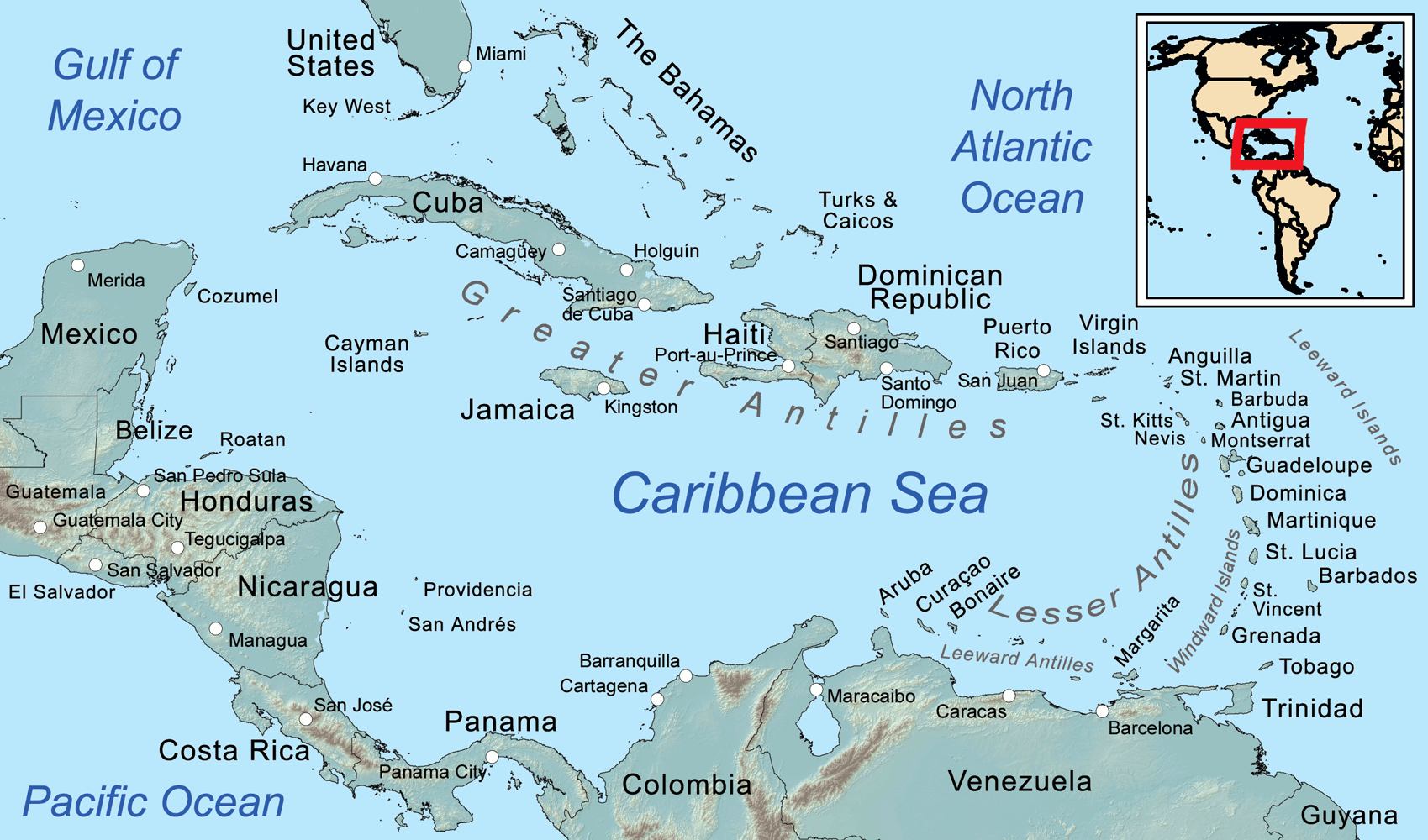
A note on Curaçao, the smallest nation ever to qualify for a World Cup. This hardly ever happens, but … I didn’t know Curaçao’s location on the map. I knew that Curaçao is one of the Dutch Antilles, but, mentally, I grouped it with islands southeast of Puerto Rico. Actually, it’s off the coast of Venezuela – practically in South America.

I’m ashamed not to have known this. In my defense, Curaçao became a sovereign nation only in 2010.

Body-text fonts, pt. 45: New Caledonia

In this month’s font’s sample, Robert Graves discusses memoir-writing:


It’s the line about people reading about food and drink that gets me. I’ve noticed, perusing Madame’s excellent blog, that my pulse quickens at the gastronomic bits.

C. S. Lewis:
There is nothing to be ashamed of in enjoying your food: there would be everything to be ashamed of if half the world made food the main interest of their lives and spent their time looking at pictures of food and dribbling and smacking their lips.
As a teenager, I used to find this passage in Mere Christianity very funny; twenty-five years later, looking at pictures of food is precisely what half the world does.

(Madame, understand, I’m not criticizing your food photos. There’s obscenity, and there’s art. Your photos are on the respectable half of the divide.)

Madame has a second blog – a Substack where she posts excerpts of her memoirs. A word of advice, Madame. Put in all you can about food and drink, and murders, and ghosts or spirits, and the Prince of Wales (not unmanageable for a Canadian) … and tidbits about your children, whom I knew in high school. (I liked the detail about giving birth one room over from the woman who kept screaming, Que me haga cesaria.) My parents dredged up an old chestnut about me just last night. My mom led a Bible study at a church in Esmeraldas. She entrusted me to some youths who lost track of me. Neighbors found me outside the church. Most of my body had been buried in a mudslide. (This was during the Niño of 1982.) I’d heard this story before, except for the detail about my having been submerged in mud. (I thought I’d just gotten dirty.) Bear in mind, this was a Downtown Esmeraldas mudslide, so it would have contained garbage, sewage, etc. And I could have drowned. We’re always just on the other side of death; that fact is more obvious in some places than in others. Robert Graves’s tone may sound frivolous, but it’s a sweetener; his subject is the First World War.

Liga de Quito 3, Palmeiras 0


Hats off to Liga for achieving this result in the home leg of their Copa Libertadores semifinal. Frankly, I don’t see the lead evaporating in São Paulo.

The winner will contest the final against either Flamengo or Racing Club. I wouldn’t be surprised if liguistas outnumbered opposing fans in Lima, the neutral host city. They’d have a shorter journey than Brazilians or Argentinians, and they’re plenty passionate about their club (and platudos).

I just wish they’d bother to fill their stadium when Ecuador plays World Cup qualifiers there.